Executive summary: questioning the defensive approach.
Antwerp, Belgium – February 19th, 2026
The EU Packaging and Packaging Waste Regulation (PPWR) entered into force in February 2025, and if you're a consumer brand operating in Europe, your teams have likely been deep in compliance work for months. PPWR's first implementation deadline arrives in August '26, with progressively stricter requirements following in 2030, 2035, and 2040.
But there’s an uncomfortable truth to it.
The default response to PPWR is defensive: look for compliant materials, swap where possible, meet the minimum thresholds, move on to the next deadline. As an innovation studio, we look at it differently: if you're going to transform your packaging portfolio anyway, if the investment is unavoidable, then the strategic question should be... "what do you get in return? Do you settle for mere market access, or will you go after genuine competitive advantage?"
That’s exactly why forward-thinking consumer brands are currently doing their homework. Yes, they’re looking for compliancy, but they're also rethinking delivery models, building reuse infrastructure, and forging value chain partnerships.
Let's dive into our thoughts!


Understanding the legislative shift.
According to the European Commission, 40% of plastics and 50% of paper used in the EU is destined for packaging. This accounts for 36% of municipal solid waste according to the European Parliament. PPWR directly addresses this by shifting from waste management to waste prevention, so the societal case for PPWR is very much clear.
Without going into too much detail of PPWR's exact specifications, the regulation outlines a number of key objectives:
PPWR (1) prevents packaging waste, (2) reduces and restricts packaging and (3) promotes reusable and refillable packaging solutions. In addition, PPWR (4) makes all packaging on the EU market readily recyclable by 2030. It also (5) reduces demand for virgin resources and (6) creates a mainstream market for secondary raw materials, including an increased usage of recycled plastics in packaging.
The European Commission emphasizes that these outlined objectives will ideally benefit both consumers and the industry as a whole. Consumers will have increased access to more reusable packaging options, less unnecessary packaging and clear labels that highlight how to recycle packaging. The consumer goods industry will benefit from this regulation through new business opportunities, a decreased dependence on raw materials and accelerated progress toward net zero by 2050.
That's PPWR in theory.
What we're seeing in the market.
We're in the early stages of PPWR implementation, and the pressure is mounting across the consumer goods landscape. Different segments face different challenges, but the common thread is clear: business as usual is no longer an option.
The luxury industry, for instance, faces a fundamental reckoning. Traditional luxury packaging has relied on elaborate unboxing experiences involving multiple layers of premium materials. The oversized boxes, the ultra-soft paper, the secondary containers that once signified premium quality now clash directly with PPWR's minimization requirements and recyclability mandates.
This sector needs to recalibrate not just materials, but how premium value is communicated to consumers. An interesting challenge!


For FMCG companies in food and beverage, the challenge is different as packaging must perform multiple functions simultaneously: preserve taste, ensure hygiene, maintain shelf life, withstand supply chain handling, … Simply swapping in a recyclable alternative is difficult, as it compromises food safety or shortens shelf life from, for instance, twelve months to three.
In addition, the regulation bans certain single-use plastic formats outright from January 2030 onwards, including packaging for individual condiment portions, unprocessed fresh fruit and vegetables under 1.5kg, and small cosmetic products used in hospitality.
PPWR also introduces reuse quotas that will reshape entire categories. By 2030, at least 10% of alcoholic and non-alcoholic beverages must be available in reusable packaging. Take-away food and beverage providers face similar obligations. These requirements don't just demand new materials; they necessitate new logistics systems, return infrastructure, and consumer engagement strategies.
Despite these challenges, we see brands making meaningful progress, though at different levels of ambition.

Individual brand efforts: necessary, but not sufficient
Several major companies have taken meaningful steps at the product level. Henkel redesigned its Persil liquid laundry detergent bottles from transparent material to white high-density polyethylene, enabling 50% recycled plastic content; a move that required changing the brand's entire aesthetic identity.
Coca-Cola has transitioned all its 20-ounce bottles in the US to 100% recycled PET. Ecover was one of the first household brands to switch to 100% recycled PET bottles, proving early on that recycled content and shelf appeal can coexist.
On the reuse side, Starbucks has conducted reusables tests in more than 25 markets worldwide, piloting its 'Borrow A Cup' programme. Unilever is investing in refill stations for personal care and household products, while Nestlé is piloting stainless-steel Nesquik containers in Germany and refill points for pet food at selective retail outlets.
These efforts are commendable, but they share a common limitation: they remain largely isolated. Single-brand recycled content targets or individual reuse pilots, however well-intentioned, haven't scaled into system-wide change.
As long as these initiatives operate in silos (one brand's bottle, one company's cup program), they represent a baseline, not a blueprint. The real breakthroughs emerge when entire sectors align around shared infrastructure, interoperable systems, and cross-brand collaboration.


Where system-level collaboration is changing the game.
The examples that should be on every packaging strategist's radar look fundamentally different. They involve multiple stakeholders, shared infrastructure, and sector-wide coordination, exactly what PPWR demands.
Interoperable reuse: the Berlin model
A recent pilot in Berlin, documented by the Environmental Defense Fund, provides one of the clearest answers yet to the boardroom question "can reuse systems work at scale without disrupting business?". The project builds on ReCup's established reusable cup network, which allows customers to borrow a durable cup and return it at any participating café across a city-wide network.
This isn't one brand's proprietary program; it's an interoperable system that works across businesses. The pilot confirmed fast customer adoption when return points are widespread, minimal workflow disruption for staff, lower long-term packaging costs compared with single-use, and reduced in-store waste volumes. It demonstrates that reuse doesn't require every brand to build its own infrastructure. It requires sectors to make shared agreements, cross-brand and cross-policy.


Recycling infrastructure: Colruyt x Indaver Plastics2Chemicals
In Belgium, retailer Colruyt and waste management company Indaver are demonstrating what a full value chain partnership looks like.
Indaver's Plastics2Chemicals facility in Antwerp, a €105 million investment, uses chemical recycling to convert polystyrene from yoghurt pots and foam trays back into virgin-quality styrene. Partners INEOS Styrolution and Trinseo repolymerise the material, and Colruyt closes the loop by using 10% recycled content in its dark grey meat trays (on shelves since October 2025).
This isn't a material swap by a single brand. It's a coordinated chain from PMD bag collection through Fost Plus, to sorting, to chemical depolymerisation, to repolymerisation, and back onto store shelves. The kind of infrastructure that makes PPWR's recycled content requirements for 2030 actually achievable.
Smart sorting at scale: P&G's HolyGrail initiative
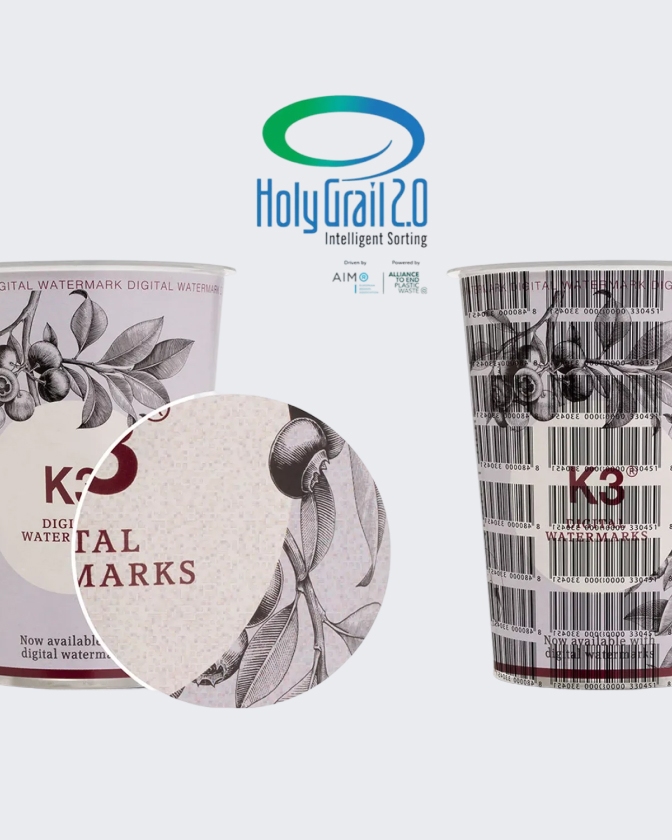
Perhaps the most ambitious cross-industry effort is the HolyGrail 2.0 initiative, facilitated by AIM (the European Brands Association) and involving over 130 organizations across the packaging value chain.
Led by Procter & Gamble, the project developed digital watermark technology; imperceptible codes on packaging that enable sorting facilities to identify materials with unprecedented precision.
Industrial trials at a German facility processing waste from 3 million households achieved over 90% detection accuracy and nearly 56,000 daily detections across almost 6,000 unique products. The initiative is now transitioning to HolyGrail 2030 - Circular Packaging, with early market demonstrations launching in Belgium (for flexible PP food packaging) and Germany (for rigid PP food packaging).
This is infrastructure that enables every brand's recycled content ambitions, not just the one that initiated it.
Made in practice: redesigning the system, not just the package.
Ecover: making refill the new routine
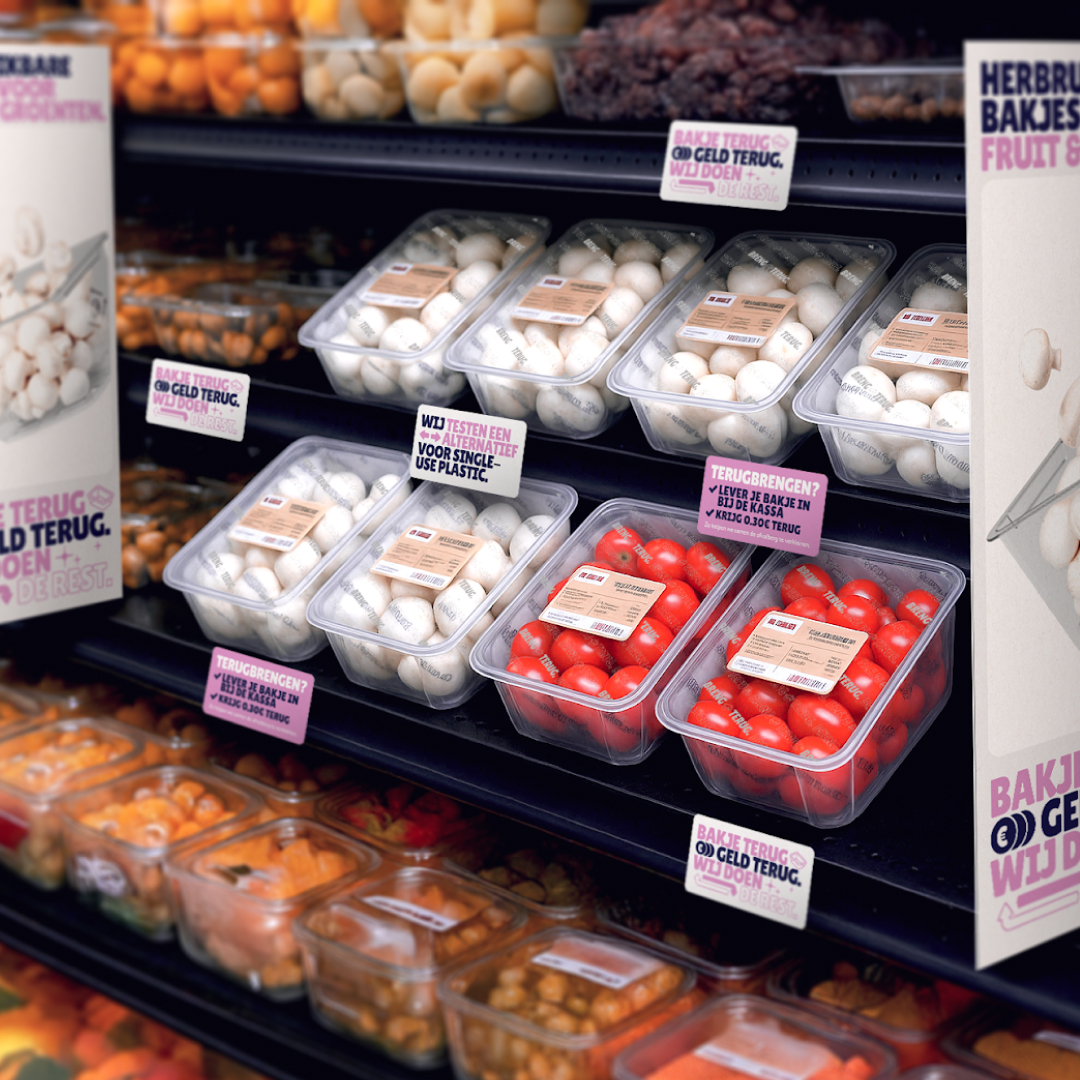
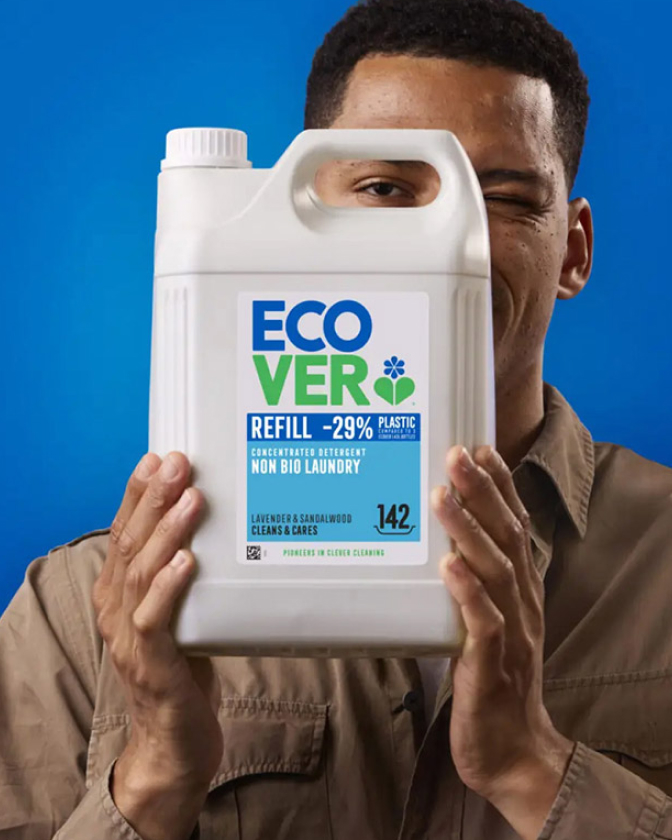
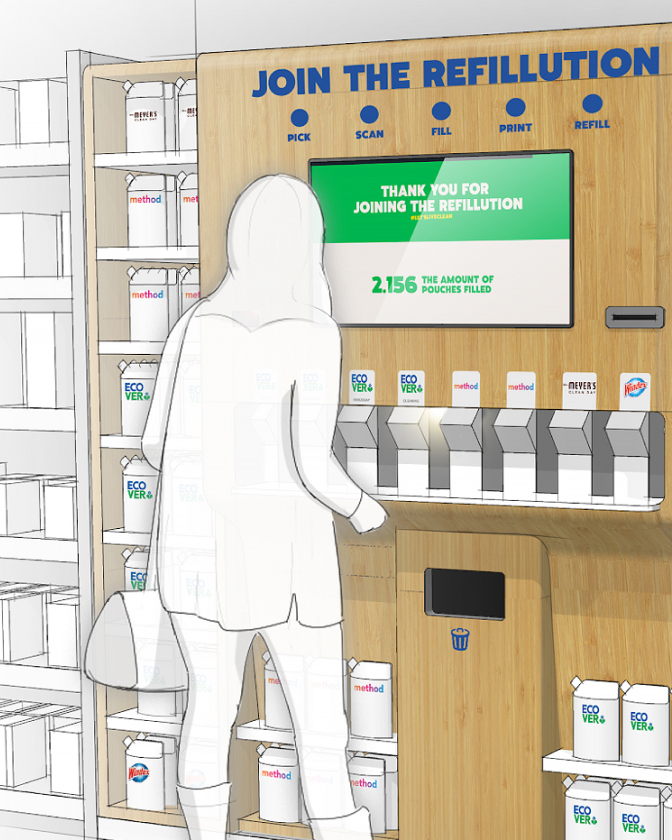
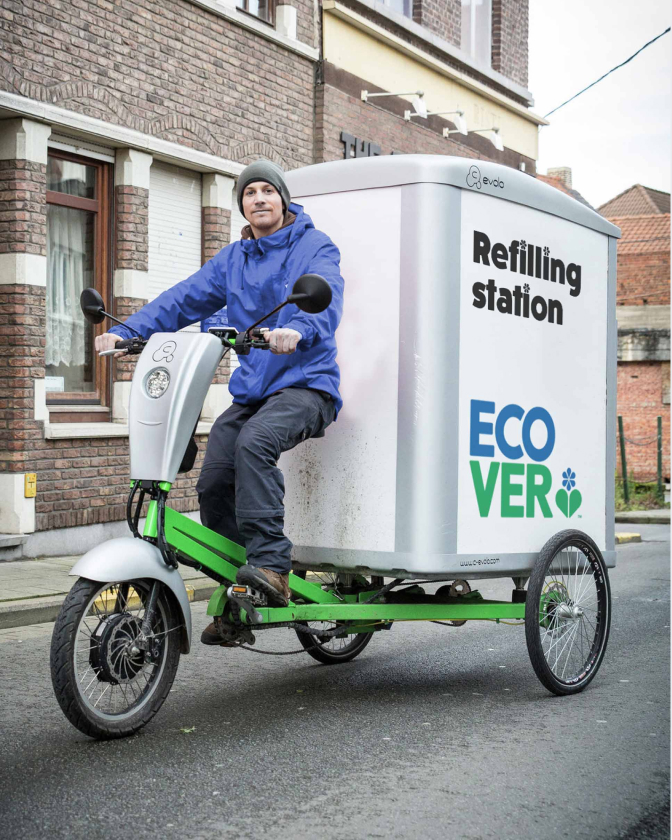
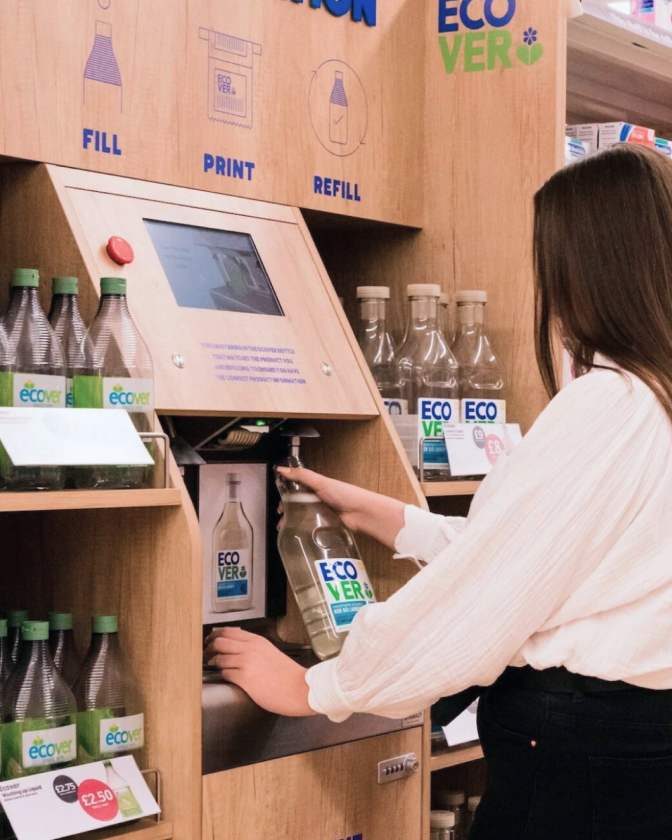
Ecover's refill station initiative, developed in collaboration with Made's strategy team, took a fundamentally different approach. Rather than optimizing the bottle, the challenge was to make refill the new routine.
At Made, we brought together behavioral experts, product designers, and digital specialists to map the full in-store journey. Using behavioral insights and iterative design, the team shaped an experience that reduces friction at every step and empowers shoppers to refill with confidence.
System innovation like this requires more than material knowledge or infrastructure. It requires behavioral change, which could be really impactful when done right.
Ecourage: enabling refill for consumer brands
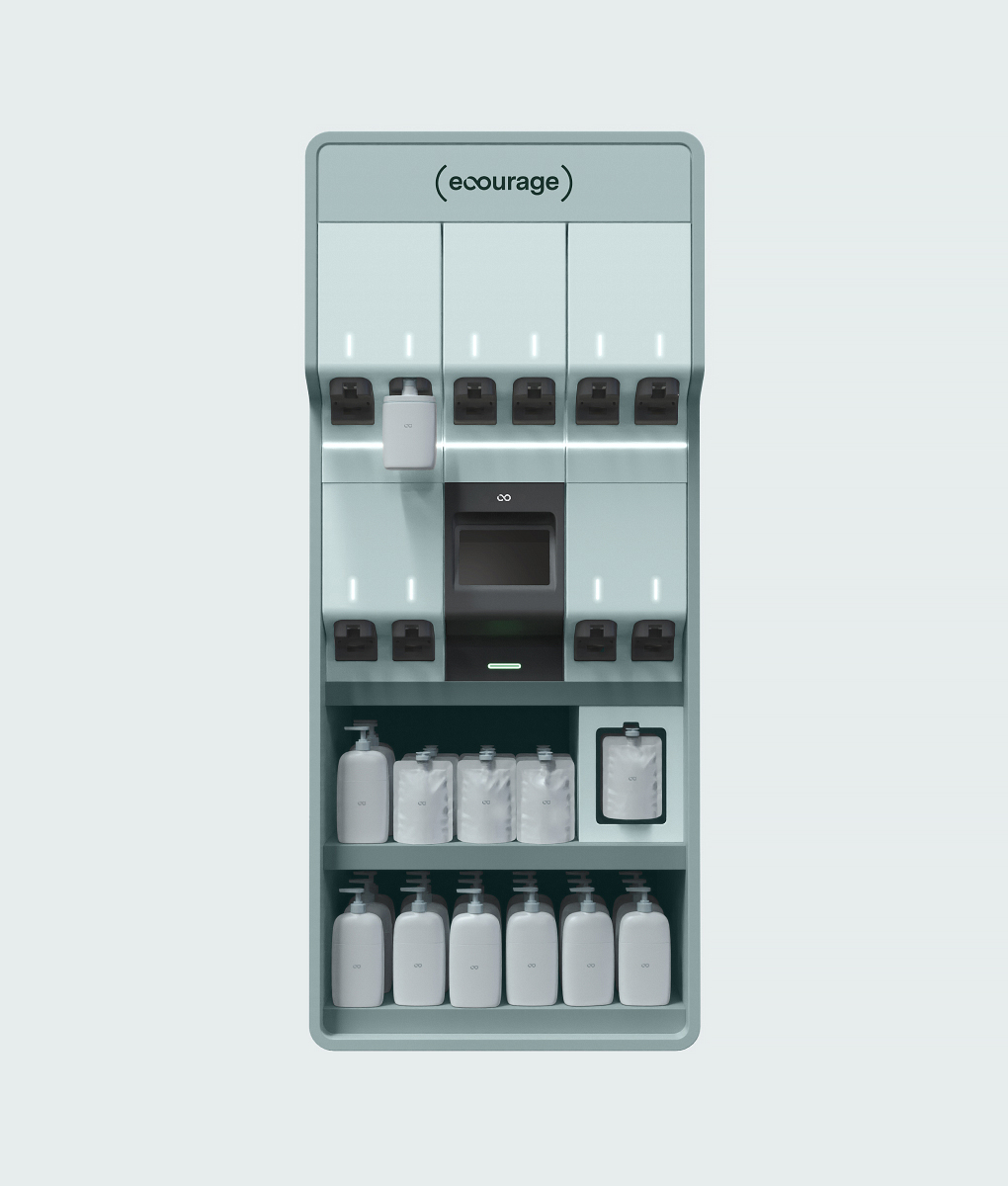
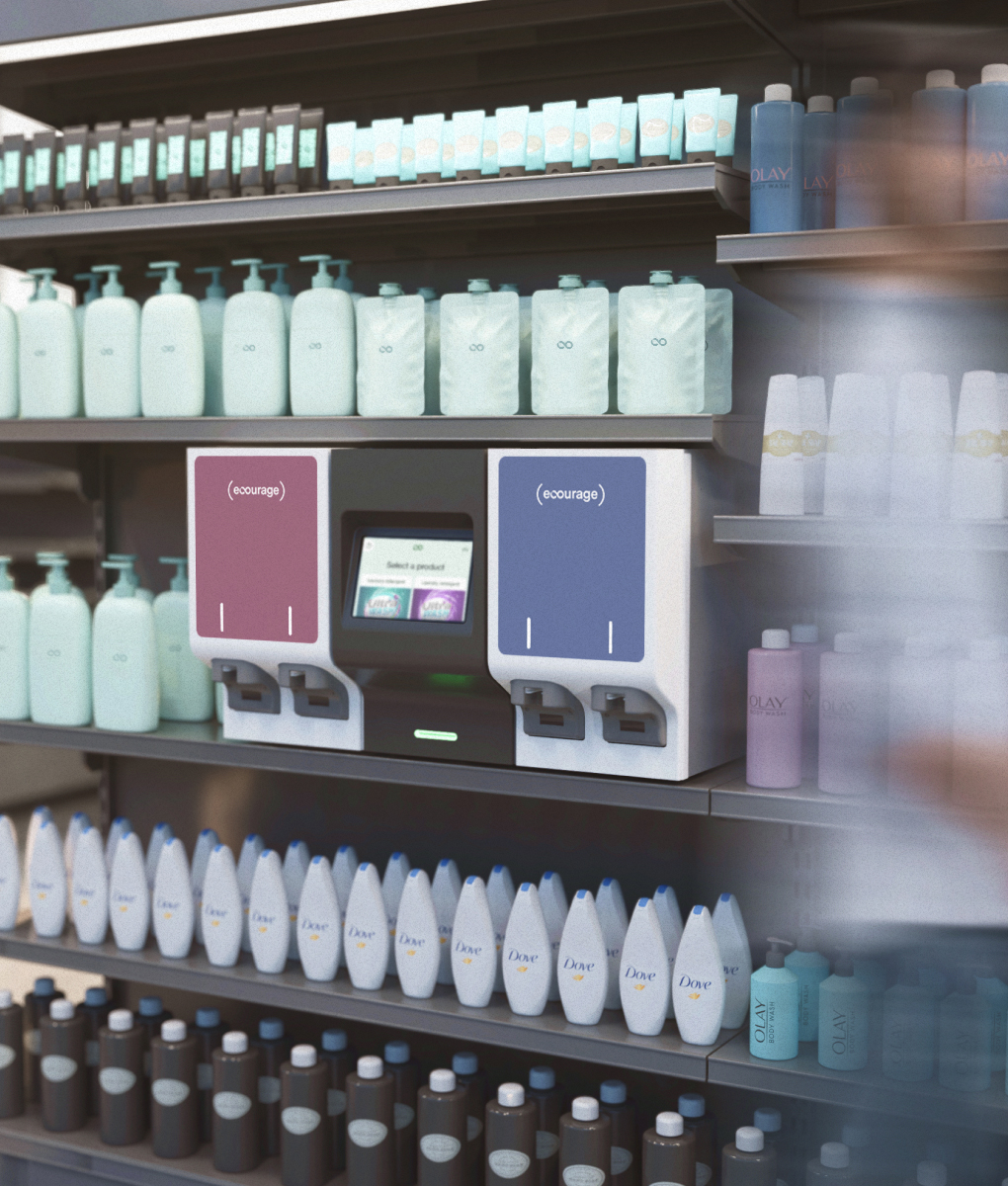
Another inspiring example comes from Dutch startup Ecourage, a service provider that builds smart refill machines.
The company enables both consumer brands and retailers to transition from single-use to reuse without building their own infrastructure. In addition, the system maximizes brand loyalty and creates something rare in packaging: a direct relationship with end-users, actionable data about product usage and disposal patterns. A value-adding model that New Zealand-based Ecostore is now even deploying in AEON retail locations across Japan.
The takeaway? Service providing platforms like Ecourage allow consumer brands to participate in the refill economy without developing their own infrastructure or technology. It's a lower-risk entry point into reuse models that can scale as regulatory requirements tighten.

Two paths, one portfolio.
Examples like these point to two distinct levels of ambition: product-level material substitution and system-level collaboration that redesigns how packaging flows through the economy. However, it's important to note that these paths are not mutually exclusive. In fact, they're interdependent.
Material substitution depends on system infrastructure. You cannot move to a readily recyclable material if there's no collection and processing capacity, as the Colruyt × Indaver partnership illustrates.
Proving recycling rates, which PPWR requires, demands collaboration across the value chain. Even the most straightforward material swap is embedded in a system.
This leads to the insight that should guide every consumer brand's portfolio strategy from now on: while most companies are currently looking at unsustainable materials, the unsustainable system is often neglected. Brands that are aware of this perspective can identify where incremental material changes suffice and where fundamental system redesign unlocks long-term value.
PPWR's staged implementation provides predictability that smart brands can leverage. Fighting one battle at a time, focusing only on material replacements for the next deadline, may look cheaper in the short term. In reality, it locks you into reactive, incremental adaptation. The real cost calculus favors working with partners across the value chain toward where the system is going, rather than making small redesigns every few years in response to each new deadline.
This is where an innovation partner with cross-value-chain experience becomes essential.
At Made, we work with brands, suppliers, retailers, and infrastructure partners to develop business models that account for the full system. Because PPWR compliance isn't just a packaging problem. It's a question of how your product reaches consumers, how materials flow back into the economy, and how value is created and shared across partners. No single player can solve this alone, and the brands gaining ground are those building coalitions now.
So what do consumer brands get in return?
Zooming in on the title of this article: PPWR changes the FMCG game, but the return on a compliance investment depends entirely on how you choose to play that game.
Consumer brands that treat PPWR as a procurement problem, swapping materials deadline by deadline, will get market access. Nothing more, nothing less. They'll remain in the game, but they won't gain any ground. And every few years, they'll face another round of adaptation, another scramble to meet tightening requirements.
Consumer brands that treat PPWR as a catalyst for system-level thinking will get something more valuable. They'll build proprietary infrastructure that competitors cannot easily replicate. They'll develop consumer relationships built around reuse and refill, creating customer loyalty and recurring engagement. They'll reduce material costs and logistics complexity, be it over time. And they'll accumulate data from connected packaging systems that informs smarter decisions across the business.
Consumer brands that treat PPWR as a catalyst for system-level thinking will get something more valuable. They'll build proprietary infrastructure that competitors cannot easily replicate. They'll develop consumer relationships built around reuse and refill, creating customer loyalty and recurring engagement. They'll reduce material costs and logistics complexity, be it over time. And they'll accumulate data from connected packaging systems that informs smarter decisions across the business.
Most importantly, they'll build strategic optionality. When requirements tighten in 2030, 2035, and 2040, these brands won't be reacting. They'll be accelerating, leveraging years of pilots, partnerships, and operational learning while competitors are still figuring out how to comply, again and again.
The European Commission promises that PPWR will create new business opportunities. We agree, but only for brands willing to see past plain compliance. The regulation rewards, in particular, those who redesign systems. Not just those who replace materials.At the end of the day, the investment is unavoidable. The return, however, is up to you.