A first-of-its-kind pilot called 'Repasys'.
Antwerp, Belgium - April 28th, 2026
Every week, millions of plastic mushroom trays move from Belgian supermarket aisles to household kitchens, where they get thrown in the bin to be collected for recycling afterwards.
That era is coming to an end, as a first-of-its-kind pilot called 'REPASYS' is putting in the effort to go from traditional recycling to actually reusable packaging. For mushrooms, to start off with, but for all other fruits and vegetables once the pilot is successful.
The 'REPASYS' pilot is located in the Mechelen region, where six of Belgium's largest retailers will test a fully circular packaging system together.
Let's dive into the story.

The packaging problem nobody wants to solve alone.
The EU's Packaging and Packaging Waste Regulation (PPWR) will ban single-use plastic packaging for fruits and vegetables under 1.5 kilograms by 2030. That deadline is four years away, and the infrastructure to replace billions of disposable containers does not exist yet.
The transition from single-use to reuse is not something any player can pull off in isolation. It demands alignment across growers, packaging producers, logistics operators, cleaning facilities, retailers, and consumers. It demands system design, and therefore some might even say it demands Made.
"The sector is not ready to switch to reusable packaging at scale," says Tom Domen, Made's Circular Innovation Catalyst, who played a key orchestrating role in the coalition that shaped this pilot. "There is no working business model yet. Building one not only takes time, but also the willingness to collaborate across company boundaries. Within this coalition, the willingness is there."
Mushroom magic.
The Reusable Packaging Coalition (RePaCo) was launched under the umbrella of the Flemish Green Deal Anders Verpakt. For the very first time in Europe, this coalition brings together six competing retail chains (Albert Heijn, Aldi, Carrefour, Colruyt, Delhaize, and Lidl) around the wonderful topic of 'mushroom baskets'.
The question rises: why start with mushrooms?
"On the one hand, the iconic blue mushroom tray is widely recognisable in Belgium. On the other hand, mushrooms are locally grown. This keeps the logistics chain short and traceable. And unlike sauces or biscuits, where every brand insists on its own bottle shape and labelling, nobody differentiates on how a mushroom basket looks. That makes harmonization and standardization possible," Domen explains. "It is the perfect starting point to prove that reuse can work, before scaling to other product categories."
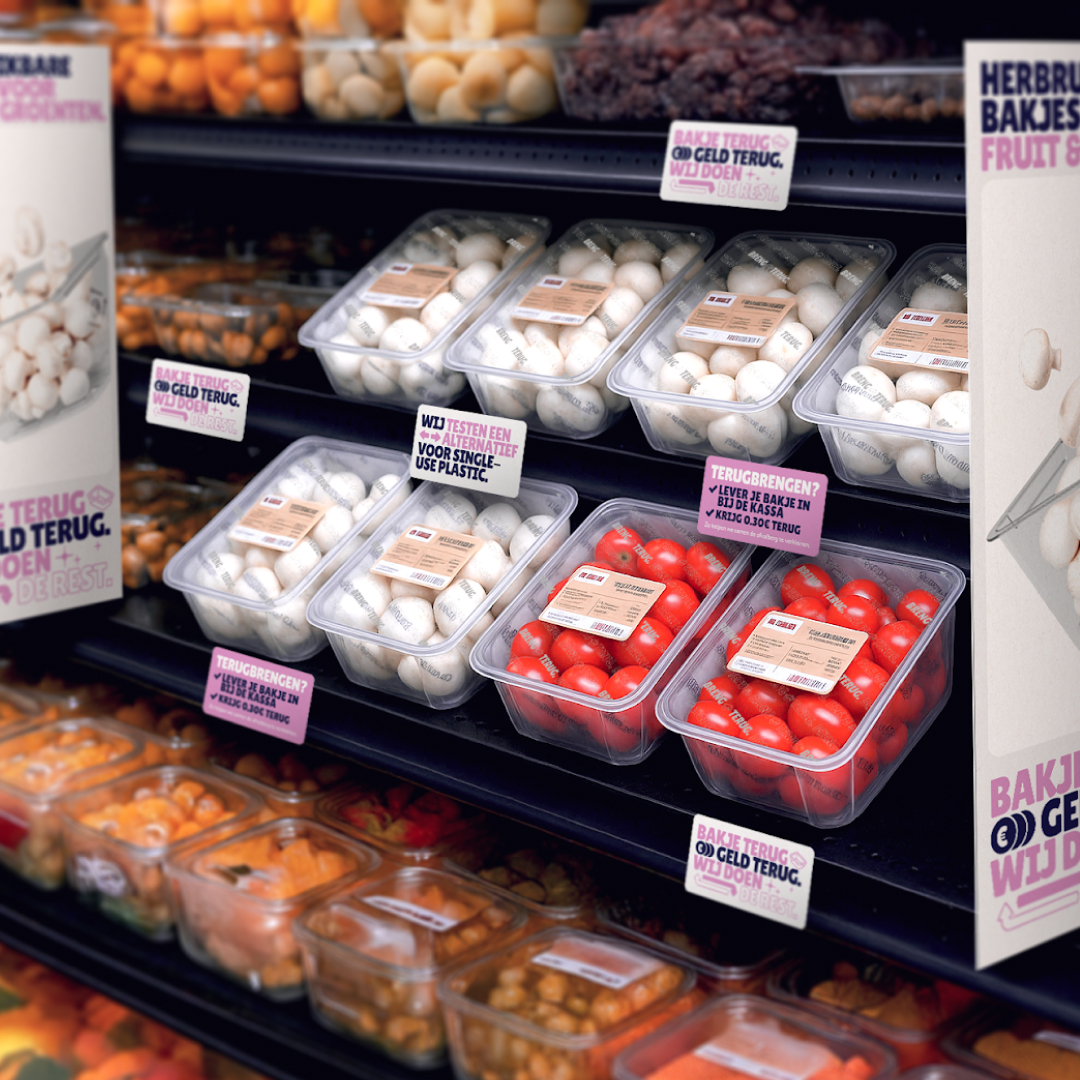
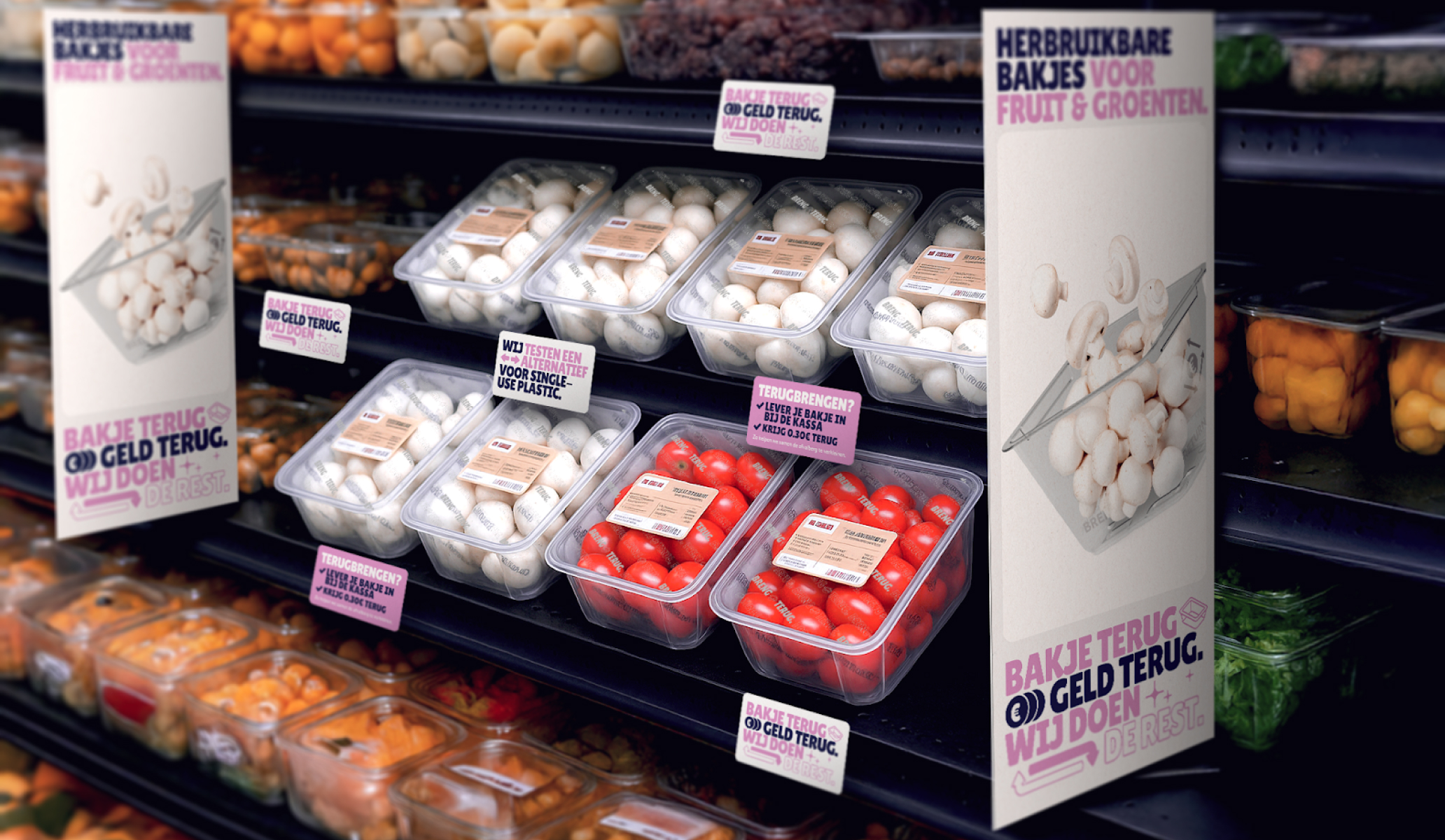
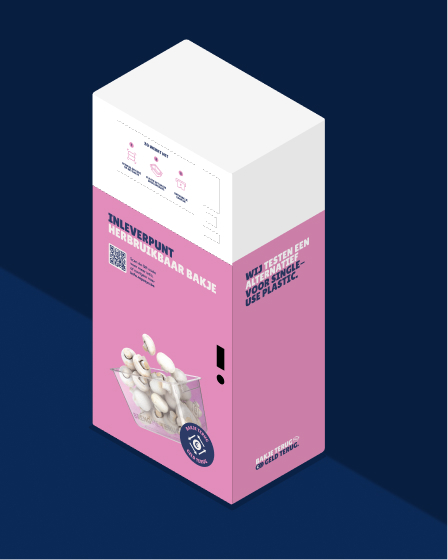
Since April 20th, consumers in the Mechelen region can buy mushrooms exclusively in reusable trays at participating stores across all six retail chains.
In comes the Reusable Packaging System coalition.
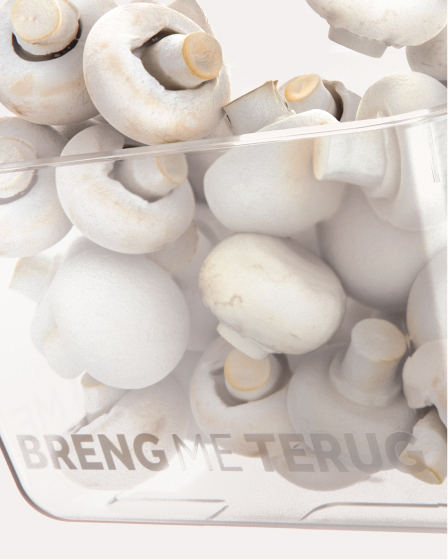
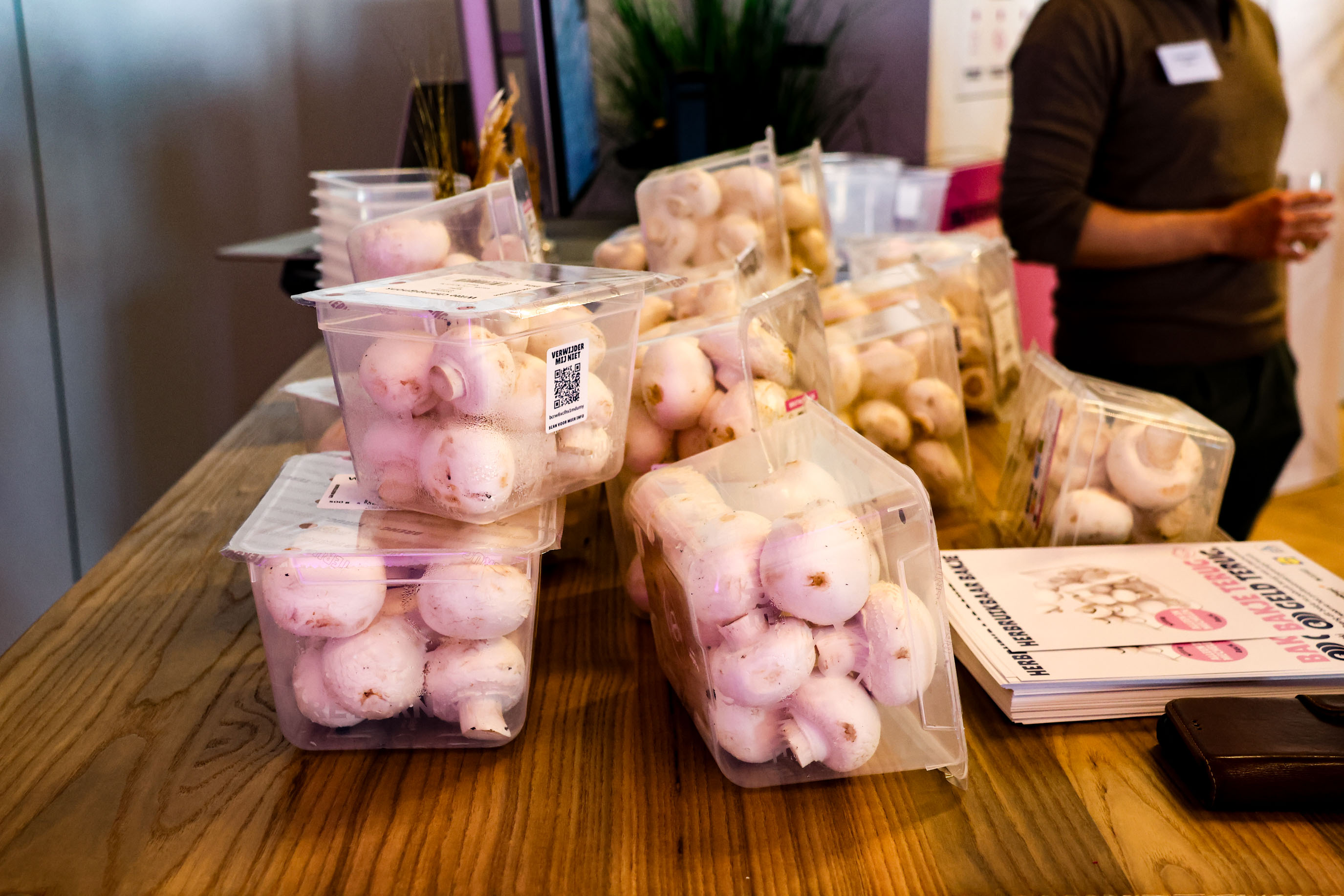
The RePaCo coalition has spent its initial phase developing a proof of concept: a sturdy, transparent polypropylene tray designed to replace the disposable blue basket. More than ten partners contributed expertise across the chain, from packaging production and mushroom growing to industrial washing, digital tracking, and logistics.
"Together, these partners confirmed that the new tray could match the speed requirements of the packaging line, survive industrial cleaning under strict hygiene standards, and be tracked through Rotion’s QR-based traceability system", Domen stresses. "And now it's time to test it in the REPASYS (Reusable Packaging Systems) pilot."
REPASYS is a collaborative project of spearhead clusters Flanders’ FOOD and VIL, supported by VLAIO, and carried out in collaboration with their strategic partner Pack4Food and academic partner University of Antwerp (REuseLab).

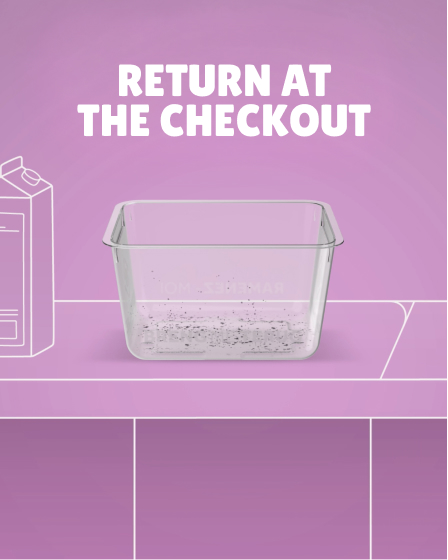
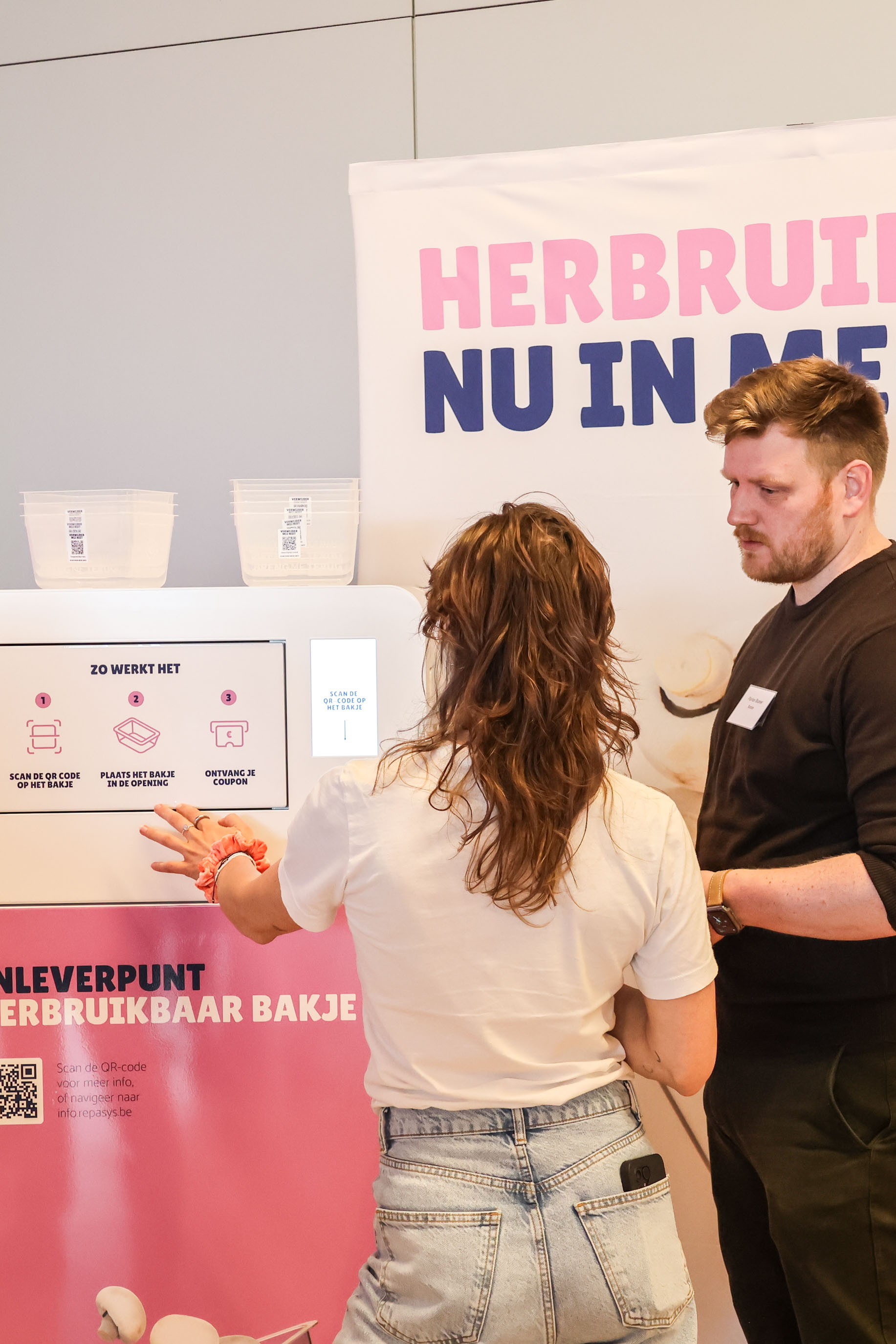
Since the week of 20 April, consumers in the Mechelen region can buy mushrooms exclusively in reusable trays at participating stores across all six retail chains. A deposit of €0.30 is charged at checkout. Consumers return the empty tray to any participating store, regardless of where they bought it, and receive their deposit back. The trays are then collected, industrially cleaned, quality-checked, and sent back to the growers for refilling.
That switch is not as straightforward as swapping one material for another. Food packaging serves essential functions: protecting product quality and safety from producer to consumer. Any reusable alternative must fulfil all of those, while also surviving repeated cleaning cycles and fitting into existing packaging line workflows. The proof of concept phase confirmed this is technically possible. The pilot will show whether it holds up in daily practice across an entire region.
Once consumers develop the routine of returning packaging for one product, the barrier drops for the next. Mushrooms today. Tomatoes, berries, and eventually an entire fresh produce aisle tomorrow.
"The tray works. The washing works. The logistics can be mapped," Domen says. "The real challenge will be changing consumer behaviour. People are conditioned to throw the tray away the moment they get home. A reusable container needs to come back intact. That is a completely different ask compared to crushing a can and tossing it in a bag. It requires a different approach to incentives, communication, and the in-store experience."
The pilot is designed to measure exactly that: return rates, dwell times, barriers, and the nudges that change habits. Alongside the behavioural research, REPASYS is generating data on logistical scenarios for Flanders-wide upscaling, the economic viability of reuse versus single-use, and granular tray circulation data that no pilot of this kind has produced before.

From Mechelen to Europe.
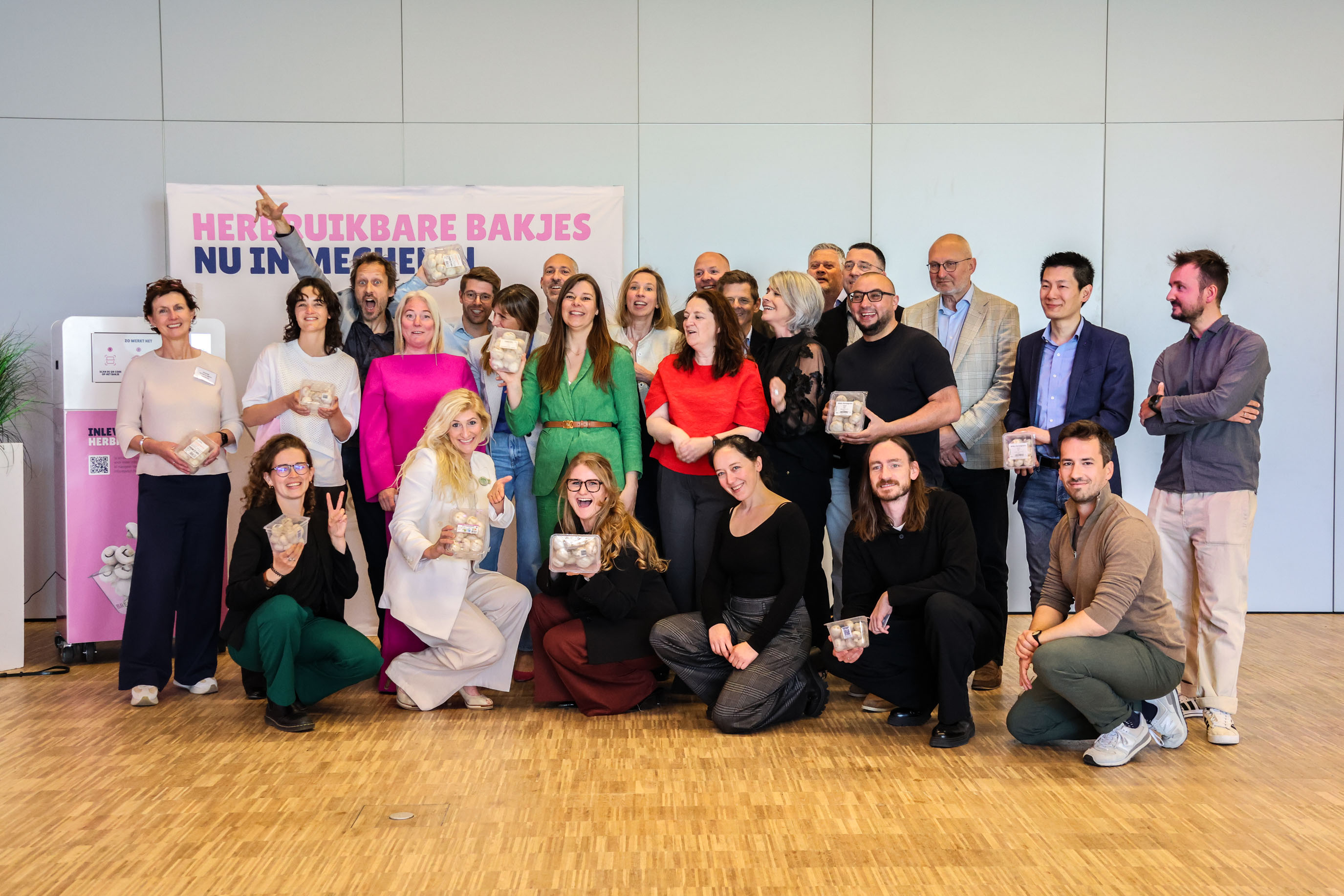
The REPASYS kick-off event took place on 28 April 2026 at Technopolis in Mechelen, bringing together the full value chain from grower to retailer, from cleaning operator to technology provider.
If the pilot succeeds, the model will extend to other vegetable and fruit categories, other regions, and ultimately to other countries watching Belgium lead. "Once consumers develop the routine of returning packaging for one product, the barrier drops for the next," Domen says. "Mushrooms today. Tomatoes, berries, and eventually an entire fresh produce aisle tomorrow. But you have to start somewhere, and you have to prove it works in reality, not in a presentation."
Reusable packaging will not replace single-use through good intentions. It will replace it through designed systems that make reuse as frictionless, affordable, and habitual as throwing something away. That is what REPASYS is testing. And that is why Made has been in the room since the beginning.