A new AI partnership is born.
Antwerp, Belgium - April 22nd, 2026
Kringwinkel Antwerp recently launched Belgium's first AI-powered sorting system for second-hand textiles. At Made, we partnered with Kringwinkel to make that happen.
During an intensive collaboration, we analyzed their end-to-end operations, designed a scalable digital infrastructure, and modeled a solution that integrates AI seamlessly into Kringwinkel’s sorting workflow.
The launch signals a new chapter for both Kringwinkel and circular retail: one where AI handles the repetitive work giving lifecycle extension an unprecedented boost in terms of scale, speed and impact.

Drowning in donations (and fast fashion's leftovers).
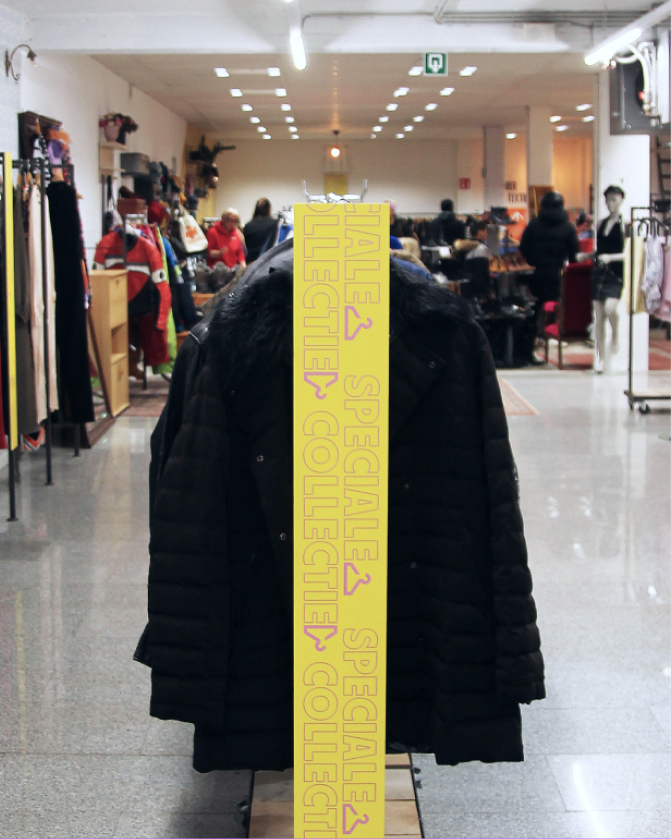
Kringwinkel is a chain of non-profit second-hand shops in Flanders. The organization sits at the intersection of social enterprise and circular economy as they provide jobs for people distant from the labour market while keeping vast quantities of goods out of landfill. It's a lifecycle extension model that works on multiple levels. Perhaps even too well.
"We are in the midst of a social trend in which enormous amounts of textiles are being produced, purchased and resold at unprecedented speed," explains Kathleen Hoefnagels, Kringwinkel's Commercial Director. "Consequently, as a second-hand store, we have to process more and more clothing, which puts increasing pressure on our business model.”

Volume, however, isn't the only pressure. The fashion market is increasingly flooded with cheap, low-quality textiles, which is a direct consequence of fast fashion's relentless production cycle. For organisations like Kringwinkel, this means the percentage of quality donations that are actually still suitable for recommerce is shrinking, while the effort required to sort through the piles keeps growing.
“Every donated item needs evaluation, sorting, damage checks, and eventually preparation for resale. All of it is manual work by default, but the bottleneck was becoming impossible to ignore. It has become a squeeze that already pushed many textile resellers into serious trouble or outright bankruptcy. At Kringwinkel, we decided to take matters into our own hands by partnering up with Made, amongst others, to rethink our business model."
The arrival of this smart machine was like the perfect moment for Kringwinkel Antwerp to kick off ecommerce. The webshop expands our geographical reach and grows the positive impact we have on textile lifecycle extension and waste reduction.
Enter the AI sort supply.
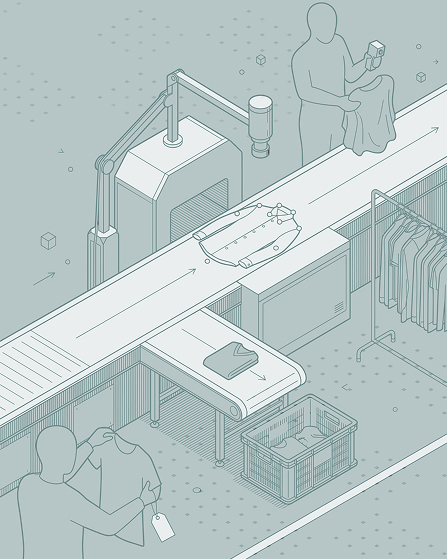
The collaboration between Made and Kringwinkel Antwerp resulted in a full end-to-end exercise to design a smart textile sorting line for the facility in Merksem (Antwerp), integrating both existing and new technologies.
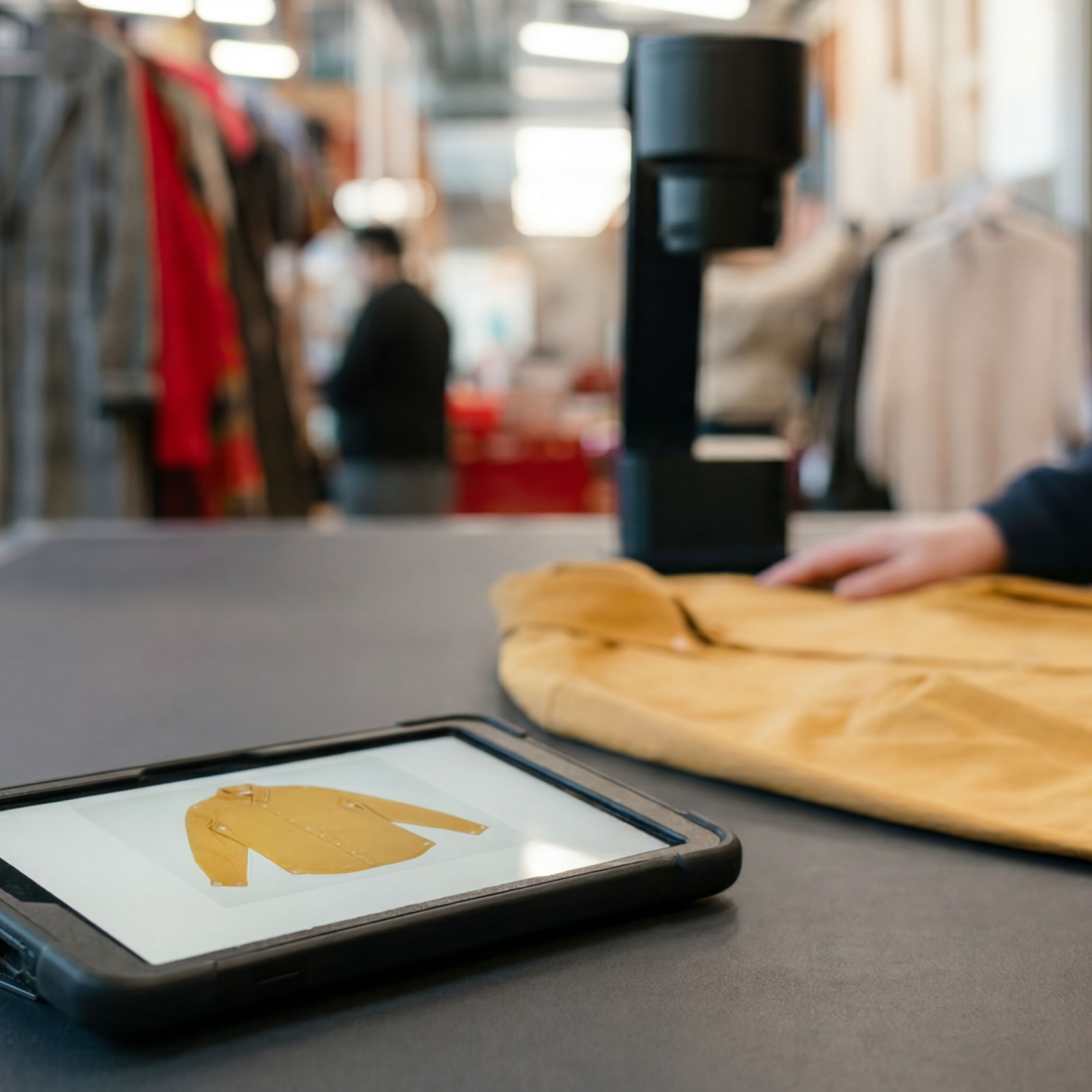
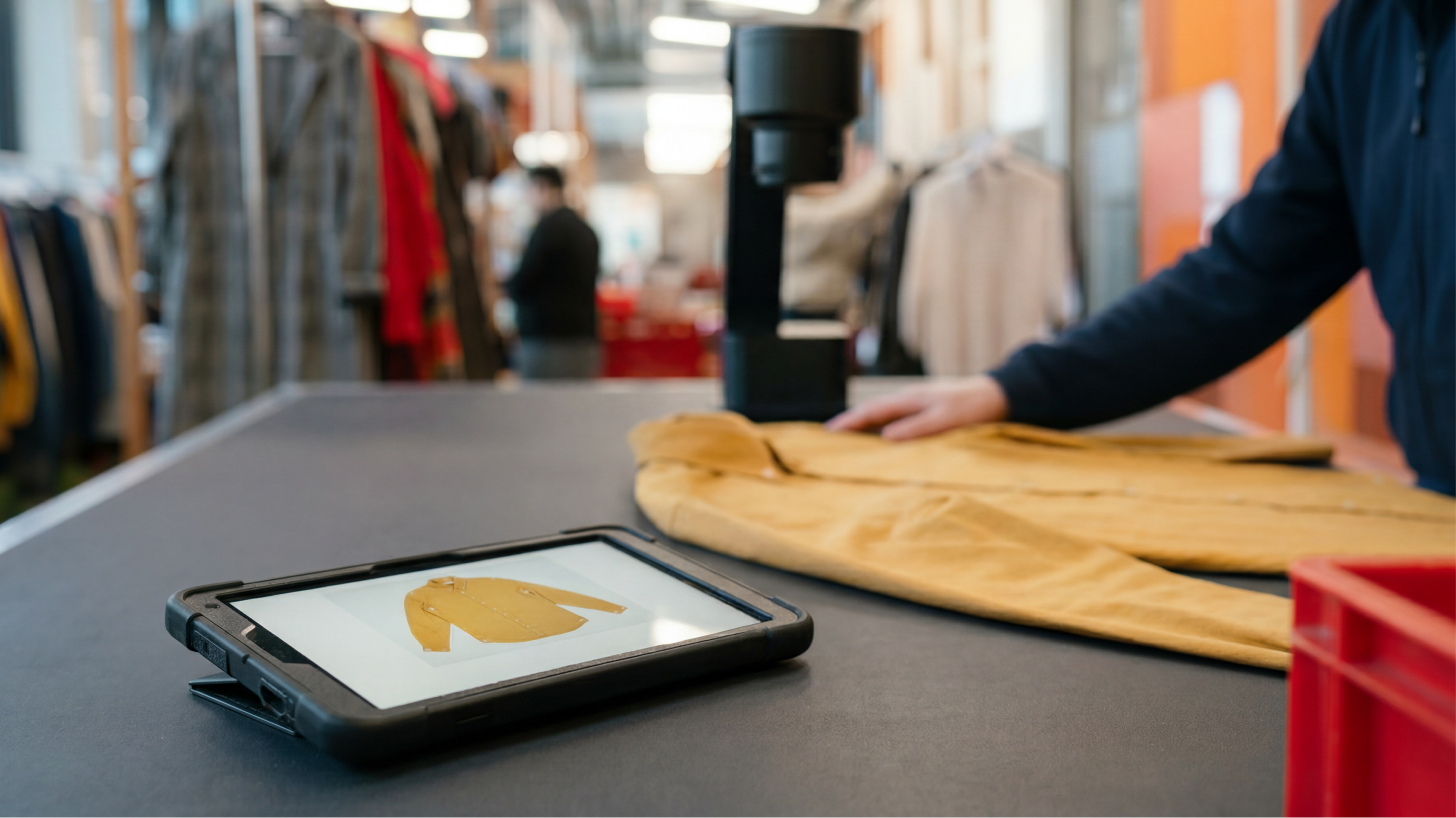
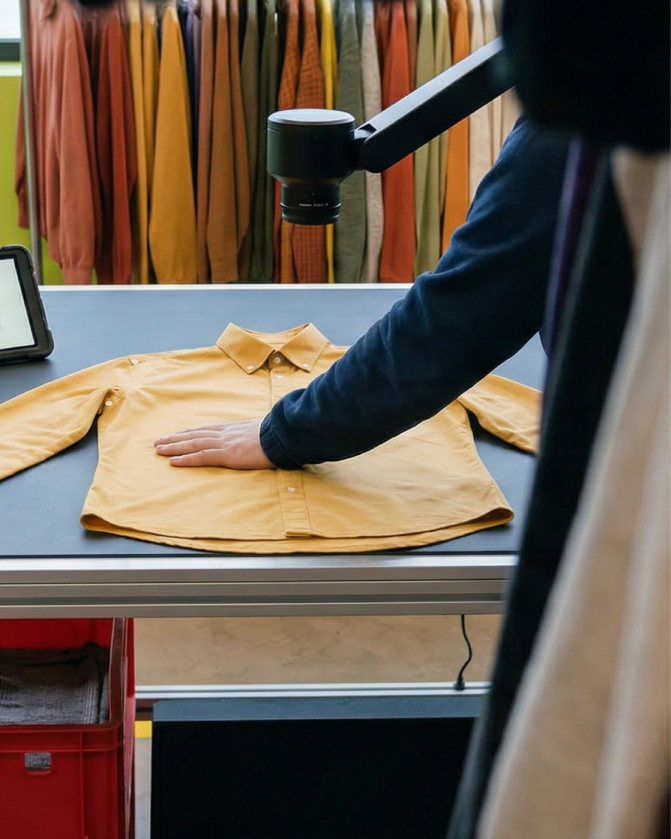
"We’ve been able to replace the majority of manual activities with automated workflows”, explains Lieven Van Ermengem, Head of Innovation and Sustainability at Kringwinkel Antwerp. “What would otherwise have been a slow and labour-intensive manual process is reduced to a fraction of the time by integrating Trosort AI. This system scans preselected garments with NIR (Near-Infrared) to identify brand and size, determine material composition, flag damage, all in seconds."
"In addition, the items are photographed automatically in high definition on both sides. The system then auto-identifies the key sales attributes, including suggested price. Once validated, the product information can be published to our first ever webshop with a single click. The arrival of this smart machine was like the perfect moment for Kringwinkel Antwerp to kick off ecommerce. The webshop expands our geographical reach and grows the positive impact we have on textile lifecycle extension and waste reduction."
The machine doesn't replace workers, though. “It redirects their energy. Staff who used to spend hours on repetitive tasks can now focus on quality judgment, customer service, and the treasure-hunt experience that keeps people coming back to physical stores.”
Previous attempts to digitize the process had stalled at a half-hearted proof of concept, with no clear path toward scalability or measurable impact. AI played a central role in making this one happen.
From complexity to clarity: where Made came in.
In recent years, Kringwinkel and Made worked together on a number of sustainability projects. One of them is ReUse In Style, a three-year research project in which a consortium of industry players worked together around expanding the lifespan of clothing and footwear. That's where the complexity of a second-hand sorting line was addressed.
"Previous attempts to digitise the process had stalled at a half-hearted proof of concept, with no clear path toward scalability or measurable impact," says Tom Domen, Circular Business Catalyst at Made. "AI played a central role in making this one happen. Beyond the technology itself, mapping out which solutions make sense within an end-to-end approach was another crucial aspect of the collaboration. From a business design standpoint, we translated the solutions into a realistic, phased roadmap toward implementation.”

The system is currently in a validation phase, and the full data structure to power an end-to-end operation still needs to be built out. But the foundation is there and with it, the potential to scale into a system that can genuinely compete with international recommerce platforms.
“This capability opens up an interesting strategic opportunity”, says Domen. “Fashion brands have long struggled to resell their own reclaimed collections as their operations are built around moving identical items in bulk, not handling thousands of unique pieces. Kringwinkel, with its new infrastructure for processing individual garments at scale, could become the ideal partner to facilitate brand resale programmes.”
The treasure hunt continues.
For the circular retail sector watching from the sidelines, the message is straightforward. AI can play a meaningful role in scaling operations. But only when implementation is thoughtful, architecture is solid, and technology serves the mission rather than the other way around.
And at Made, we bring the expertise to make it happen.