Executive summary
Antwerp, Belgium - January 18th, 2026
The fashion industry, typically characterized by the 'fast fashion' model, delivered decades of aggressive growth. However, its economic foundations are eroding. Tightening EU regulations, rising operational costs, and shifting consumer loyalty are rendering the linear "take-make-waste" model increasingly risky. At Made, we see an industry ripe for reinvention, but the path forward has always lacked data.
That’s why, over the last three years, Made has orchestrated a 'ReUse In Style' Living Lab to move beyond theory and execute a rigorous stress test of circular business models in the real world. In collaboration with major retail partners, including Decathlon and JBC, and supported by the University of Antwerp, we tested what actually drives consumers to maintain, repair, and resell footwear and clothing.
Our findings reveal that "lifecycle extension" is not just an environmental love story. It's a value opportunity ready to be captured by forward-thinking fashion brands.
The ReUse In Style Living Lab identified three commercial levers that have always been underutilized: Quality Perception, Repair Accessibility, and Emotional Attachment. Brands that activate these levers will stop value from leaking into landfills and simultaneously generate new revenue streams that secure a competitive advantage for the decades ahead.
Why the linear model is obsolete.
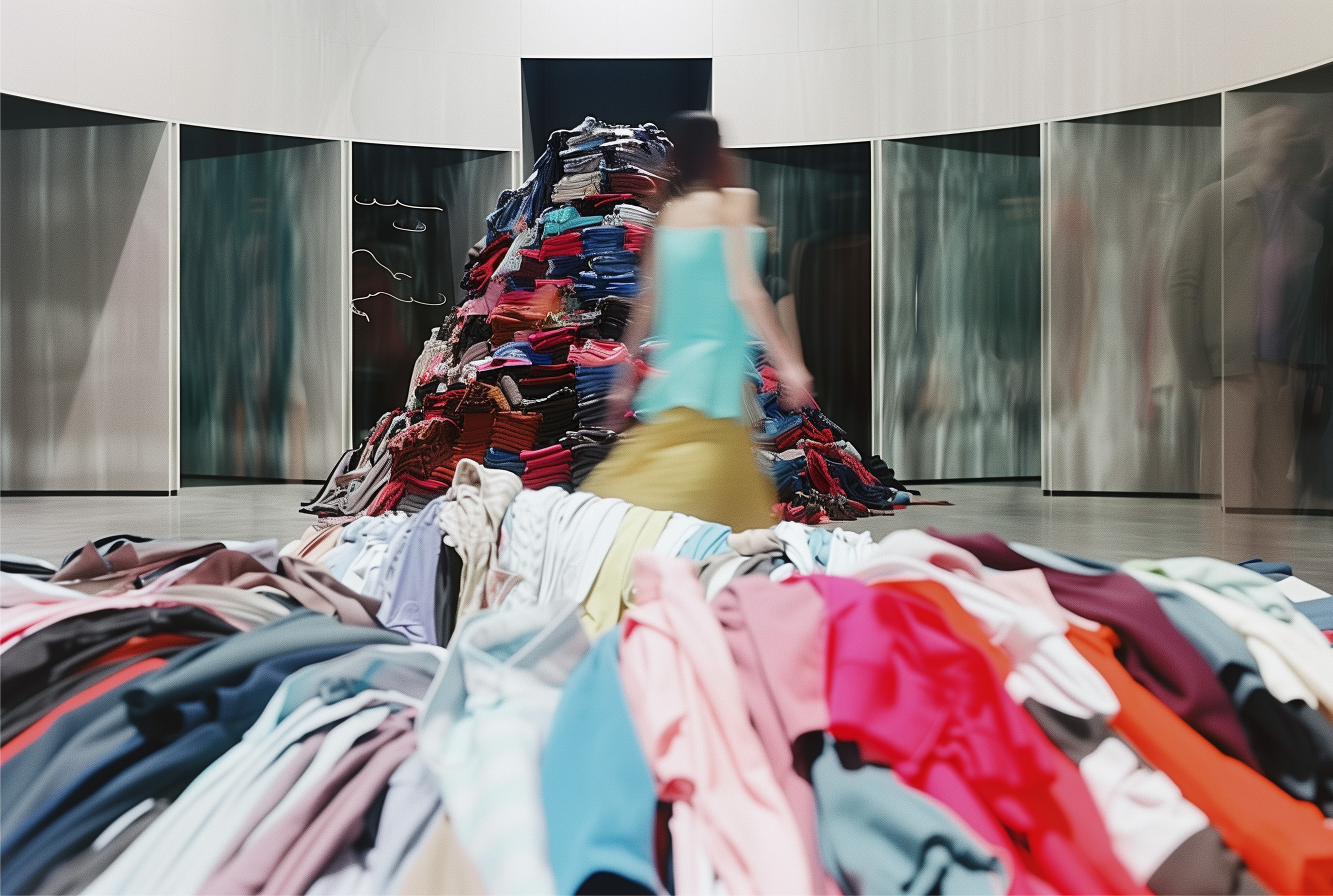
Let's kick off this story with a staggering statistic that should keep fashion executives awake at night: according to the Ellen MacArthur Foundation, a truckload of textiles is dumped in landfills or incinerated every single second.
Not every day. Every second. Let that sink in.
Meanwhile, UNEP reports that consumers are buying 60% more clothing than they did two decades ago and wearing each item for half as long.
These numbers are exemplary for the legacy of fast fashion. The business model is built on rapid production cycles, rock-bottom prices, and often disposable quality, designed to move high volumes of trend-driven clothing from factory to consumer at high speed.
For decades it worked brilliantly, though. Now, the model that built billion-dollar empires is threatening to bury them. Incoming EU textile regulations, shifting consumer expectations, and mounting evidence of environmental damage are converging into a perfect storm. The question for leadership teams in the fashion industry is no longer whether to transform the business model. It's more of a question who transforms first and eventually leads the industry in the next decades.
xxxx
Inside the ReUse In Style Living Lab.
In 2022, Made joined forces with University of Antwerp's REuse Lab to lead a VLAIO-funded Living Lab that would test, rather than theorize, about lifecycle extension in fashion. Project partners like Decathlon, Schoenen Torfs, and JBC, brought real stores, real customers, and real stakes to the table.
The core reasoning behind the project challenges conventional sustainability thinking: durable clothing isn't just a question of how clothing is made, but primarily one of how users value, use, maintain, and repair it.
Three years of research made one thing clear: lifecycle extension is not a technical optimization that can simply be bolted onto existing business models. It is fundamentally a behavioral and systemic challenge.
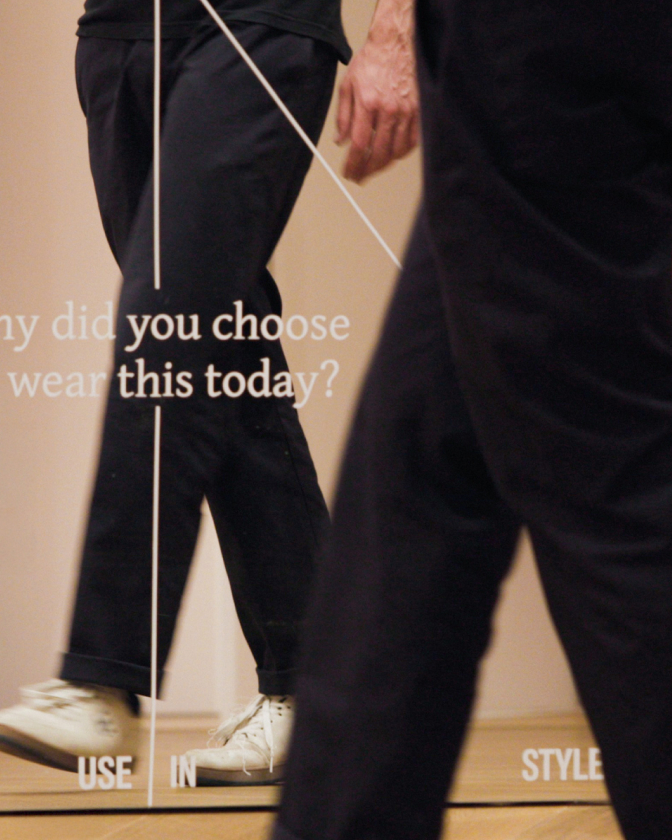
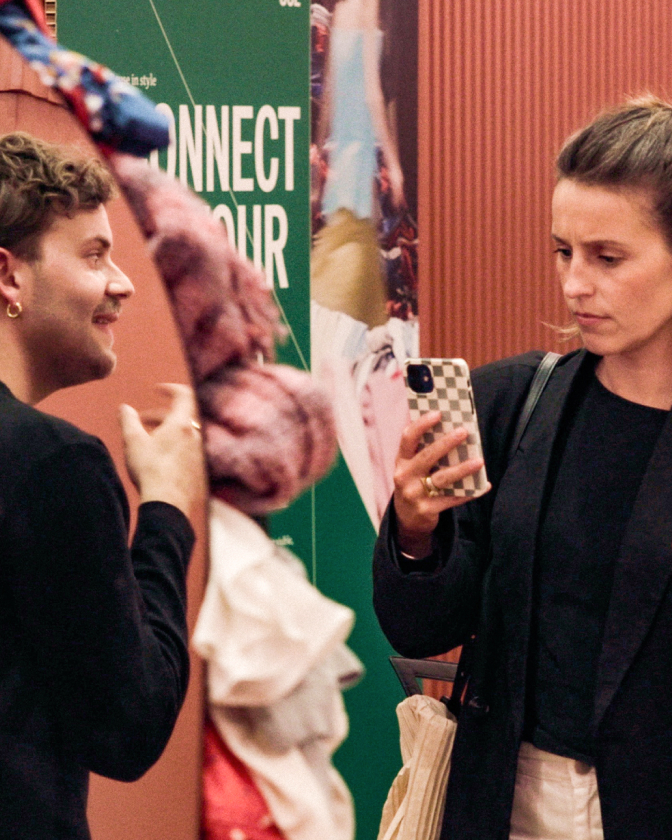
Within the Living Lab, we brought together retailers, researchers, designers, social economy actors, government, and consumers to run experimental interventions and field experiments testing which design choices, services, and communication forms actually lead to longer clothing use.
The project architecture was built around four interconnected pillars, resulting in 5 different projects and 21 experiments. Each of them generated insights that translate directly into circular business model opportunities.
Quality perception is a lever for circular behavior.
Circular business models only work when consumers have confidence in product quality. Without this degree of trust coming from ‘quality’, consumers won't pay more for durable items. They won't invest in repairs. They won't buy secondhand. Quality perception is therefore a crucial lever for circular behavior.
Our research, however, revealed that there is a difference between actual quality and perceived quality. In addition, it addresses the gap that the fast fashion model has long exploited: consumers struggling to identify real "technical" quality.
Because technical quality exists. Seam strength, pilling resistance, colorfastness: these are measurable and meaningful parameters that make an honest assessment about product quality possible. However, they're largely invisible at the point of purchase. Consumers can't assess stitching density by looking at a garment on a hanger. They can't evaluate fabric durability by touch alone.
Fast fashion thrives in this information gap, selling low-quality items that look and feel acceptable in the store but deteriorate quickly in use. This creates an opportunity for forward-thinking brands: educate consumers about identifying real (technical) quality, building trust that fast fashion cannot match.
But there's a second dimension to it. Consumers also value clothing based on their own subjective parameters, regardless of actual technical quality. Think about how textiles feel against the skin. Whether they flatter. How they fit into their sense of identity. These factors determine whether a garment becomes a wardrobe staple or a forgotten impulse buy.
Understanding how and why consumers allocate this value holds a key to extending product lifecycles. Brands that grasp these subjective drivers can design, present, and communicate products in ways that foster lasting attachment.
The circular business model implication of ‘the quality assessment paradox’ is that brands must work on both fronts.
- First, close the information gap by making technical quality visible and understandable. This can be achieved through labelling, in-store education, or transparent sourcing.
- Second, understand and appeal to the subjective parameters that drive emotional value.
Brands that do both will earn loyalty that transcends price, turning customers into advocates for longevity over disposability.
xxxx
Emotional attachment as a driver of product longevity.
Apart from the directive to focus communications on both technical and perceived quality parameters, the most commercially applicable finding involves the power of emotional attachment.
Experiments demonstrated that value emerges when people are actively invited to reflect on their clothing. It’s the element of (self-)reflection that increases the likelihood of behavioral change. Currently, this is generally underutilized while people actually want to be involved in caring for their clothing. However, brands rarely facilitate this. When they do, through storytelling, provenance, or personal history, the results are striking.
For secondhand merchandise, identical items with backstories dramatically outperformed anonymous goods. Imagine a hiking boot labelled: "These climbed Kilimanjaro in 2019." That narrative transforms a used product into a coveted artifact. Presentation reinforces this effect: clothing displayed on mannequins and racks scores significantly better than items in bins or on shelves. Piles signal disposal, you know?
The circular business model implication here is that resale and secondhand channels become viable profit centers when brands invest in storytelling and presentation. Product passports, wear histories, and curated secondhand collections create real value. The emotional dimension of clothing, long exploited by marketing departments to drive new purchases, can be redirected to extend product life.
Care and repair must shift from afterthought to core service.
For decades, the fashion industry's relationship with customers ended at the point of sale. That model is becoming obsolete.
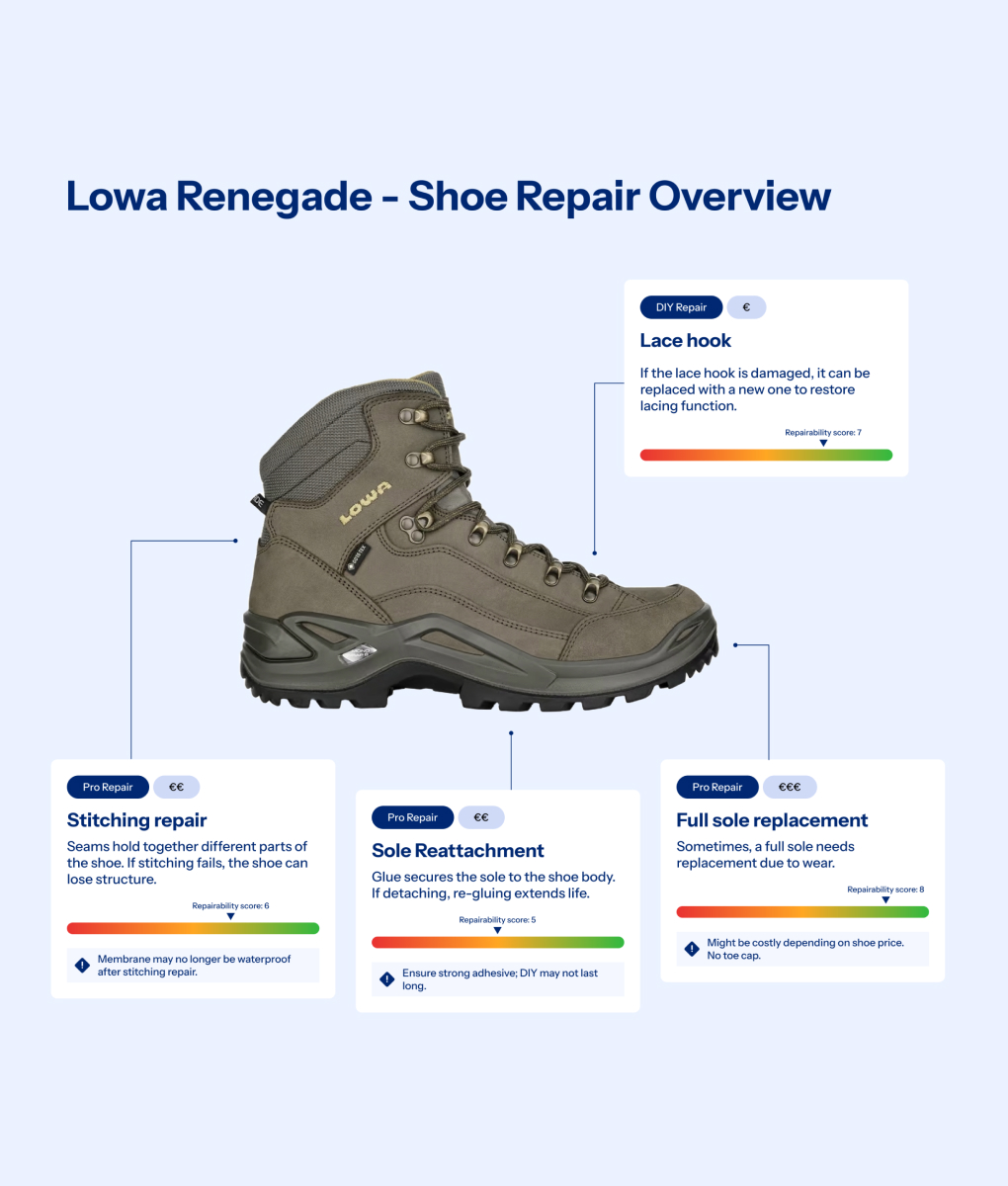
EU legislation is increasingly pushing brands toward extended producer responsibility, making them accountable for products throughout their lifecycle. But beyond compliance, there's a commercial opportunity: care and repair services, when built in as standard offerings, deepen customer relationships, extend product life, and capture value that currently leaks to third parties or landfill.
Our research revealed critical barriers to unlocking this opportunity. Price remains the biggest obstacle to repair: consumers who buy affordable products are least likely to repair them, because repair costs approach replacement costs. Yet these same consumers often want to repair, citing environmental concerns and emotional attachment. Motivation isn't the barrier, but friction is. Having said that, consumers will pay for repair, but only when the price stays below 30% of the new item cost.
Maintenance presents a similar dynamic. We significantly over-wash our clothing, degrading quality and shortening product life unnecessarily. Brands that help consumers care for their garments, through washing guidance, freshening services, or product-specific maintenance tools, extend product life while transforming one-time transactions into ongoing relationships.
The circular business model implication: care and repair must shift from afterthought to core service. This requires clear pricing (below the 30% threshold), visible and accessible service points, and credible expertise. Brands that professionalize these services will build recurring revenue streams while capturing customer loyalty that pure-play retailers cannot match.
xxxx
Digitalization professionalizes secondhand market.
A traditional retail model deals in bulk: containers of identical items flow from factory to warehouse to store. Circular models, however, deal in units. Each returned, repaired, or resold item is unique, with its own condition, history, and value. Managing this at scale without digital infrastructure is impossible.
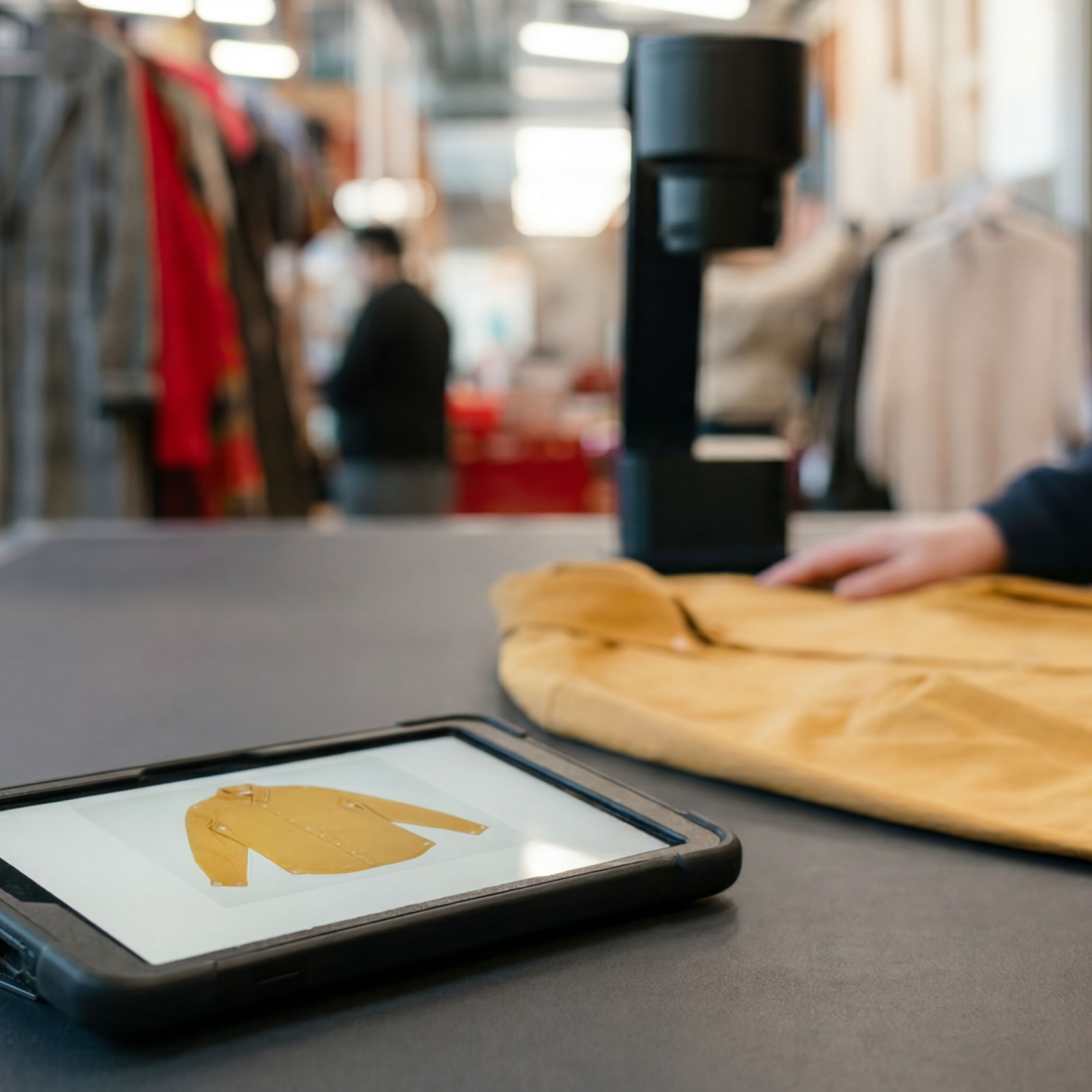
Our research confirmed this challenge and pointed toward solutions. Automated sorting at item level is feasible and forms the foundation for scaling secondhand operations. Artificial Intelligence - yes, here we have it - can grade conditions, categorize products, and route items to the most valuable next destination, whether resale, repair, recycling, or donation.
Technology alone isn't enough, though. Online secondhand channels expand reach, yet conversion depends heavily on presentation: packshot quality is decisive. A poorly photographed item won't sell, regardless of its actual condition. This creates labour intensity around photography and quality control that must be factored into unit economics.
The business model question here becomes "margin versus volume". High curation and presentation command better prices but limit throughput. Lower curation scales faster but compresses margins. There is no single answer and the right model basically depends on brand positioning and customer expectations.
What's universal is the need for feedback loops: data from sorting, sales, and returns must flow back to sourcing and design teams to continuously refine what gets collected, how it's processed, and what sells.
The Living Lab has proven that digital infrastructure isn't a nice-to-have when it comes to making the indsutry more circular. Digital infrastructure is more like a prerequisite for circular economics at scale. Think AI-powered sorting, consistent quality grading, and itemized tracking enabling the operational efficiency that makes resale and repair viable beyond pilot projects. Without digitalization, circular initiatives remain boutique experiments. With it, they become a core business.
The strategic takeaways for fashion brands.
Three years of Living Lab research have taught us that the transition from linear to circular fashion isn't primarily a supply chain problem or a materials problem. Perception and behavior are core to the problem, with the relationship between brands and the people who wear their products as the context.
A crucial insight that emerged across our research is that loyalty in a circular context is fundamentally different from fast fashion loyalty. In a circular model, loyalty is not about repeat purchases. It's about continuing to care, repair, and return. Here, loyalty becomes relational rather than transactional.
In addition, not all customers attach value to clothing in the same way. Some value it functionally, others economically, others emotionally, and others as an expression of identity. Companies that recognise and acknowledge these differences can tailor their offerings accordingly, through repair, care, resale, or guidance on use and maintenance. Those who best understand how their customers value clothing are also best positioned to capture the benefits of a circular value chain: stronger customer relationships, new service categories, and recurring revenue streams.
The fashion brands that will lead this transition understand that product quality and perceived quality are two different things, and that both must be addressed simultaneously. They recognize that consumers aren't passive recipients of sustainability messaging but active participants who want to be involved in caring for their clothing, if only brands would invite them.
They see repair not as an afterthought or a cost centre but as a service category that demands the same professionalization as sales, with clear price thresholds (below 30% of replacement cost), accessible touchpoints, and credible expertise.
They know that secondhand isn't a discount bin but a storytelling opportunity, where provenance and presentation can transform used goods into coveted items. And they accept that none of this works in isolation: circularity requires unprecedented collaboration across the value chain, from designers to social economy partners to repair professionals.
The sector must evolve from fast fashion to value-based fashion. This means moving from selling items to stewarding wardrobes, from driving consumption to enabling longevity.
The path forward.
As a closing statement, it's important to frame the Living Lab’s ambition correctly.
The Living Lab did not set out to make the entire fashion value chain circular in the wink of an eye. That ambition is too complex for any single initiative. What we did was break the transition into workable levers within the usage phase of clothing and footwear: trust in secondhand, emotional value and meaning, the role and positioning of repair, and scalability through data and technology. Together, these elements lower barriers, reduce risk, and remove uncertainty, without pretending to solve the entire system.
For the industry, this means that circular transition isn't an all-or-nothing proposition. It's a sequence of targeted choices that together create impact.
For policymakers, our research demonstrates the importance of creating space for experimentation. Many of the solutions we tested exist in a tension between societal value and economic viability. Policy frameworks that recognize and support this middle ground make it possible for innovation to mature before it is scaled or regulated.
Our research now serves as a proven foundation, tested in real stores with real consumers, that offers concrete guidelines for any business willing to reshape its linear model into a circular one. The interventions have been designed, tested, and measured. The consumer barriers have been mapped. The business model alternatives have been explored.
What the Living Lab ultimately leaves behind is a shift in perspective. Circular fashion doesn't begin with the product. It begins with the relationship between person and clothing. Lifespan is not a property of an object but the result of care, recognition, and context. When industry and policymakers take up that responsibility together, space emerges for a fashion sector that is not only more efficient, but also more caring and more resilient.


small.jpg)