The next FMCG battleground is in the AI isle.
Antwerp, Belgium - March 12th, 2025
By Tim Van den Bergh, Director of Consumer Goods & Health
Let's imagine it’s Thursday night and your 8 y.o. son's birthday is planned for Saturday. The only problem: it's not planned yet.
With blood pumping through your veins, only minutes away from a panic attack, you open your chatbot:
“Plan a hot dog party for 12 kids. Budget €60. No nuts. No artificial colors. Deliver before 10:00 on Saturday.”
The chatbot or 'AI shop assistant' returns a complete basket in a matter of seconds.
“Want me to check out?”
No browsing. No aisle. No shelf. But imagine you’re the ketchup brand in that cart. Are you part of the basket because you built decades of brand equity, or because you were the cheapest, most available brand, with the highest margins, the sponsored one perhaps, or simply the most delicious one?
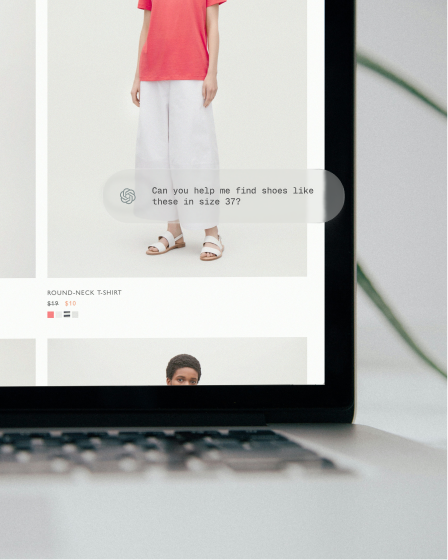
Welcome to the next consumer products battleground: the AI aisle, because that's where CPG is about to lose customer interaction. The AI chatbot is becoming the place where people decide, and increasingly, where they buy. A tendency that creates a new gatekeeper; one that forces brands to become clearer on their claims, more provable as well, and more machine-readable than ever.



The new gatekeeper.
“Decode the basket. Own the shelf.” has always been our mantra at Made when it comes to consumer insights within the FMCG space. And yes, even in this AI age, it still is.
However, further away from the shelf itself, the next frontier is quickly taking shape. Because AI is making the world behave very differently.
And yes, grass is green and water is wet.
But for FMCG brands, for instances, 'decoding the basket' is moving towards 'decoding the prompt' and it really changes how the game is played.
The chatbot changes who decides on what actually gets thrown into the basket. And when the shopping experience moves from supermarket aisle to a conversational yet distant "chatbot" interface, the “shelf” becomes more like a backend system. And whoever controls the interface actually controls the backend system, and thus decides what gets into the basket and what doesn't.
When shopping moves into a conversational yet distant 'chatbot' interface, the 'shelf' becomes more like a backend system. Whoever controls the interface, controls the basket.
When answers become transactions.
What FMCG brand should pay attention to, is that these AI assistants are turning into commercial platforms.
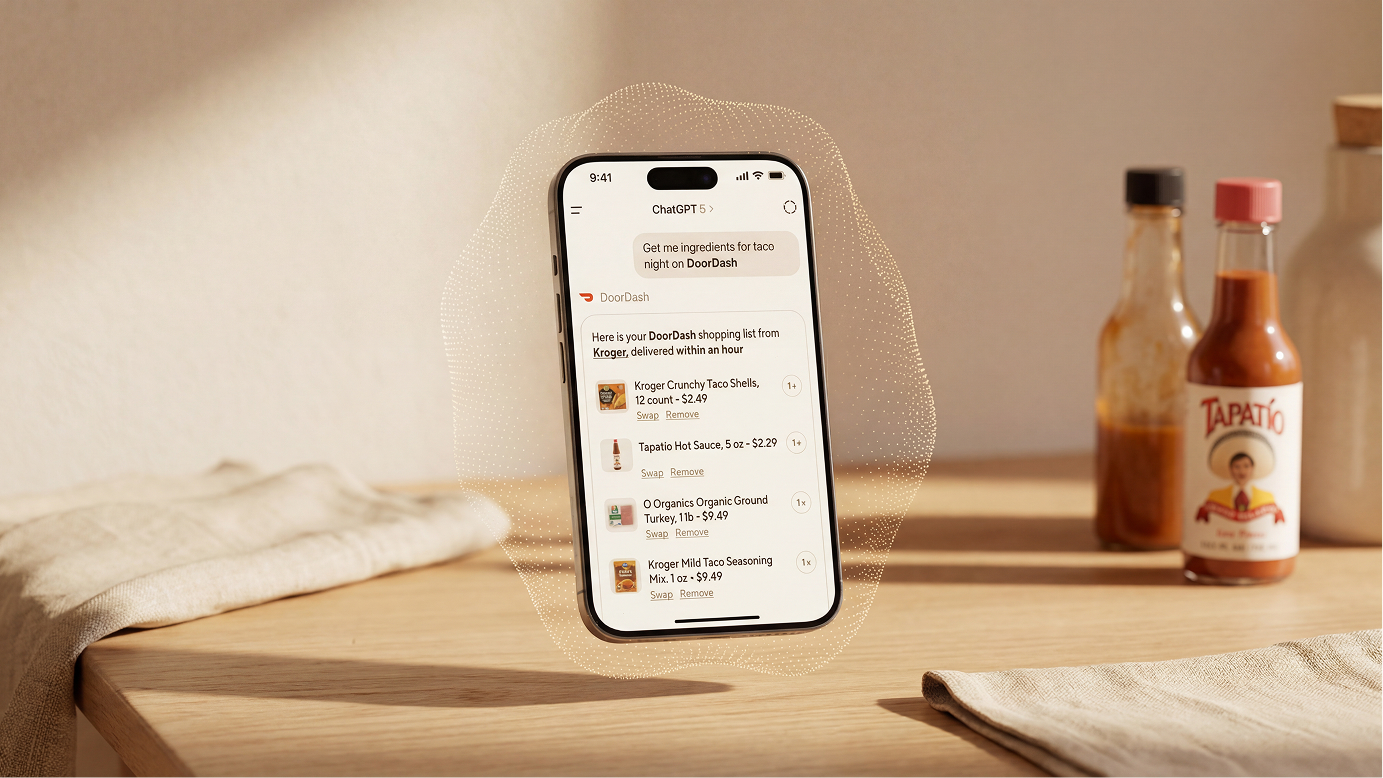
Looking into what's actually happening in the market, we're seeing OpenAI describing plans to test ads in ChatGPT. It has announced Instant Checkout, built with Stripe, so a user can buy without leaving the AI conversation.
Retailers are plugging into that flow; Walmart has publicly announced a partnership with OpenAI to enable shopping through ChatGPT using this Instant Checkout feature.
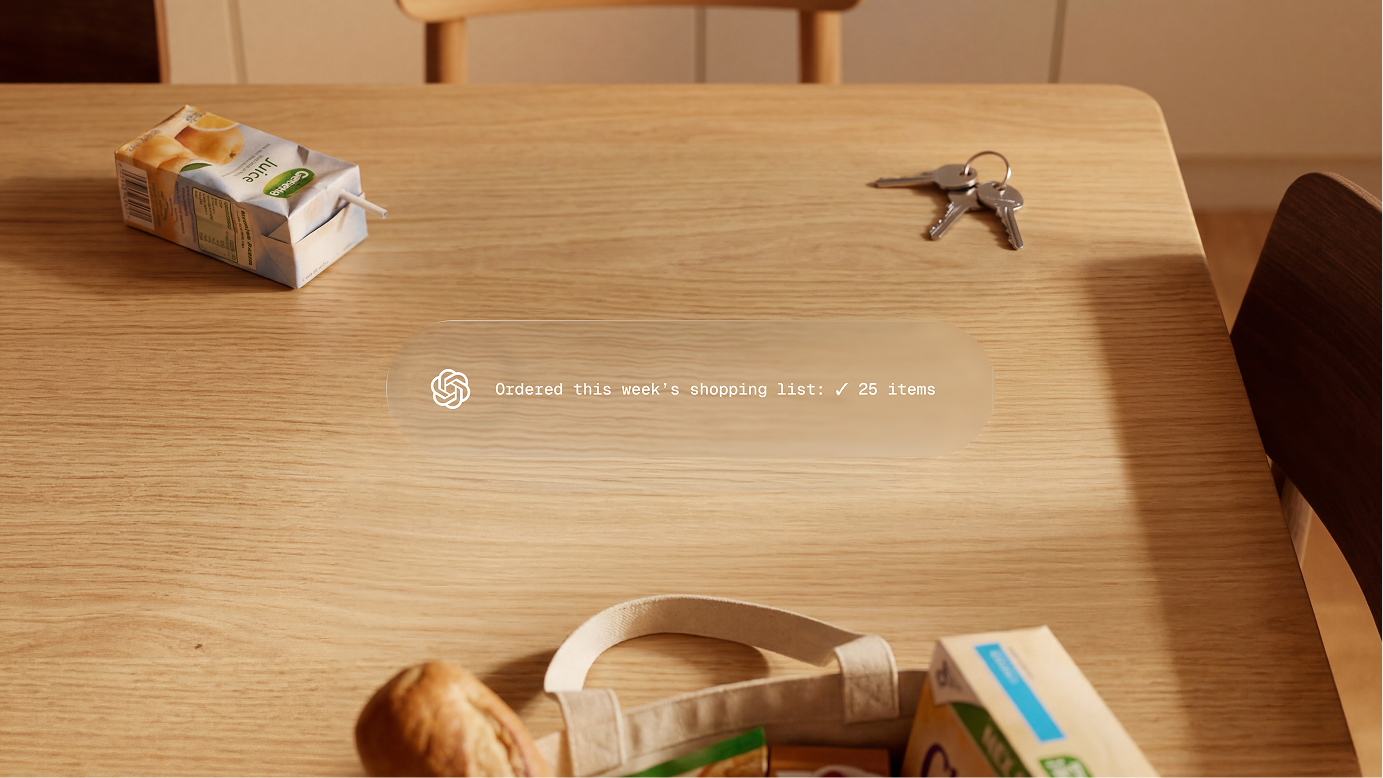
These kinds of market dynamics completely redesign the shopper journey. Discovery, consideration, substitution, and purchase are happening all in one thread. And when that happens, your brand stops competing for shelf space and starts competing inside someone else’s decision making engine.
What does the agent optimize for?
In a real store, brands fight for visibility. For shelf dominance. For brand activation, if you like. For repetition, habit. In a chatbot, they fight to meet a selection of criteria.
The AI assistant can optimize search results for what the consumer asks for, like “no added sugar,” “best value,” or “fastest delivery.” It can optimize for retailer realities like margin, inventory, and private brand growth.
If ads enter the interface, it can optimize for platform economics too.
If the shopper doesn’t specify values, the assistant still makes a choice based on its own incentives. Perhaps the retailer's incentives. And maybe the platform's incentives. And the moment the shopper says “any ketchup is fine,” your brand doesn’t become a preference; it becomes a variable.
That’s the part many people don’t want to say out loud: AI doesn’t just answer questions. It sets defaults and that’s exactly where markets are won.
AI doesn’t just answer questions. It sets defaults and that’s exactly where markets are won.
Private brands + recommendation economics: the accelerant.
Private labels aren't just growing as a cheaper alternative for premium brands anymore. In many categories they're evolving into private brands: premium, well-designed, high trust, optimized for retailer ecosystems.
Now add an AI-mediated shopping interface. If a retailer owns that conversation and also owns a competing product, steering becomes structural towards the best margin, towards inventory clearance, private brand growth, sponsored placements, ...
Even without evil intent, optimization does what optimization does. This is exactly where retail media foreshadows what’s next. In an AI interface the “endcap” becomes a recommendation slot. Sponsored visibility isn’t something you scroll past; it can become the suggested item in the basket-building moment.
What’s the role of a brand, when the agent is choosing?
The lazy take here is that brands eventually will die. The real take, however, is more hopeful (for some): average brands will die. Distinct brands will become more valuable.
Because as choice becomes automated, humans will cling to a smaller number of trusted defaults. That is a massive opportunity, if you earn the right to be the default.
In the AI aisle, emotions still matter, but it needs a trigger. A machine can’t be moved by your campaign film. It can act on signals. That’s why the winners in the AI isle will be radically clear, provably true, and structurally discoverable.
Clarity means you stop being “for everyone.”
Proof means your claims can be verified consistently across your website, retailer pages, and product feeds.
And discoverability means your product truth is machine-readable: ingredients, allergens, nutrition, formats, certifications, sustainability attributes, and availability data that an agent can use to filter you in, not out.
The move now: visibility in generative engines.
If you want to win in a world of chat-to-checkout, treat “being recommended” as a core capability. Make your product truth consistent and structured, so you don’t lose on ambiguity.
Publish authoritative explanations that AI assistants can cite when consumers ask about ingredients, health, and impact. And stop thinking of trade purely as shelf and promo; start engaging with the inputs that shape recommendation: feeds, substitutions, ranking logic, and sponsored placements.
Because the shelf isn’t disappearing tomorrow. But the center of gravity is moving fast.
If the agent doesn’t know what you stand for, it will decide what you stand for based on someone else’s incentives, and you’ll lose the cart without ever losing the shelf.