The mistake consumer brands often make in a GenAI innovation process
Welcome to the third edition of The Executive Exchange, a content series in which our Managing Director, Michiel Mol, shares a fresh perspective on what's currently shaping some of the most essential industries. In scope today: why many consumer brands aren't launching more winners with GenAI.
.jpg)
The intelligence gap between GenAI and consumer brands.
Antwerp, Belgium - January 6th, 2026
By Michiel Mol
Managing Director, Made
First of all, allow me to wish all of our readers a very happy and equally as prosperous new year. May you achieve extraordinary things in 2026, both on a personal and a professional level!
With the holiday season just behind us, many consumer brands have recently reached their year-end peak. Hence, it's no surprise they're still top of (my) mind currently, which is also why I'm zooming in on consumer brands in this third edition of The Executive Exchange.
In the last few weeks of the year, something important came to my attention. Many FMCG companies have deployed GenAI in their innovation pipelines. However, 95% of enterprise AI pilots fail to deliver measurable P&L impact. The problem we're seeing here is that many brands are using GenAI to generate more concepts from generic inputs, producing what is called "AI slop": category-average ideas that any competitor with the same tools could replicate.
The consumer brands pulling ahead in the current day and age are doing something fundamentally different. They're connecting GenAI to a set of anchors that create defensible advantages:
- Proprietary truth: unique consumer data
- Proprietary capability: formulation and manufacturing constraints
- Real-world proof loops: actual market validation, not synthetic research
For consumer brands, the AI slop trap hidden behind GenAI is real. The question is whether these brands will keep feeding it in 2026, or decide to build something that actually lands winners in their markets.
Ready to dive into my thoughts?



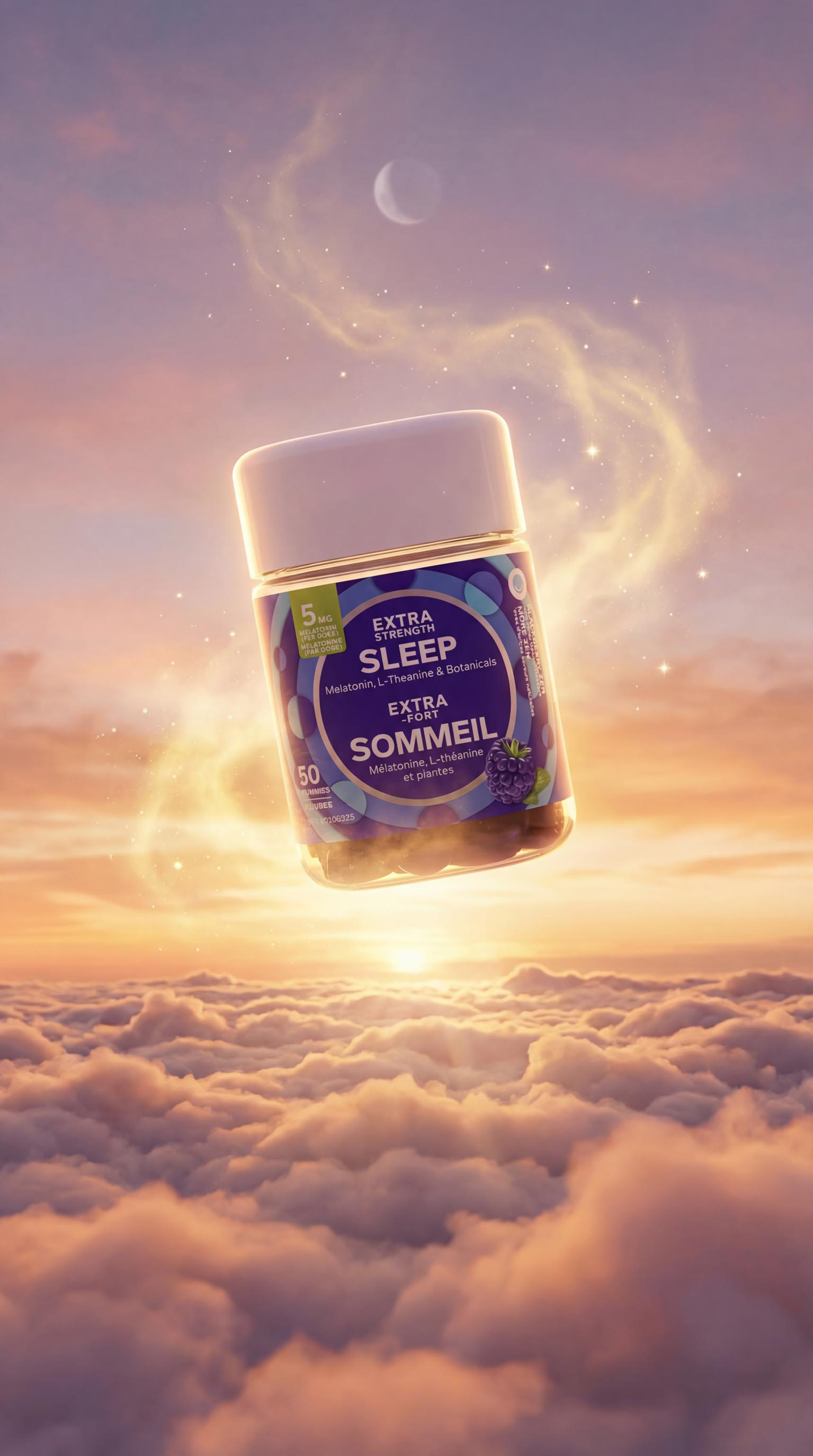
Why aren’t we landing more winners?
AI dominates every boardroom conversation, every strategy offsite, every investor call. No news there, as the pressure to "do something with AI" has never been higher.
And most consumer brands have responded. They've launched pilots, hired specialists, and invested in tools. But here's what we keep seeing: the vast majority of these consumer brands are leaving the real mass of potential untouched below the waterline. While the technology is capable of transforming how these brands compete, it's being used to do the same things slightly faster.
This gap between what AI could deliver and what consumer brands are actually getting from it is why I wanted to focus this edition of The Executive Exchange on the role GenAI can play in innovation.
It's a pattern I've seen across industries, though. In the previous edition, I wrote about the AI agent trap in manufacturing: the mistake of automating existing processes instead of reimagining them. In consumer products, I'm seeing something similar but with a different flavor to it. Companies are generating more concepts, but winning less. Question rises whether AI gives them more clutter rather than clarity.
In recent months, I've had the same conversation with FMCG leaders again and again: "We've rolled out GenAI. We're generating concepts faster than ever. So why aren't we landing more winners?" The answer lies in the intelligence gap. GenAI gives you infinite output. But most companies are feeding it finite, generic inputs. And when you apply infinite generation to generic inputs, you don't get breakthrough concepts. You get slop. Faster.
The AI slop trap in plain sight.
Two weeks ago, I sat down with the VP Innovation of a large European FMCG player. They'd built an internal "Idea Studio" that turns briefs into hundreds of concept territories, naming and claims, packaging directions, launch campaign mockups, and a neat deck for leadership. The tool took them from brief to "ready-to-present" in hours.
But as we talked through their pipeline, something became obvious. They were measuring innovation progress by the number of decks produced. Think more output. More options. More presentations.
Yet their hit rate on actual market launches hadn't improved. If anything, it had declined. The speed had created noise, not signal. For me, that was a perfect example of the GenAI slop trap: optimizing the appearance of innovation instead of the physics of winning. And this company is far from alone.
According to MIT's GenAI Divide report (2025), 95% of enterprise AI pilots fail to deliver a measurable impact on P&L. The research paints a stark picture: generic tools "stall in enterprise use since they don't learn from or adapt to workflows."
But here's what that statistic doesn't tell you: the problem isn't AI. The problem is what we're asking AI to do.
The actual job of an innovation pipeline isn't to create more ideas. The job is to create repeat purchases at target margin, at scale. That outcome depends on uniqueness, which GenAI, by itself, cannot reliably create.
The real job of innovation.
To understand where the slop trap comes from, it helps to look at how most FMCG innovation pipelines are structured.
The typical sequence runs: Brief → Ideate → Select → Validate → Develop → Launch.
It starts with a brief: a strategic prompt that defines the opportunity space, target consumer, and commercial ambition. From there, teams move into ideation, generating a wide range of concepts, often with external agencies or internal workshops.
The selection stage narrows this down, typically through internal scoring or early consumer feedback. Validation tests the surviving concepts more rigorously, usually through quantitative research or simulated shelf tests. Development turns the validated concept into a real product, including formulation, packaging, and supply chain readiness. And finally, launch brings it to market.
When GenAI entered the picture, the temptation was obvious: insert it at the ideation stage. Some brands also started using it for validation, generating synthetic consumer responses. It's safe. It's fast. It looks productive.
But here's the issue.
The actual job of an innovation pipeline isn't "to create more ideas." The job is to create repeat purchases at target margin, at scale. That outcome depends on uniqueness: something that stands out in the market, earns trial, and delivers enough value to bring consumers back. And GenAI, by itself, cannot reliably create that kind of uniqueness.
Why? Because GenAI is designed to generate high-likelihood continuations of patterns it has seen. Especially for consumer brands, this means that, by default, it trends toward category averages, familiar archetypes, and "trend + format + claim" remixes. It can make novel-ish combinations. It can make better decks. But breakthrough distinctiveness? That usually lives somewhere else.
McKinsey's State of AI 2025 survey confirms this pattern. High-performing organizations are three times more likely to have fundamentally redesigned workflows rather than just layering AI onto existing processes. The difference between the 5% who succeed and the 95% who stall isn't model sophistication. It's whether you're using AI to do the same things faster, or to do fundamentally different things.
This raises the question: what does "fundamentally different" actually look like?
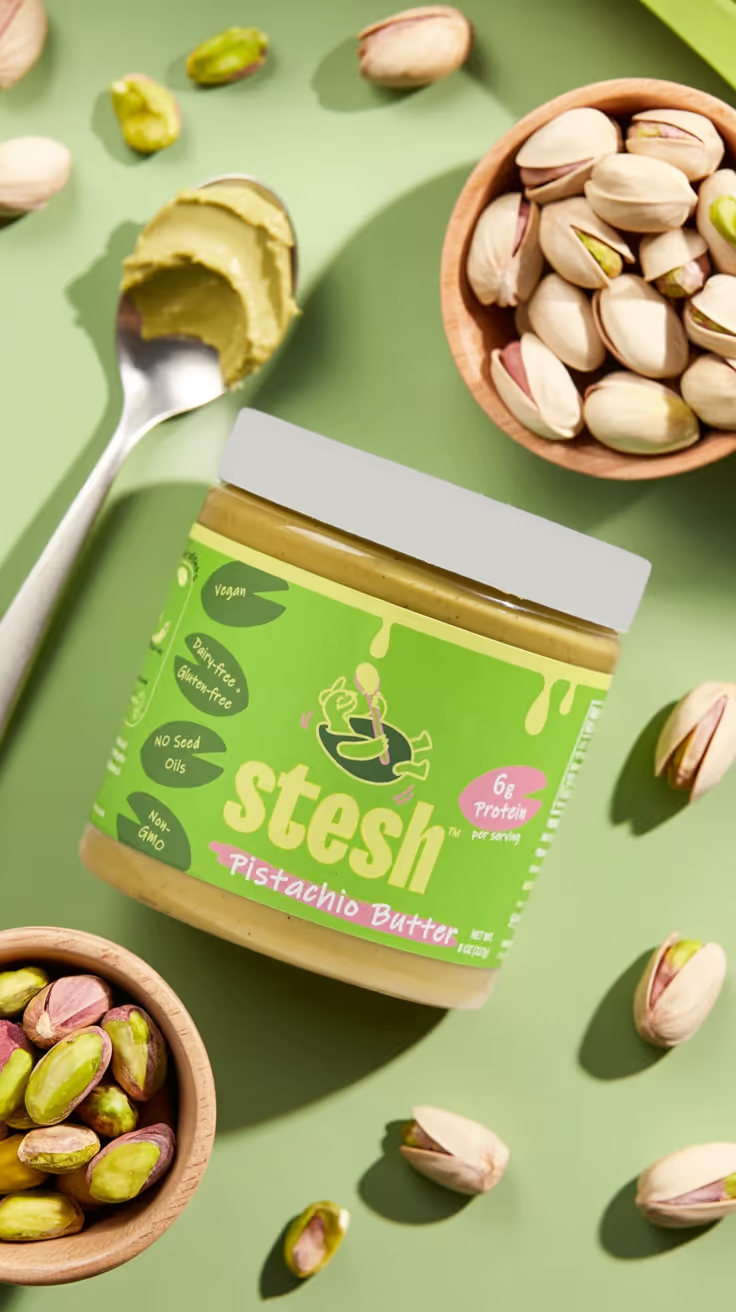

Three anchors for an AI growth engine that performs.
If you want your consumer products to be unique, scalable, and profitable, you need at least one anchor that GenAI does not generate by default. These anchors are what separate signal from slop.
The first anchor is proprietary truth. Every company sits on a mountain of data that competitors cannot access: customer service transcripts that reveal unspoken frustrations, retailer search terms that show what consumers are actually looking for, sensory panel notes from years of formulation work, return reasons that expose product shortcomings, promotional elasticity data that shows what really drives purchase. This is your real consumer reality, not the public trend reports that everyone else is reading. When GenAI is trained on this data, it stops generating category averages and starts generating insights that are uniquely yours.
The second anchor is proprietary capability. This is the "physics" of your business: the formulation know-how you've built over decades, the process advantages in your manufacturing lines, the packaging technologies you've patented, the supplier relationships that give you exclusive access to ingredients, the unit economics that let you hit price points competitors can't match. GenAI can generate endless concepts, but if those concepts aren't grounded in what you can actually make, defend, and scale, they're just fiction. The companies pulling ahead are the ones feeding their constraints into the system, so that every output is already feasible and differentiated.
The third anchor is proof loops in the real world. Validation research can tell you whether a concept sounds appealing. It cannot tell you whether consumers will pay for it, repurchase it, or recommend it. That requires actual market exposure: small-scale launches, A/B price tests, retailer pilots, rapid sensory sprints. The problem with most innovation pipelines is that real-world proof comes too late, after significant investment in development. The opportunity with GenAI is to compress the loop, generating testable hypotheses faster and feeding real market data back into the system continuously.
And here's the litmus test: if a competitor with the same model and the same public data could generate it too, you're creating slop. As McKinsey notes: "The power of LLMs comes from a company's ability to train them on its own proprietary data sets. Customizing models using proprietary data is one of the key strategies that can deliver competitive advantage."
This isn't a theory. The companies pulling ahead right now are the ones connecting GenAI to these anchors.
If your GenAI is running on the same public data as your competitors, you're funding the slop machine.


The GenAI path forward for consumer brands.
The window for building a GenAI advantage is narrowing. Gartner predicts that by the end of 2026, more than 80% of enterprises will have deployed GenAI-enabled applications in production.
The technology itself is commoditizing fast. That means the question won't be "who has AI?" Everyone will. The question will be who can turn proprietary truth, capability, and proof loops into repeatable wins.
According to Bain's Consumer Products Report 2025, "Adoption of AI could eventually accelerate the disintermediation of CPGs that remain rooted in old-school approaches and don't learn quickly how to stand out in AI recommendations." In other words: if you only use GenAI to accelerate the front end of your pipeline, you'll end up with more concepts, more internal noise, more lookalike products, and faster disappointment.
For C-suite leaders in consumer products, this translates into three strategic shifts.
- First, audit your AI investments against the three anchors. Is your GenAI connected to proprietary truth, proprietary capability, or real-world proof loops? If it's running on the same public data as your competitors, you're funding the slop machine.
- Second, redefine what you measure. Stop counting concepts and decks. Start measuring time-to-validation and the ratio of launches that actually hit repeat-purchase thresholds. The metrics shape the behavior.
- Third, invest in an AI system, not just in a tool. The consumer brands winning with AI aren't buying better chatbots. They're building closed-loop and flexible architectures that connect always-on sensing, concept generation, prototyping, proof, and learning. That's where the compounding advantage lives.
At Made, that's the shift we care about most: moving from "AI makes us faster" to "AI makes us win more often." Make no mistake: the slop trap is real. The question is whether you'll keep feeding it in 2026, or build something that actually compounds.




.jpg)