Made leads the debate on how AI transforms the role of shipping agents
Together with the Belgian Shipping Federation, Made's maritime experts moderated an industry brainstorm on December 4th that explored some of the key questions every shipping agent is asking about how AI redefines their role in global trade.
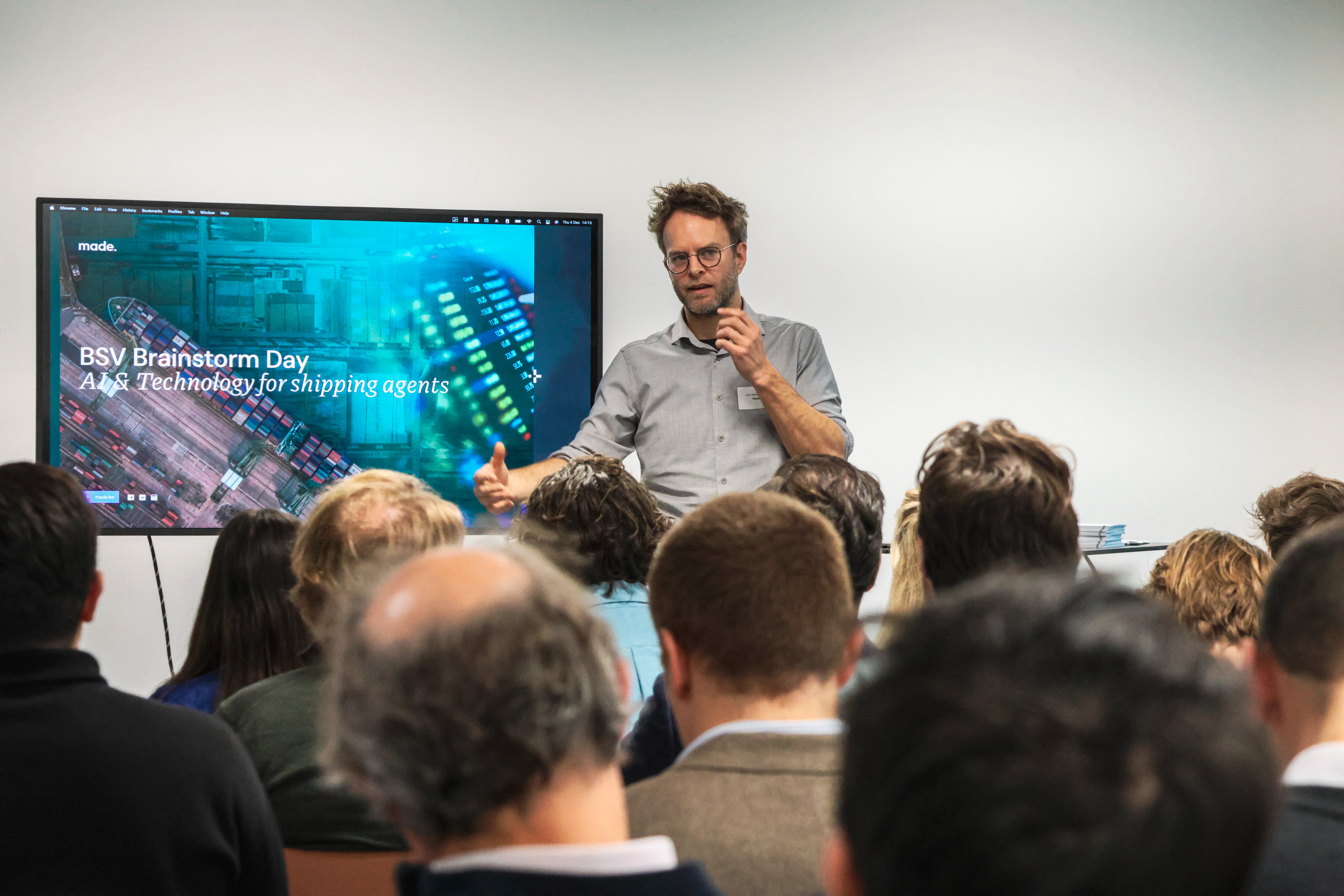
Bringing together shipping agents to discuss AI.
Antwerp, Belgium - December 8th, 2025
On Thursday, December 4th, Made’s maritime experts, together with the Belgian Shipping Federation (BSV), organized an interactive afternoon at business hub 'The Beacon' dedicated to exploring the impact of AI and emerging technologies on shipping agents.
With many years of experience in driving maritime innovation for industry leaders like Lloyd’s Register and CMB.Tech, our own Nick Heeren (Business Lead Maritime), Joos Van den Bergh (Innovation Lead Maritime) and Stef Pauwels (Senior Business Analyst) were perfectly positioned to moderate an industry brainstorm as shipping agents came together in Antwerp to envision their future role.

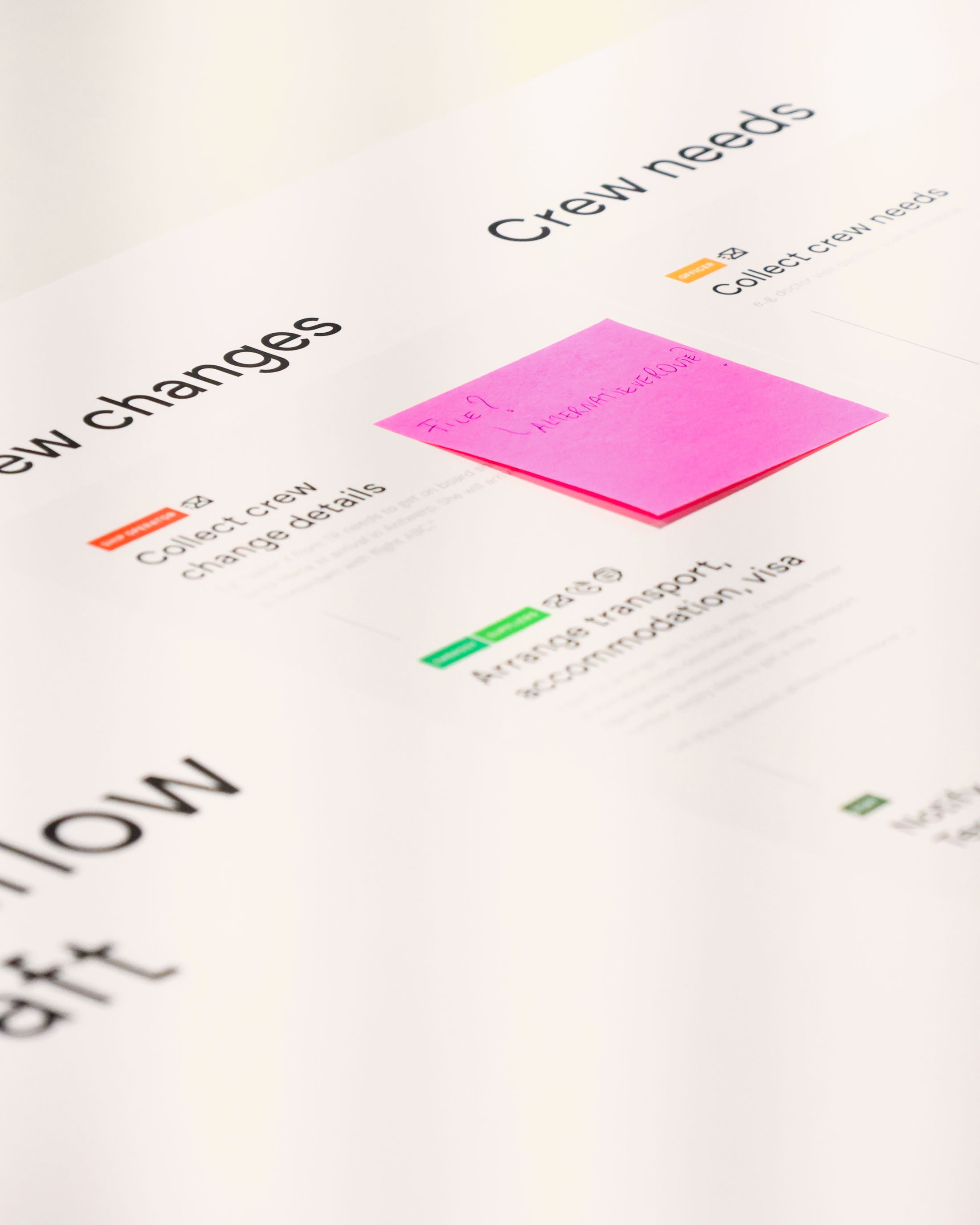


Mapping out the shipping agents’ pain points.
Starting at 13h00, the afternoon kicked off with a series of inspirational talks highlighting the latest innovations transforming the world of shipping agents.
Afterwards, at around 15h00, Made’s maritime experts steered the conversation during an open discussion about the daily challenges shipping agents are facing in the current maritime landscape.
“Shipping agents these days are eager to discover how others handle the same obstacles. From managing the email avalanche to coordinating last-minute crew changes when vessels delay. That’s why we started the discussion by creating a clear picture of today's pain points," explains Joos Van den Bergh. "Whether it's manually updating declaration details across different systems, the scramble to reschedule everything when a ship delays 12 hours, or tracking down invoices from dozens of suppliers; these shared challenges became our roadmap for where AI and technology could make an immediate impact for this group of people."
Can AI completely automate complex customs declarations across multiple jurisdictions? Can OCR systems reliably digitize bills of lading? Can invoice matching and routing be largely automated? The discussion navigated which automation opportunities would be realistic today versus aspirational.
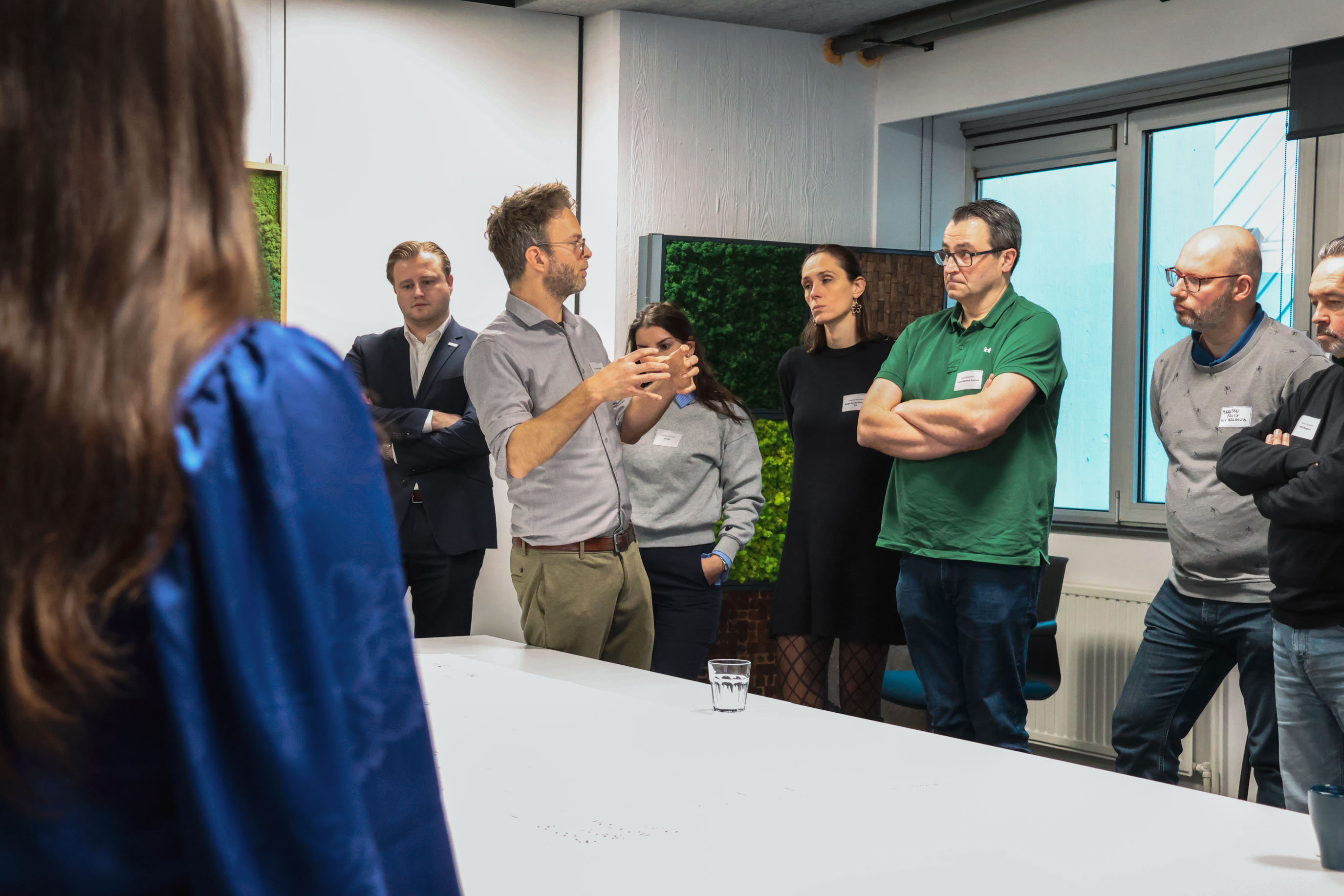
From possibility to practical reality.
Building on these identified challenges, Made’s maritime experts shared insights on existing AI and technology solutions already deployed in maritime operations. The discussion navigated which automation opportunities would be realistic today versus aspirational.
"We explored what's actually achievable," says Nick Heeren. "Can OCR systems reliably digitize bills of lading? Yes, that's operational. Can AI completely automate complex customs declarations across multiple jurisdictions? We examined the current limitations. Can invoice matching and routing be largely automated? We looked at real implementations."
Rather than promising silver bullets, the session provided honest assessments of where technology could assist immediately, like email categorization and standard response drafting, versus areas requiring more development or human oversight.



Participants left with a concrete understanding of how their profession transforms in an increasingly digital maritime ecosystem.
Evolving roles in a digital maritime world.
Through discussions like these, bringing a wide variety industry parties to the table, a vision naturally emerges of how the shipping agent's role evolves when augmented by AI assistants and intelligent data systems.
"The conversation organically led to reimagining the shipping agent's future role," notes Stef Pauwels. "A top priority here, and probably the biggest opportunity as well, lies in reducing manual and repetitive work. Think document flows and email handling, for example. A possible solution lies in AI-models that interpret and dispatch incoming e-mails and perhaps performs actions on these emails.
"Additionally, AI agents could play a critical role in unifying the currently scattered information landscape. AI agents could be set up in a workflow and act like an in between layer, connecting the many different systems shipping agents are using these days. When AI would be handling this kind of routine data processing, shipping agents could focus a lot more on relationship management, strategic problem-solving, and value creation through expertise rather than manual administration."
"After the brainstorm session, participants left with a concrete understanding of how their profession could look like in a few years, driven by modern technology in an increasingly digital maritime ecosystem."