The AI agent trap: why automating your current process is the slowest way to progress
Welcome to the second edition of The Executive Exchange, a content series in which our Managing Director, Michiel Mol, shares a fresh perspective on what's currently shaping some of the most essential industries. In scope today: how AI agents should be applied in a manufacturing environment.

The promise of autonomous AI workers at factory floors.
Antwerp, Belgium - December 9th, 2025
In this second edition of The Executive Exchange, I'm zooming in on the elephant in the room. At least; the elephant in many of the rooms I’m in lately. Because everywhere I go these days, everyone is talking about AI agents.
Surprised? Hell no.
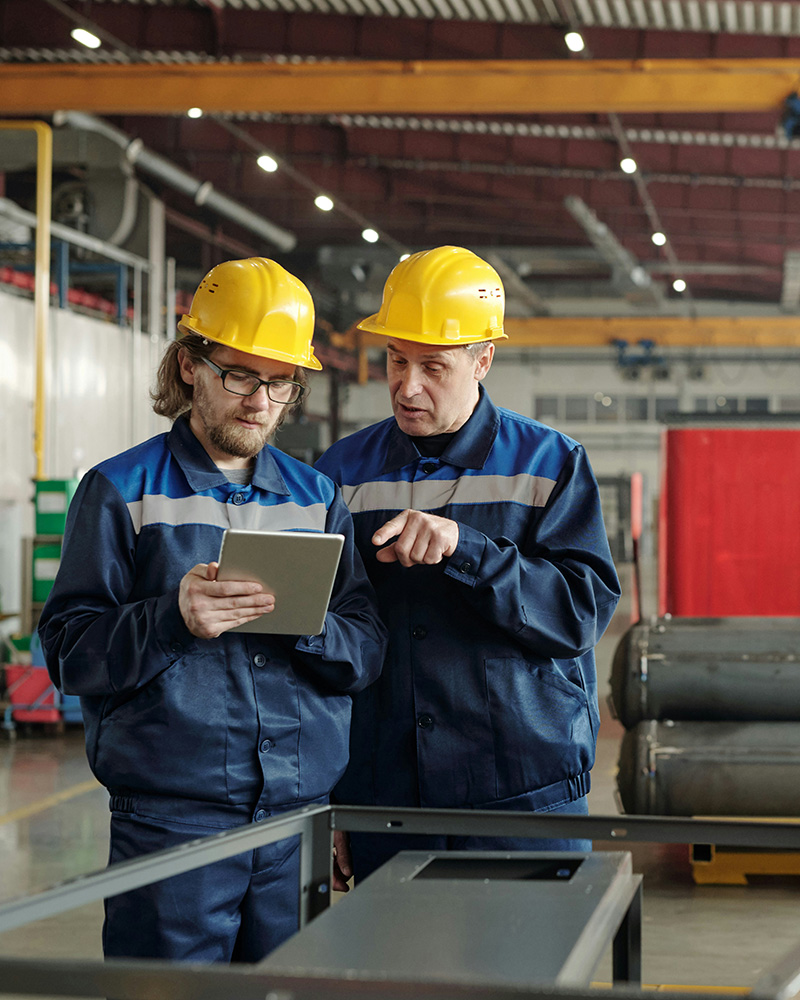
But there’s something in particular about this topic that came to my attention last week: the promise of autonomous AI workers at factory floors is driving a frenzy of pilots and prototypes. However, many companies are just looking to build faster horses. And by doing so, they are applying infinite intelligence to finite, legacy processes.
And that cannot be right.
Let's dive in!


AI pilots that actually move the needle.
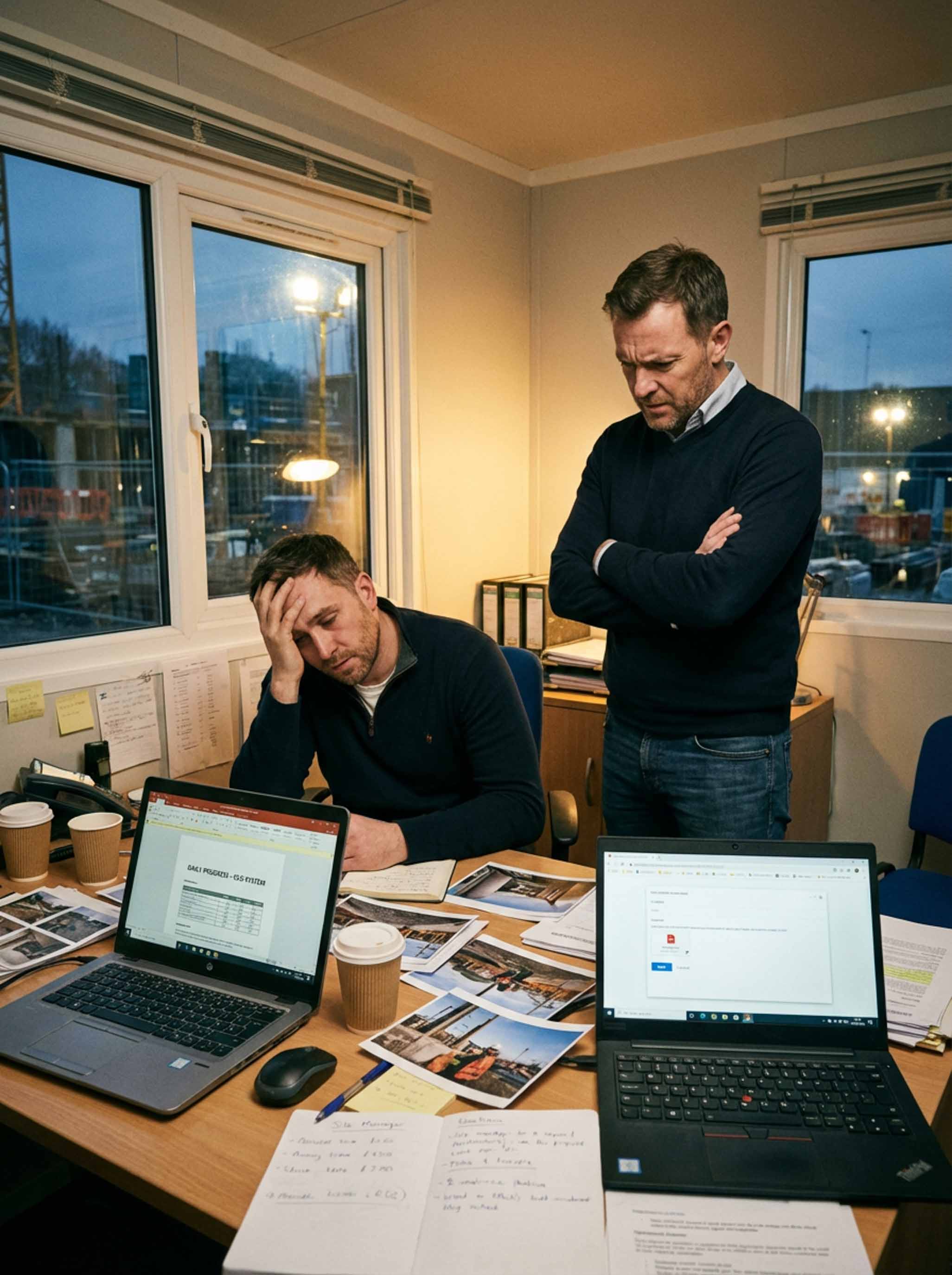
Last week, I sat down with the Operations Director of a major European construction firm. We spent the better part of two hours walking through their digital transformation roadmap, but we kept circling back to one specific frustration: the new AI pilots were working perfectly, technically speaking, but they weren't moving the needle on the business side of things.
This particular construction firm had deployed an AI agent to automate the ‘Daily Site Log’, a ritual where site managers spend an hour every evening compiling photos, notes, and subcontractor updates into a PDF report for headquarters.
The AI was nothing but brilliant. It digested the inputs, formatted the text, and emailed the PDF in seconds. BAM!
And then, I asked this question. An uncomfortable one.
“Why are we still emailing PDFs?”
The moment of silence that followed the question perfectly illustrated the trap that many businesses, especially in the manufacturing and construction industry, are falling into.
Turning the 'As Is' into an AI-powered 'To Be'.
The example I’m giving here isn't an isolated case, you know. According to Autodesk's 2025 State of Design & Make report, half of the construction leaders consider identifying the right use cases for AI to be a major concern, while most companies are still figuring out where AI actually fits.
Even though the PDF anecdote is small, it triggers a very specific type of project that we often run, at Made, for our customers: analyzing the “As Is”, envisioning the “To Be”.
Because, in recent years, we’ve seen many business leaders who are so focused on the "As-Is" journey, i.e. ‘the way we have always done things’, that we are using revolutionary technology to simply polish obsolete workflows. Yes, these are quick wins, but it’s not the essence of optimizing your business processes through technology.
If you are looking to implement the full power of AI to your business, you have to disconnect from the existing journey.
The backward approach.
In asset-heavy industries, like maritime & logistics or manufacturing & construction, processes are rigid for a reason. Two reasons actually: safety and compliance. But when you apply AI agents, that rigidity becomes more like a cage.
When you look at a site manager typing up a report, the "As-Is" journey is something like:
Observe -> Record -> Synthesize -> Distribute.
The temptation here would be to insert an AI agent at the "Synthesize" step. It’s safe, it’s easy, it saves the manager 45 minutes a day and everybody would be like:
“Yeah, that’s exactly what we need guys. Good job.”
Well, it’s not.
If you are looking to implement the full power of AI to your business, you have to disconnect from the existing journey. You have to dare to move away from, or at least look differently at, the actual ‘Job to be done’.


What is the actual Job To Be Done?
Referring back to sending this PDF-report I was talking about earlier; what is the actual job of that daily report? It isn’t ‘to create a PDF’. The job is ‘to identify risks and align resources for tomorrow’.
Companies that already understand this distinction are seeing results. Take Suffolk Construction for example.
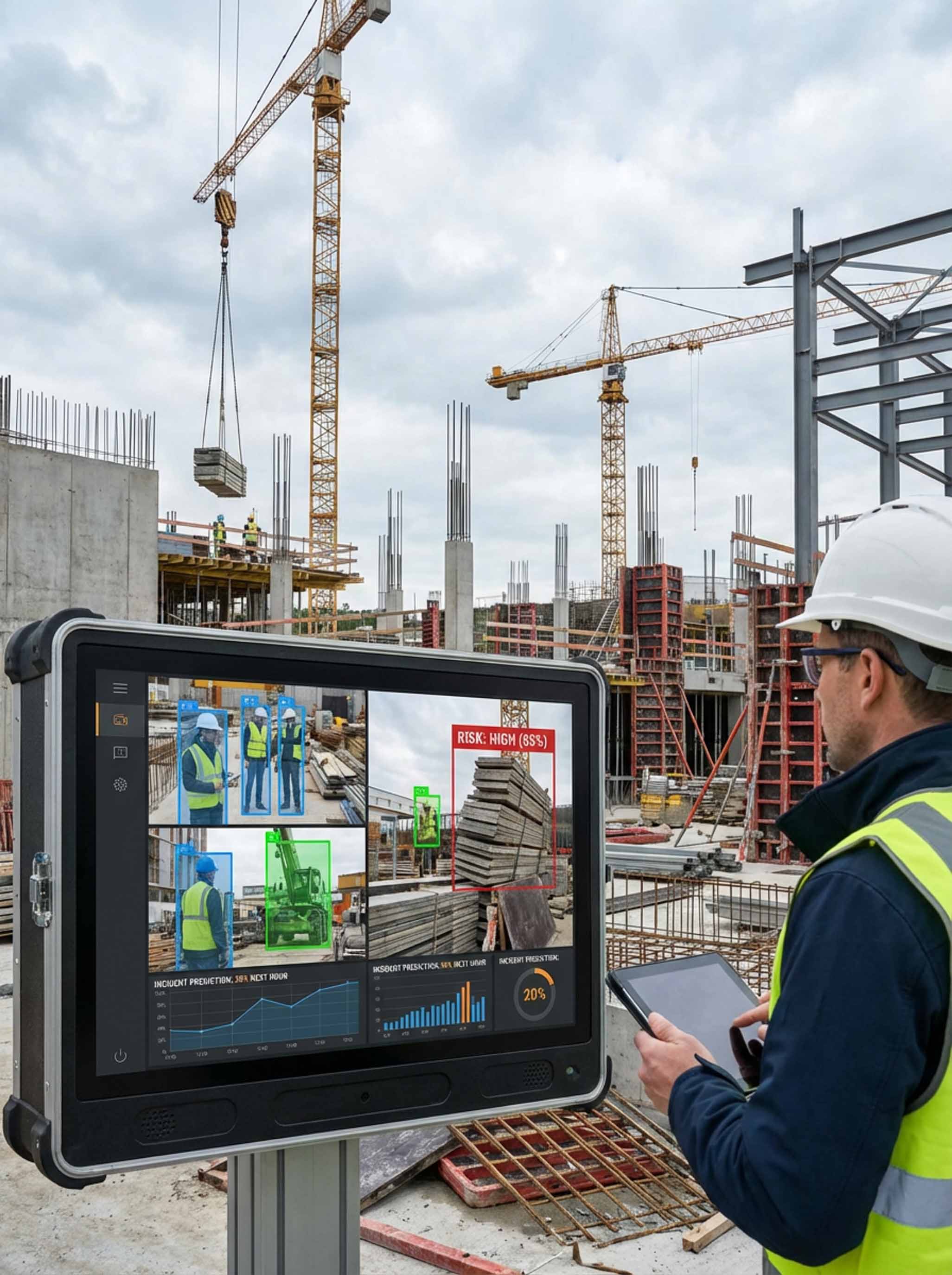
This major builder headquartered in Boston, Massachusetts developed an AI-powered safety program that didn't just digitize existing safety reports. Instead, they reimagined the entire safety workflow.
Their system, nicknamed "Vinnie", analyzes site videos or photos and data to predict incidents before they happen. By moving from observation to prediction, Suffolk lowered its recordable incident rate by 28% and its lost-time incident rate by 35%. Not by automation of an old process, but by creating a fundamentally new journey.
An Operational Director should realize that, in many cases, he doesn't need a reporting AI agent to send a PDF; but a dispatching AI agent that takes charge of the situation.
The new AI-powered journey.
The challenge that precedes the creation of Suffolk’s new journey, is to really anchor yourself in the Job To Be Done. Consequently, the existing "As-Is" journey will dissolve and the canvas will become blank again. At that stage, the Operational Director would realize he doesn't need a reporting agent to send the PDF; but a dispatching agent that takes charge of the situation.
Let’s try to imagine a new journey.
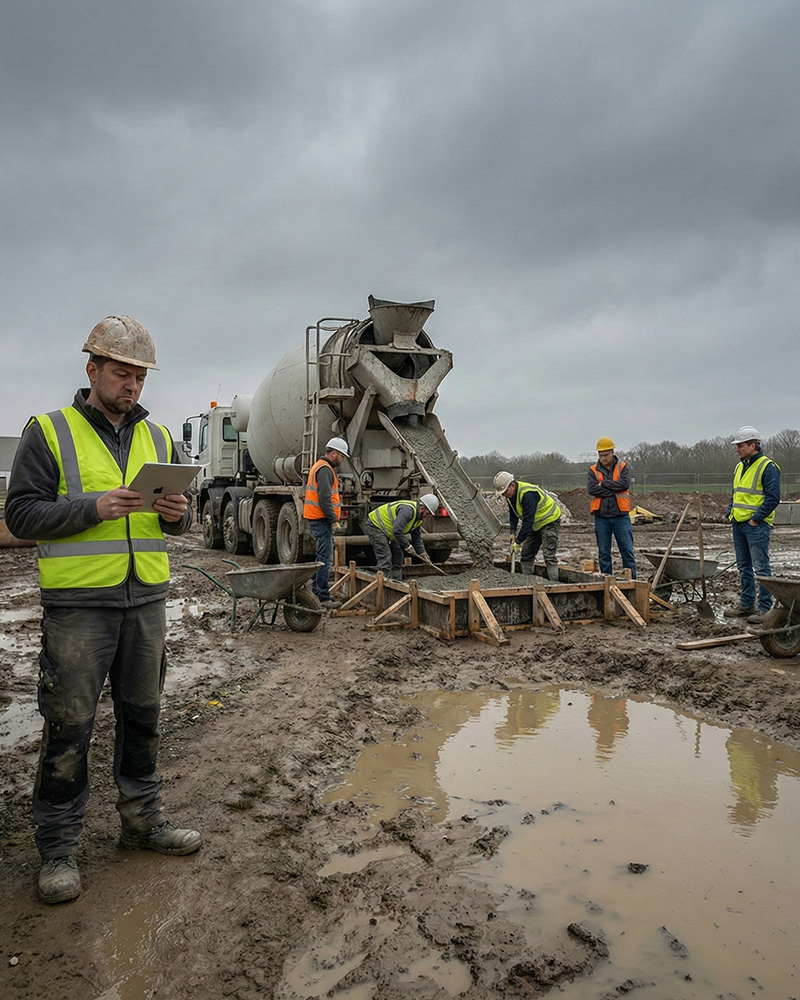
Instead of waiting for a daily report, the AI agent connects directly to the site's camera feeds, weather data, and material supply sensors. It notices that the concrete pour for Zone B is scheduled for 8:00 AM, but the rebar inspection hasn't been logged in the system yet.
The AI agent doesn't write a report about this ‘risk’. Instead, it pings the inspector's phone claiming ‘Zone B needs clearance by 4:00 PM today or we lose the pour slot. Simultaneously, it puts the concrete supplier on a tentative hold. In addition, the AI agent alerts the Zone B foreman that there might be a delay.
By the time the human site manager wakes up the next morning, the problem is either solved or clearly queued for decision. The ‘Daily Report’ didn't happen because it didn't need to happen. The job, i.e. aligning resources, was done in real-time. BAM!
From faster horses to orchestrators.
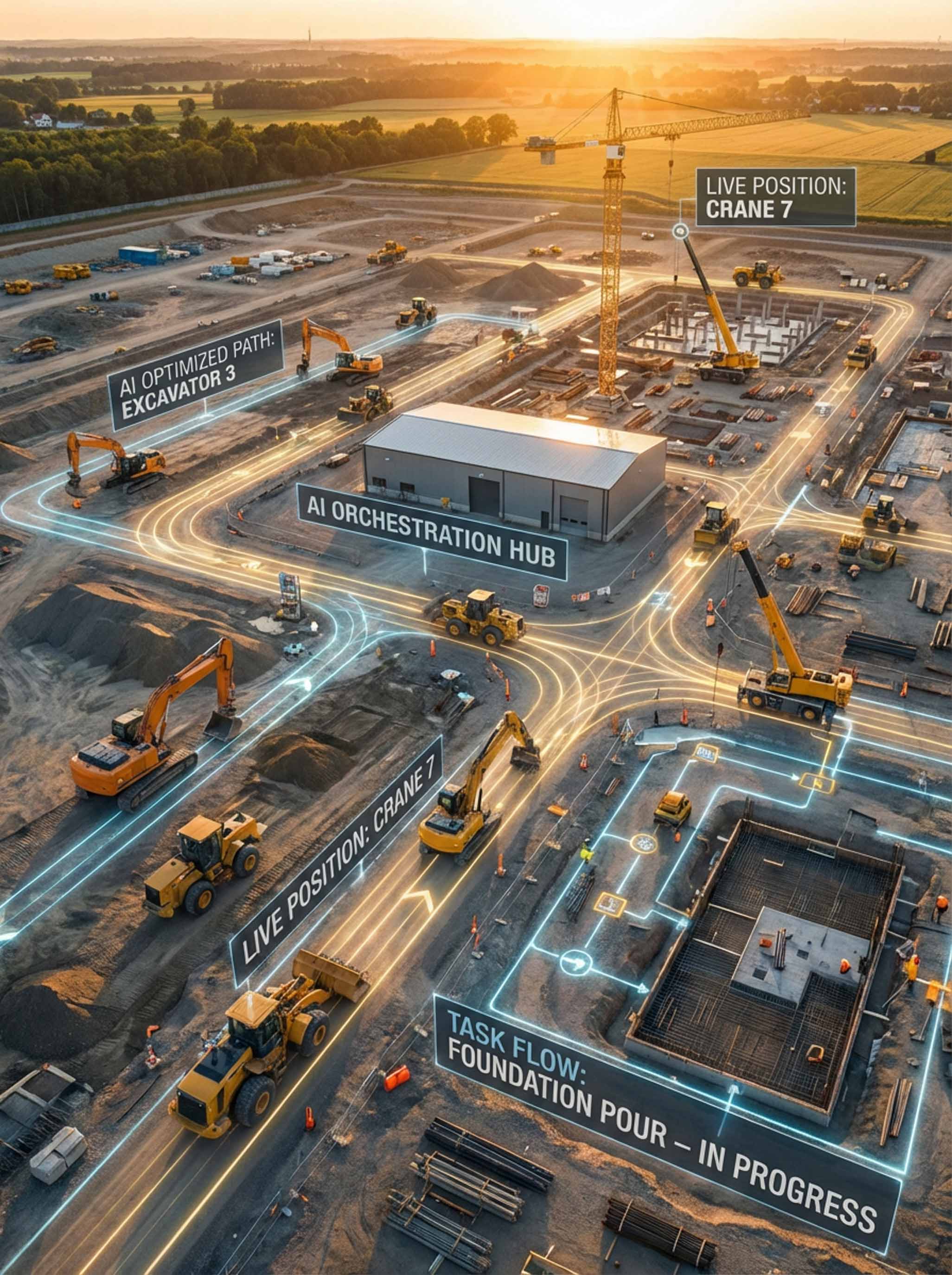
This isn't a hypothetical future, though. Skanska Norway is already developing exactly this kind of approach. They're building an AI system for real-time coordination of heavy equipment on construction sites. Their vision? Having construction projects where every single machine knows at any given time where the other machines are, what they are doing, and the most optimal way to organize the work.
The key insight here is that Skanska isn't using AI to generate better equipment utilization reports. They're using AI to orchestrate equipment in real-time, eliminating the need for reports altogether. That's the shift from reactive reporting to proactive orchestration.
This is a type of journey you would never think of if you just looked at the site manager's current job description. You would only find it by working backwards from the outcome, questioning the ‘As Is’, envisioning the ‘To Be’.
If you would use AI agents solely to automate your current bureaucracy, you will just end up with a faster bureaucracy.
Why this matters now.
For executives in manufacturing and construction industries, being able to make this distinction will prove to be a critical skill.
In today’s business reality, we are entering a phase where the gap between ‘digital leaders’ and ‘digital laggards’ will no longer be about who has the best dashboard. It will be about who has the smoothest of operations. About who can really achieve operational excellence.
If you would use AI agents solely to automate your current bureaucracy, you will just end up with a faster bureaucracy. You will generate more reports, trigger more notifications, and add more noise to the factory floor, drowning your decision-makers in high-speed clutter.
However, if you can use AI agents to reimagine the journey, you’d stop managing the process as such and start managing the exceptions. You move from a reactive posture (‘Read the report to see what went wrong’) to a proactive one (‘The AI agent fixed the schedule before the shift started’).
“Yeah, that’s exactly what we need guys. Good job.”
The Operations Director now knows that the companies that will win with AI agents will be the ones with the courage to delete their old process maps. And yes, this requires a fundamental shift in how this construction firm approached innovation in the past.
The path forward.
Back to the Operations Director that triggered this writing. He now knows that the companies that will win with AI agents will be the ones with the courage to delete their old process maps. And yes, this requires a fundamental shift in how this construction firm approached innovation in the past.
Instead of thinking about how AI can speed up recurring existing tasks, they will need to question whether they should still be doing these tasks in the first place.
In case you’re wondering, the conversation I had with that Operations Director ended on a high note. We scrapped the ‘Reporting Agent’ pilot. We are now whiteboarding a ‘Logistics Orchestrator’, a smart AI chap that doesn't know how to write emails, but has all it takes to ensure the right bricks are in the right place at the right time.
At Made, we believe that technology is the easy part. The hard part is having the vision to let go of the "As-Is." And we might just be the right partner to help you find those new journeys.


.jpg)