.jpg)
Etex and Made set up a new partnership.
Antwerp, Belgium - March 27th, 2026
With European sustainability regulations tightening and the construction industry itself accounting for approximately 37% of global carbon emissions, the world is desperate for the industry to change.
Etex, global pioneer in lightweight construction materials, is determined to lead the transition to low-impact construction by rethinking the entire fibre cement lifecycle. To turn this ambition into reality, Etex partnered with Made.
Together, we’ve co-created a comprehensive sustainability roadmap translating global ambitions into concrete local actions, setting the company up for lasting competitive advantage in a decarbonizing market.
Scroll down to get the full story, including multiple video interviews with Kevin Verborgh (Director of Manufacturing & Construction, Made) and Geert Van Kelecom (Sustainability Manager, Etex)
Why this matters now.
According to the United Nations Environmental Programme (UNEP), the buildings and construction industry accounts for approximately 37% of global emissions. The production of building materials like cement, steel, and aluminum drives a significant share of that carbon footprint.
While this places construction at the heart of the climate emergency, it also represents an extraordinary opportunity.
Given that decarbonizing construction is one of the most powerful levers available to shape a more sustainable future, the construction industry is facing a new era in which forward-thinking manufacturers can build strong foundations today allowing them to lead the industry tomorrow.


Manufacturers, today, can look at current market dynamics in two ways: wait-and-see vs. anticipate-and-shape.
For manufacturers who wait to take charge of the situation, current market dynamics create a real squeeze. Corporate Sustainability Reporting Directive (CSRD) requirements, for instance, are tightening by the week, while the Ecodesign for Sustainable Products Regulation (ESPR) will soon dictate how products need to be designed, manufactured, and recycled. Meanwhile, non-European competitors operating under looser standards continue to access European markets.
A wait-and-see approach will have manufacturers end up with rising compliance costs on one side and price pressure from imports on the other.
For manufacturers that take the initiative and move first, the same forces create tremendous opportunity.
Manufacturers and construction companies that embed sustainability into their daily operations & culture now won't just comply with tomorrow's regulations. They'll actively shape them and unlock new opportunities while doing so. They'll secure preferred supplier status with developers and contractors under pressure to decarbonize their own value chains. And they'll build the operational capabilities that slower competitors will eventually scramble to replicate.
It’s in complex situations like these that companies like Etex are building their competitive moat. And at Made, we are happy to have guided them through the journey.
Etex: inspiring ways of living.
In recent months, Etex and Made have set up a close collaboration aimed at accelerating Etex' ambitions to set new standards in moving towards a more sustainable construction industry. Both companies have co-created the road ahead for Etex' Fibre Cement platform, turning global ambitions into specific local actions worldwide.
"Our company's purpose ‘Inspiring Ways of Living’ underpins everything we do at Etex," says Geert Van Kelecom, Etex’ Sustainability Manager for Fibre Cement. "In light of sustainability, this means that our lightweight construction solutions are designed to be sustainable at their very core."
"Hence, setting ourselves up for plain compliance with CSRD and ESPR regulations would merely be touching the floor, not the ceiling. At Etex, we intentionally strive to lead the transition to low-impact construction by, in this case, rethinking the fibre cement lifecycle together with Made’s sustainability team."
This newly created partnership between Made and Etex is an important signal indicating that the time to take responsibility for the construction industry is now
"This newly created partnership between Made and Etex is an important signal indicating that the time to take responsibility for the construction industry is now”, says Kevin Verborgh, Director of Manufacturing & Construction at Made.
“The collaboration, with a clear focus on fibre cement, aims at (1) lowering Etex’ carbon footprint, (2) integrating circularity in Etex’ fibre cement business model wherever possible, and (3) driving breakthrough recycling to ensure nothing goes to waste and every material finds a new beginning. By doing so, Etex helps its customers worldwide to build cost-efficiently and more responsibly with Etex’ fibre cement solutions."
The Road to Sustainability.
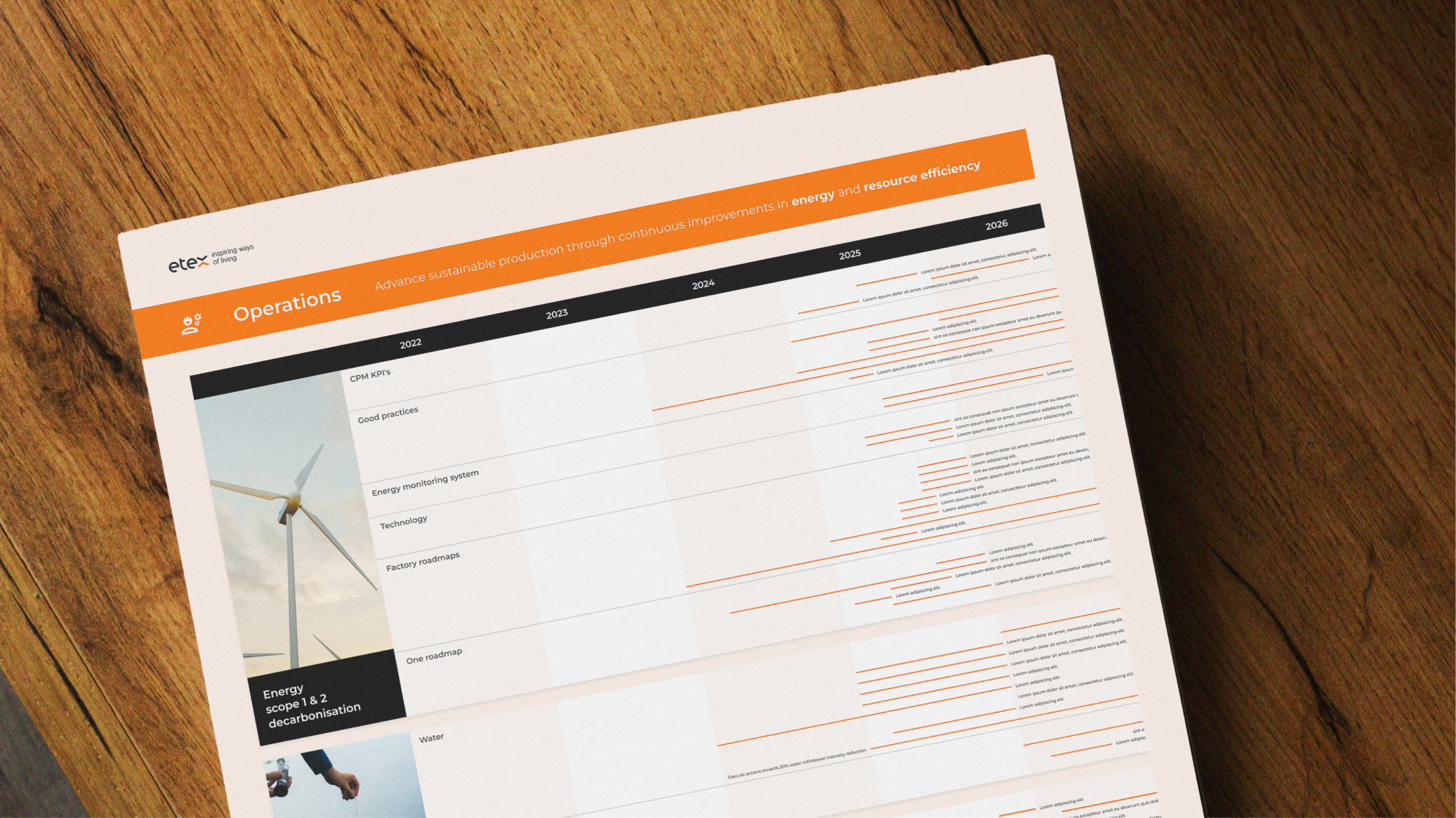
The fruits of this newly established partnership are displayed on the ‘Road to Sustainability for Fibre Cement’; a roadmap that comprises a clear set of focus areas. In this path forward, Etex and Made have combined both existing and new initiatives, bridging the gap between where the fibre cement platform is today and where the company wants it to be.
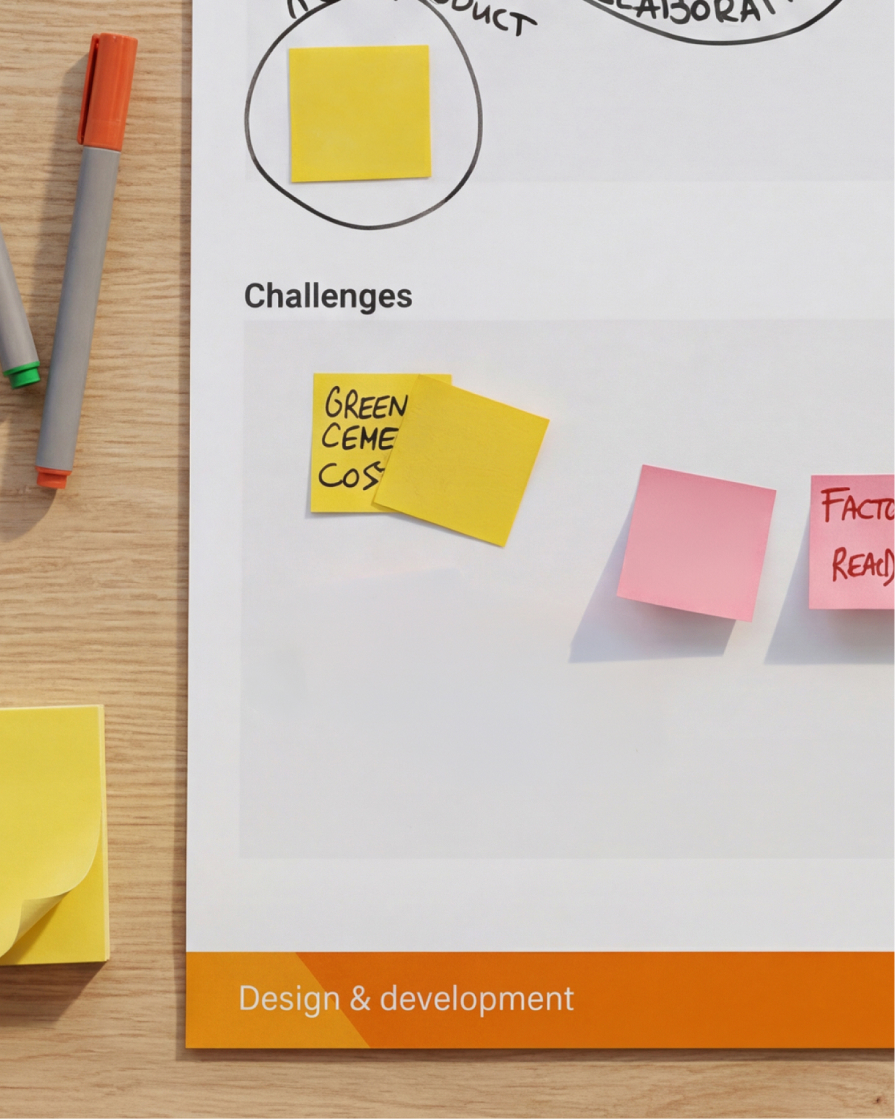
Creating a sustainable business design served as the starting point. “Today, cement is essential as a binder in fibre cement, but the cement industry in general is carbon intensive”, Van Kelecom notes.
“However, fibre cement already uses cement efficiently and has a long service life, making it a smart choice for low-carbon construction. Our goal is to further reduce the impact over the full lifecycle. That means lowering the impact of cement and increasing secondary and renewable raw materials without compromising on performance. We want to keep materials in circulation, while designing materials for easy repair, maintenance, and disassembly to enable end-of-life recovery and recycling.”
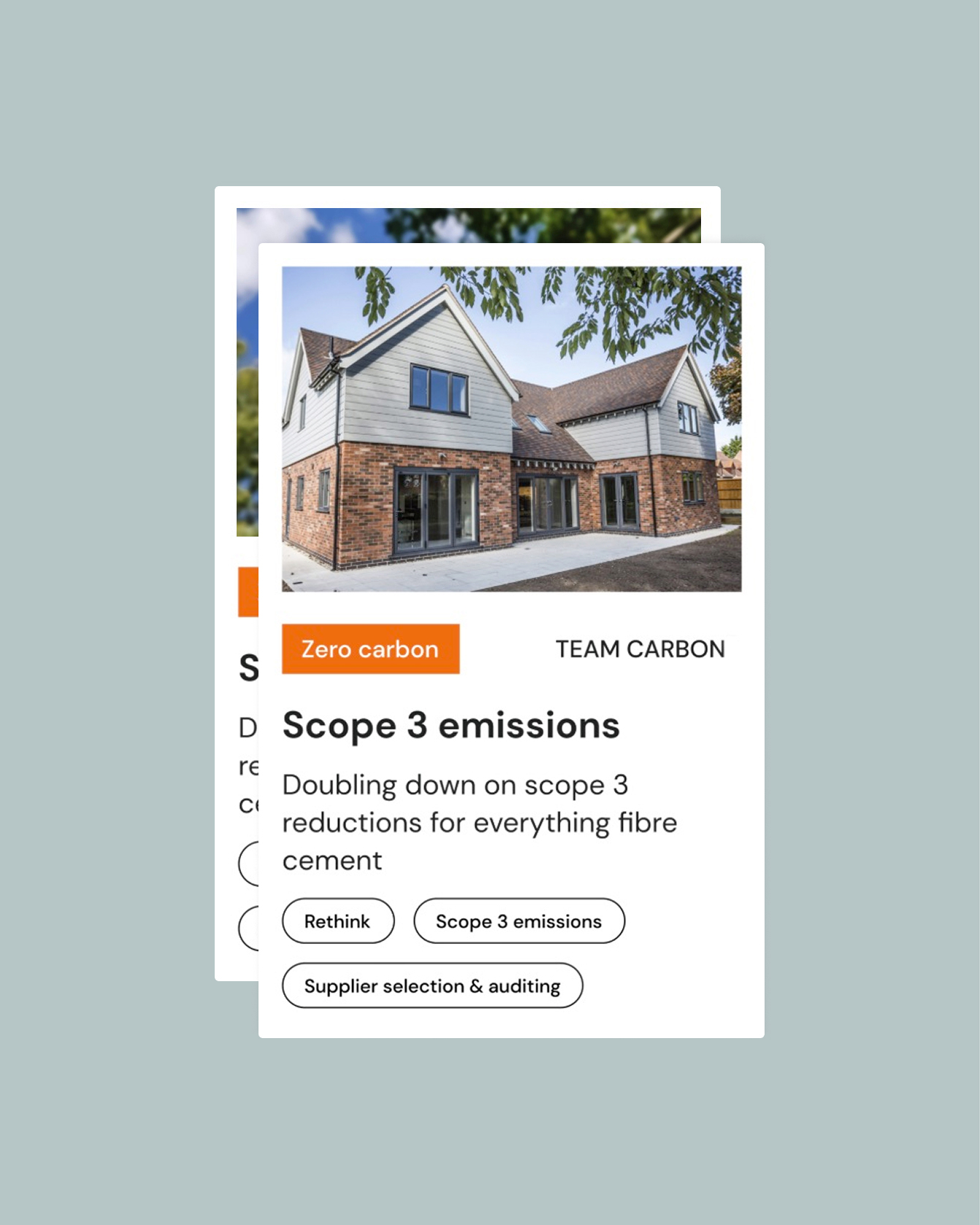
With a sustainable business design on point, production must follow in that same direction.
“That's why a responsible production methodology forms the second pillar of the strategy work we did for Etex”, says Kevin Verborgh. “Think of ways to reduce emissions, apply renewable energy sources, set up closed material loops and water-saving systems to keep the footprint low and performance high. All within the fibre cement space. In addition, rethinking Etex’ packaging solutions and logistics has been equally crucial to build strong foundations for emission and waste reduction across the entire supply chain during the coming years.”
A third focus area centres on customer experience. “Improving how our customers interact with sustainable solutions is essential to our cause”, Van Kelecom notes. “This requires new service models, proactive engagement, and transparent communication. Every commitment is backed by recognised certifications and transparent data, giving customers the confidence to make informed choices.”

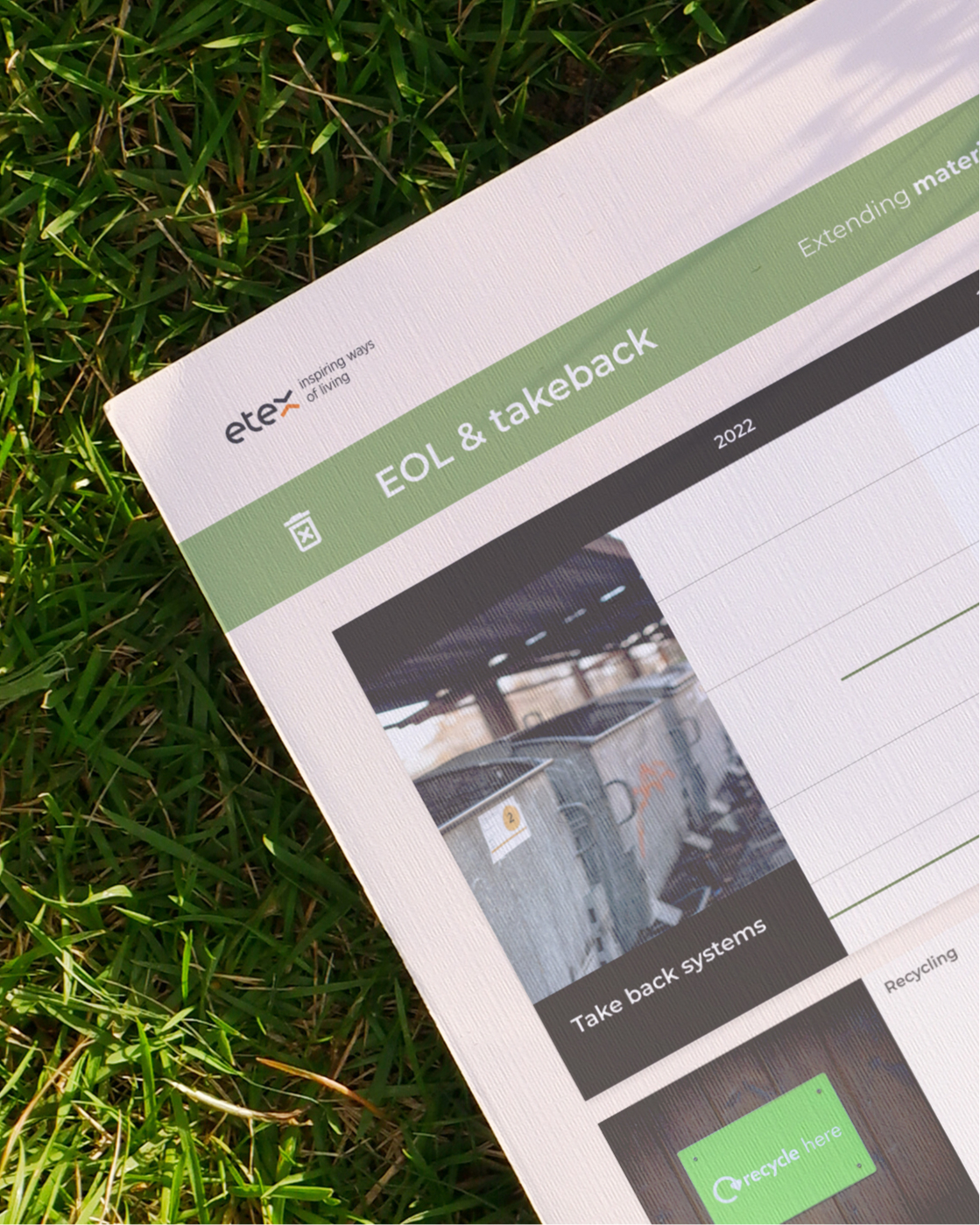
“And when fibre cement materials reach their end-of-life, we want to offer waste take back solutions, ensuring nothing goes to waste by turning it into a new value to ensure a truly circular economy. While exploring opportunities of re-use, we have for example developed CEMLOOP XL, a breakthrough recycling process co-funded by the EU LIFE Programme”, Van Kelecom adds.
Etex’ newly created ‘Road to Sustainability for Fibre Cement’ rests on exquisite use of qualitative data. “Because you can’t set meaningful targets or communicate performance results without high‑quality data”, emphasizes Kevin Verborgh.
“This is particularly true for carbon emissions, where accurate reporting depends heavily on the availability and reliability of data from suppliers. This data enables a rigorous measurement of progress. Etex’ Sustainability Roadmap KPIs are aligned with both corporate ambitions and fast-changing regulations to ensure that sustainability claims can be proven, not just promised.”
A sustainability roadmap orchestrator.
When Etex approached Made, the company had already been actively advancing its sustainability journey for several years. Apart from technology or data, Etex ‘Road To Sustainability for Fibre Cement’ depends on people to assure translation from global ambitions into tangible local actions.
“Hence, Made's role was to bring synergy across all stakeholders”, says Kevin Verborgh. “In projects like this, having such an orchestrator is essential. Together with all stakeholders, we mapped existing initiatives across teams and regions, identified gaps, and co-defined a clear sustainability north star that could unite diverse parties around a shared purpose."
"Through a structured co-creation process with Etex’ experts, we succeeded in building a sustainability roadmap with clear strategic pillars, integrating existing projects while adding new initiatives, all prioritised against impact, feasibility, and customer value.”
In projects like this, having an orchestrator is essential. Together with all stakeholders, we mapped existing initiatives across teams and regions, identified gaps, and co-defined a clear sustainability north star that could unite diverse parties around a shared purpose.
Equally important, however, was setting Etex up for execution. “That’s why, apart from the roadmap, we designed a governance model bridging corporate ambition with regional ownership and completed with shared KPIs to make progress measurable. The Etex leadership team now uses a shared platform that helps them align teams, prioritise investments, and move forward with clarity and confidence across the full fibre cement lifecycle.”
Looking back on the close collaboration in recent months, Etex has been using this newly created sustainability standard to steer real business decisions. “And in the next decade, we’ll be here to make sure Etex goes beyond that”, Kevin Verborgh concludes.