Celebrating an 8 year partnership.
Antwerp, Belgium - May 11th, 2026
2026 marks our 8 year collaboration with Brabo, the organisation responsible for piloting and boatmen services in the Port of Antwerp.
What began as a single project to replace paper-based workflows has grown into a strong partnership and a comprehensive digital ecosystem that connects every layer of Brabo's operations, from the quayside to the bridge to the back office.
In this article, Jeroen Nelen, our Director for Maritime & Logistics, walks you through this wonderful collaboration.

Maritime digitization is accelerating.
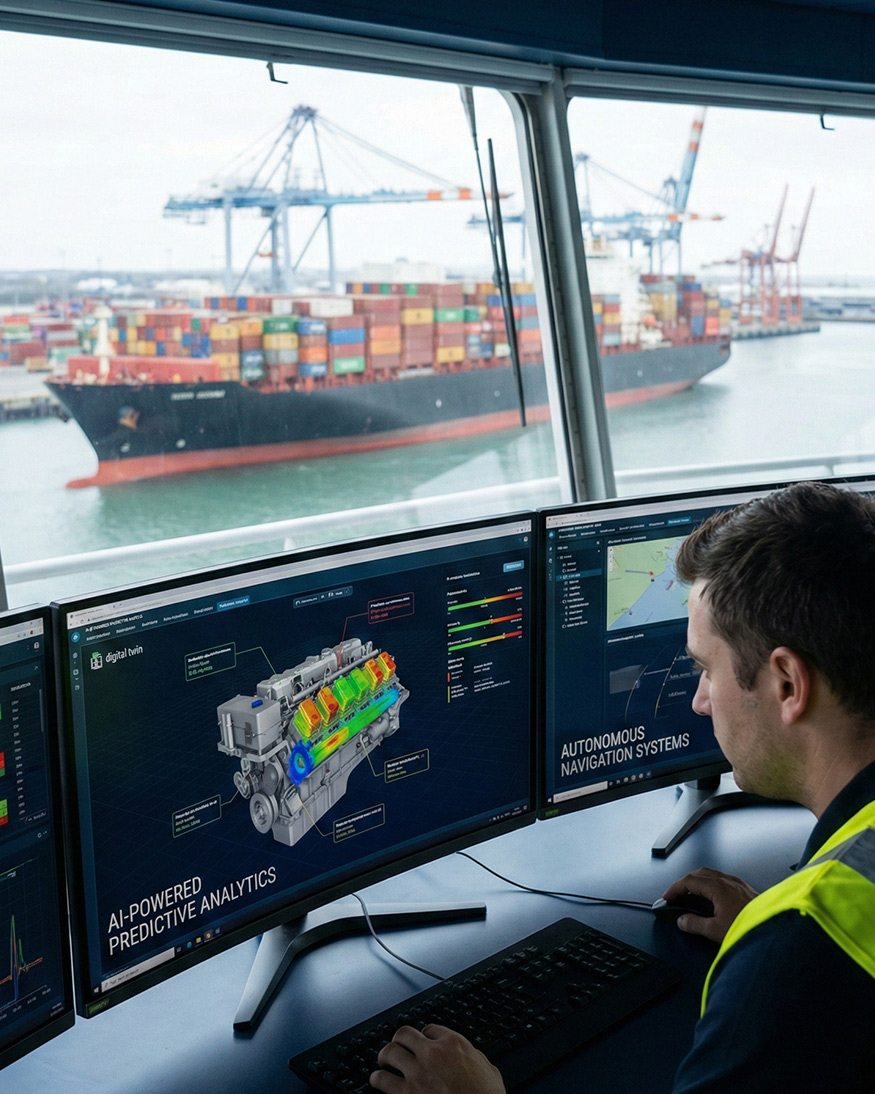
Driven by IoT, artificial intelligence, and real-time data platforms, ports across the world are evolving from logistical nodes into intelligent ecosystems. The global maritime digitization market, valued at roughly $61 billion in 2025, is projected to more than double by the end of the decade. Port authorities from Rotterdam to Singapore are investing heavily in projects where digital twins, autonomous drones, and AI-powered traffic management take centre stage.
With initiatives like APICA (Advanced Port Information en Control Assistant), which is a real-time digital twin that integrates data from thousands of sensors, cameras, and drones to monitor port activity, the Port of Antwerp-Bruges is becoming a global pioneer in this space.
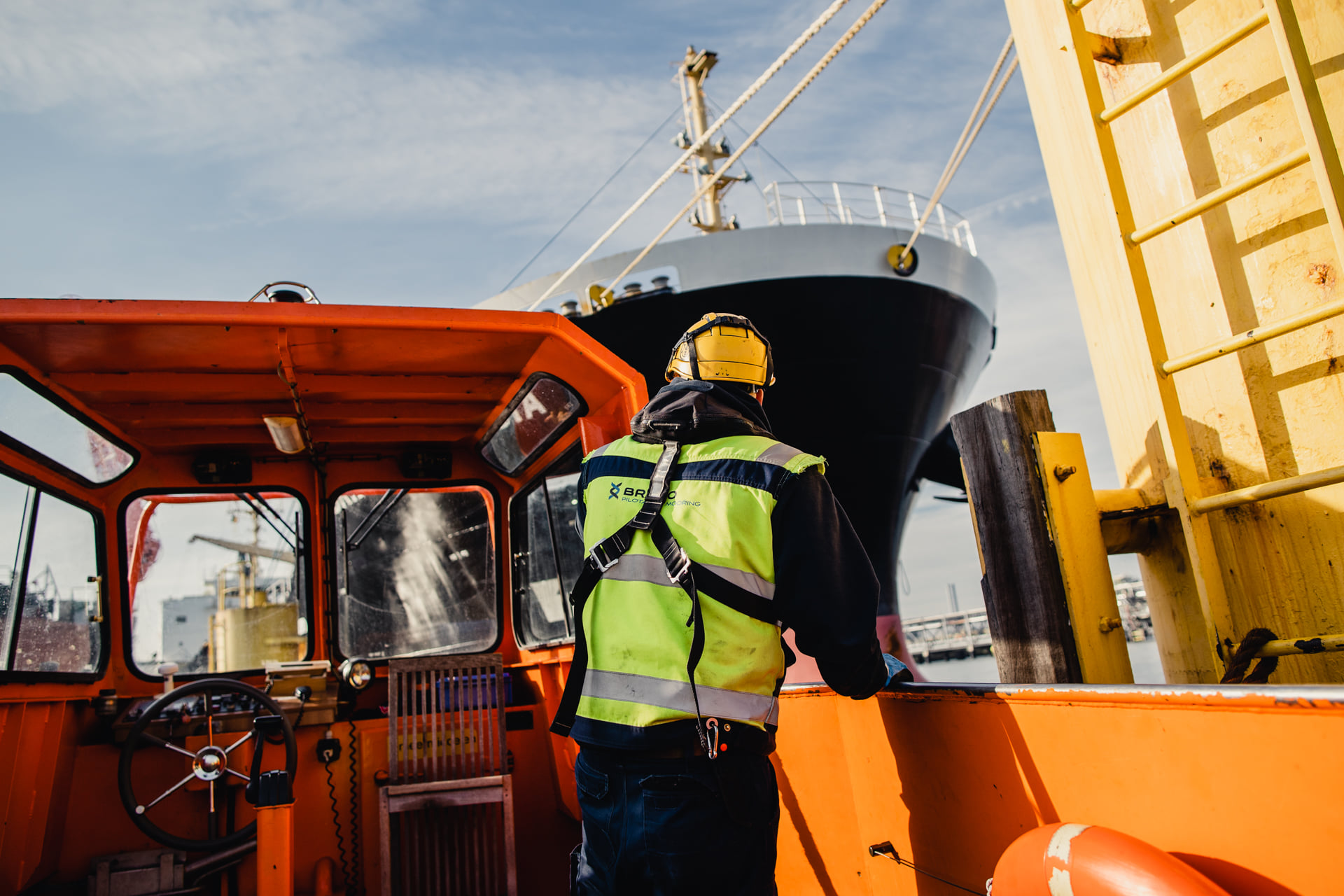
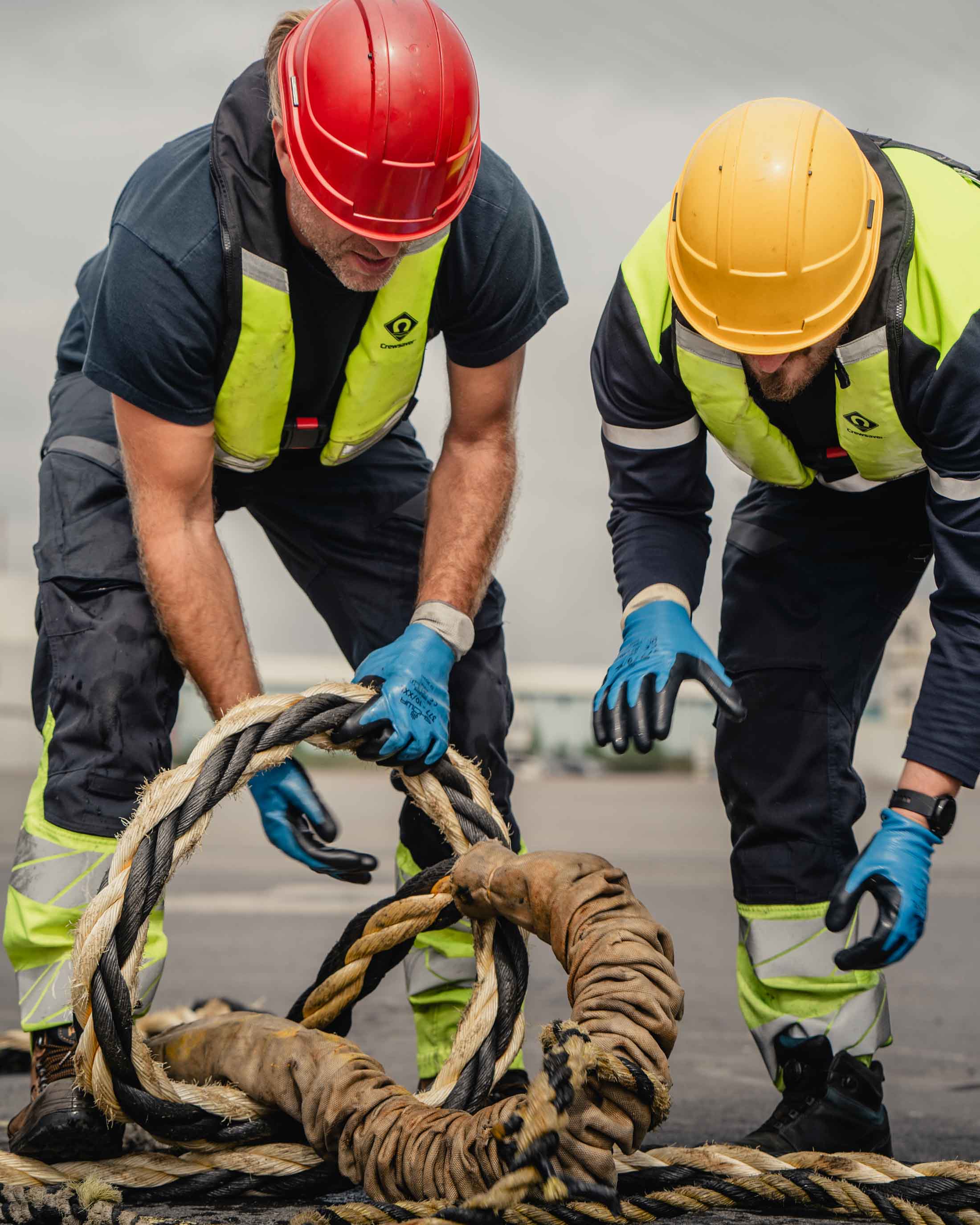
In the operational layer, there is the human-intensive, safety-critical work of guiding vessels into and through the port. That’s where our collaboration with Brabo began.
“Digital transformation across these ports is happening on multiple layers simultaneously”, says Jeroen Nelen, Director Maritime & Logistics at Made. “In the infrastructure layer nowadays, we are setting up automated terminals, sensor grids, and port-wide surveillance networks. In the data layer, we have platforms that aggregate, analyse, and visualise operational information in real time. And in the operational layer, there is the human-intensive, safety-critical work of guiding vessels into and through the port, coordinating shifts, managing incidents, and keeping daily operations running smoothly.”
Each of these layers comes with its own set of challenges and requires its own kind of expertise.
“Digitizing the operational layer, for instance, is fundamentally different from building a sensor network or automating a container terminal. It requires technology that fits seamlessly into the rhythms of operational life, that earns the trust of highly experienced professionals, and that creates value not by replacing human expertise but by amplifying it. This is the layer where our collaboration with Brabo began”.


A wealth of knowledge trapped in analogue workflows.
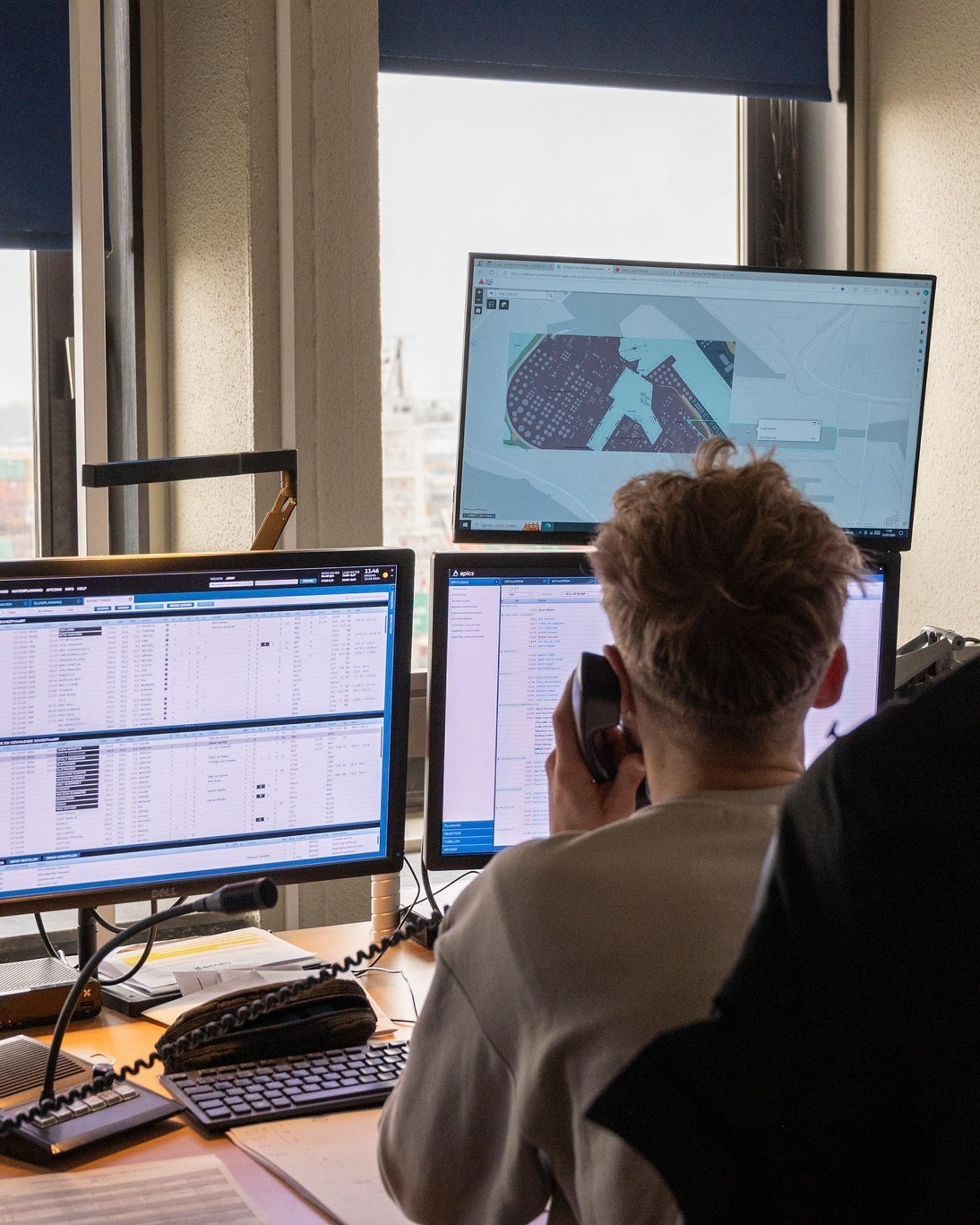
Before the collaboration began, Brabo's daily operations relied heavily on manual, paper-based processes. Work assignments for boatmen were distributed on printed sheets. Pilots carried paper documents aboard vessels. Planning teams coordinated shifts and voyages using spreadsheets and a legacy system called APICS, which had served the organisation for years but lacked the flexibility to evolve with growing demands.
Incident reporting was done on paper forms. Important notes about dredging works, obstacles, or port conditions were scattered across different channels, making it difficult for pilots and boatmen to have a complete, up-to-date picture before arriving at a vessel. Attendance lists, delivery notes, and operational reports all required manual handling, creating delays, duplication of effort, and the risk of information getting lost.
Brabo was sitting on a wealth of operational knowledge, but it was trapped in disconnected systems and analogue workflows. Digitizing it would be the key to sustaining growth, improving safety and operating more efficiently.
“In short, Brabo was sitting on a wealth of operational knowledge, but it was trapped in disconnected systems and analogue workflows”, says Jeroen Nelen. “Brabo's leadership, however, recognised that digitizing operations would be the key to sustaining growth, improving safety, and operating more efficiently, ultimately with a vision of building a digital twin of the entire port's piloting operations. That ambition is what set the partnership in motion and has kept it evolving for eight years.”

Building a digital ecosystem shaped by the people who use it.
Together with Brabo, the multidisciplinary maritime team at Made designed and built "Biotoop" (which was later renamed as "Opera"), a comprehensive digital platform that brings every layer of Brabo's operations into a single, connected ecosystem.
The platform spans three core touchpoints that mirror the people who use it daily: boatmen on the quayside, pilots on the bridge, and planners in the back office. Each touchpoint was designed from the ground up with its specific users in mind, because the most common reason digital tools fail in operational settings is that they are built for the process, not for the person.
Each touchpoint was designed from the ground up with its specific users in mind, because the most common reason digital tools fail in operational settings is that they are built for the process, not for the person.
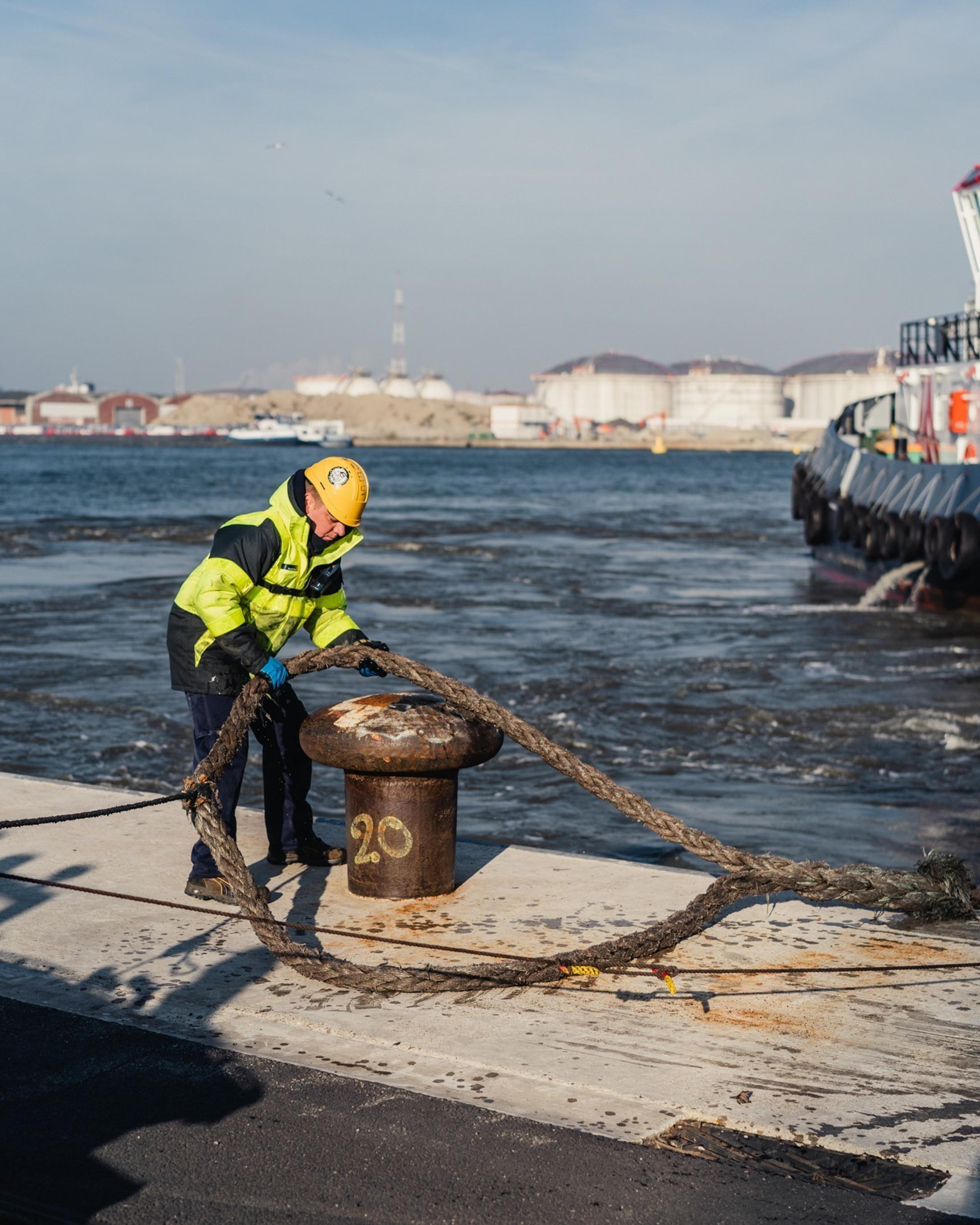
For boatmen, a mobile application was developed to replace the paper worksheets. Boatmen now receive their task assignments directly on their phone, completed with voyage details, ship information, timing, and crew composition. They can execute tasks step by step, log workboat usage, record timestamps, and file reports, all from the field. The app also enables them to report incidents and findings in real time, with photos and location data attached automatically.
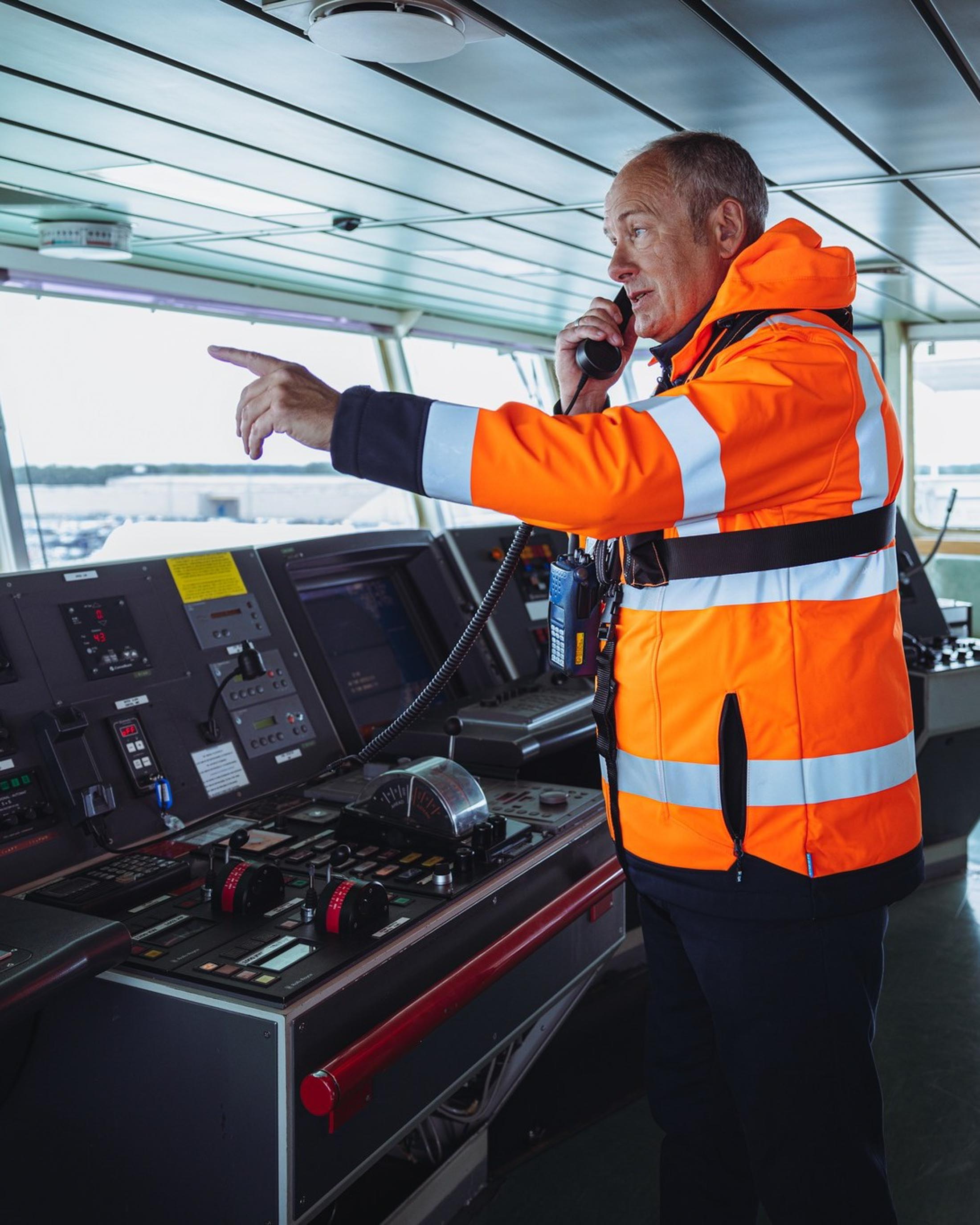
For pilots, a tablet application was created, which they take aboard vessels. It gives them immediate access to their assigned voyages, ship specifications, briefing information, and contextual remarks left by work leaders or previous pilots. A standout feature is the Passage Plan: pilots can draw their intended route on a map of the port, and the system automatically surfaces all relevant port notes, including dredging works, obstructions, and depth changes, within a configurable radius of the drawn passage. Since nearly all routes have been drawn by now, the system suggests the ideal route based on historical data. This turns scattered, easy-to-miss information into contextual, actionable intelligence exactly when it matters.
.jpg)
For planners and work leaders, a web-based back office replaced the legacy APICS system. It provides a comprehensive planning overview: upcoming voyages, vessel details, roster management, an attendance list with real-time availability, and tools for assigning pilots and boatmen to services. The system integrates with external data sources, including ERP for customer information, Proteus for HR and rest time tracking, and VTS for real-time vessel positions, so that planners always work with the most current information.
And for administrative services, Biotoop is feeded with all operational data to automatically generate invoices from the ERP system; a tremendous gain of digitizing the complete operational workflow.


What a living platform makes possible.
“One of the things this partnership has reinforced for us is that the real value of digital transformation does not emerge at the moment of launch”, says Jeroen Nelen. “It emerges over time, as the platform accumulates data and the organisation develops the confidence to use that data for new purposes.”
With the Biotoop foundation in place, the platform has continued to evolve in directions that would have been impossible without the operational data it collects. A live map view, powered by S57 nautical charts and real-time VTS data, shows vessels moving through the port with their contours, speed, and heading. Geofencing triggers automatic notifications and process steps. Machine learning models provide predictions for pilot drop-off optimization. And incident management has been redesigned to enable structured, data-rich reporting with risk levels, cause analysis, and direct links to the relevant voyage.
The ports and operators that are furthest ahead in their digital maturity are not necessarily the ones that invested most heavily in technology from the start. They are the ones that built solid digital foundations, put operational data at the centre of their strategy, and gave themselves room to evolve.
“This trajectory, from replacing paper to generating operational intelligence, mirrors a pattern we see across the maritime industry”, says Jeroen Nelen. “The ports and operators that are furthest ahead in their digital maturity are not necessarily the ones that invested most heavily in technology from the start. They are the ones that built solid digital foundations, put operational data at the centre of their strategy, and gave themselves room to evolve. The journey from a digital workflow to a digital twin is not a single leap. It is a compounding process, where each layer of data creates the conditions for the next layer of insight.”
Maritime innovation that floats, not sinks.
Eight years of shaping Biotoop with Brabo has given Made front-row seats to what separates maritime innovations that earn lasting adoption from those that don't survive first contact with reality.
“Like our Managing Director recently wrote, maritime innovation is a contact sport and therefore is not for everyone. The industry is cemented in history, with trust and innovation being deeply intertwined. The second an innovation misses out on even the slightest element of operational context, it gets thrown overboard”, says Jeroen Nelen.
In an industry where critical information has historically been scattered across systems, channels, and people's heads, connecting those flows is what turns a digital tool into an operational backbone.
Technology must serve the operator. Port environments are physically demanding, safety-critical, and time-sensitive. Digital tools that add friction, require extensive training, or pull attention away from the task at hand will be rejected, no matter how sophisticated they are. Every design decision in Biotoop was informed by the daily reality of the people who would use it, from the size of buttons on a phone screen used by boatmen wearing gloves, to the way information is layered in the pilot app so that the most critical data is always immediately visible. Innovation that works in these conditions must be shaped from the inside out, not from the outside in.
Trust is earned gradually, and lost instantly. Brabo's pilots and boatmen are highly experienced professionals who have done their jobs well for decades. They have seen plenty of technology initiatives come and go. Introducing digital tools into their workflow required building with them, not for them, and demonstrating value incrementally rather than forcing wholesale change overnight. In maritime, there is no shortcut past this. Adoption is not a feature you can ship. It is the result of consistently proving that the technology respects the expertise of the people it was designed for.
Connected information flows are what create real impact. The power of Opera is not in any single feature but in the fact that a finding reported by a boatman at the quayside can inform the passage plan of a pilot boarding a vessel two hours later. Data that used to be locked in paper forms and individual memory now flows through the organisation and becomes part of a shared operational picture. In an industry where critical information has historically been scattered across systems, channels, and people's heads, connecting those flows is what turns a digital tool into an operational backbone.


A partnership that reflects where maritime is heading.
The global maritime industry is moving toward a future of fully connected, data-driven port ecosystems. The building blocks are becoming clearer by the year: real-time sensor networks, AI-powered decision support, digital twins that simulate entire port environments and facilitate decision making.
Each layer of that transformation requires deep collaboration between technology partners and domain experts, and each layer benefits from the patience and commitment that only long-term partnerships can provide.
Eight years into this collaboration, Opera continues to grow. New capabilities are being added, new data sources integrated, and new use cases explored. For Made, this partnership with Brabo exemplifies what we believe in most: that the best digital solutions emerge from long-term partnerships with organisations that have deep domain expertise, and that the measure of good technology is not its novelty but its impact on the people and processes it was built to serve.