Executive summary
Antwerp, Belgium - December 23rd, 2025
By Tim Van den Bergh,
Director Consumer products
A general decline in sales volume forces consumer brands to recalibrate their portfolio. Regulation is turning sustainability from a brand differentiator into a requirement to simply access the market. Health expectations are reshaping what consumers want to buy and how much they consume.
In 2026, consumer brands face a number of challenges that demand strategic attention. At the core of these challenges is a single imperative: consumer insight. Consumer brands with the deepest understanding of who their consumers are, what they value, and how their needs are evolving, will win in this new era.
In this article, our Director of Consumer Products, Tim Van den Bergh, examines the forces that are reshaping the consumer goods market and why investing in consumer understanding is the thread that ties every strategic response together.


Why this matters now.
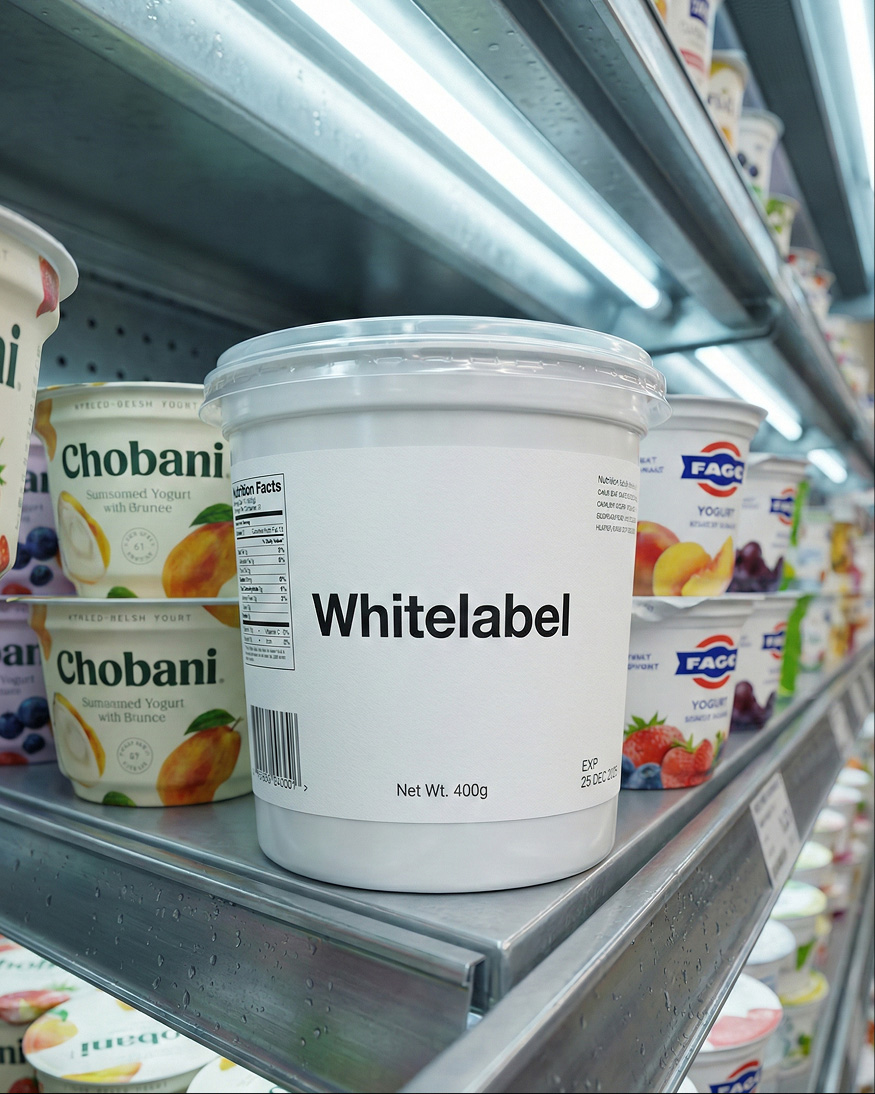
A decade ago, private labels were generally positioned as the budget alternative for price-conscious shoppers. Today, that perception has fundamentally shifted and it’s bringing premium consumer brands to a point of recalibration.
According to Circana's 2025 research, private labels now command 46% of all FMCG unit sales across Europe's six largest markets, with penetration reaching 48% in Spain. In addition, 60% of consumers today say private labels are as good as national brands in terms of product quality, innovation, and sustainability.
At the same time, Bain & Company's 2025 Insurgent Brands report reveals that fast-growing ‘insurgent’ or ‘challenger’ brands captured a staggering 39% of category growth in 2024, up from 20% the year before. These brands hold less than 2% market share, yet they are taking a disproportionate slice of whatever growth exists because they understand specific consumer segments deeply.
"What we're seeing within our consumer strategy projects is that this trend is not a temporary dip," says Tim Van den Bergh, Director of Consumer Products at Made. "When we analyze actual consumer behavior in the current day and age, we come to the conclusion that the fundamentals of how consumers shop, what they value, and what they expect from brands have shifted. Companies that treat this as a cyclical downturn will find themselves structurally disadvantaged."

The portfolio question every brand must answer.
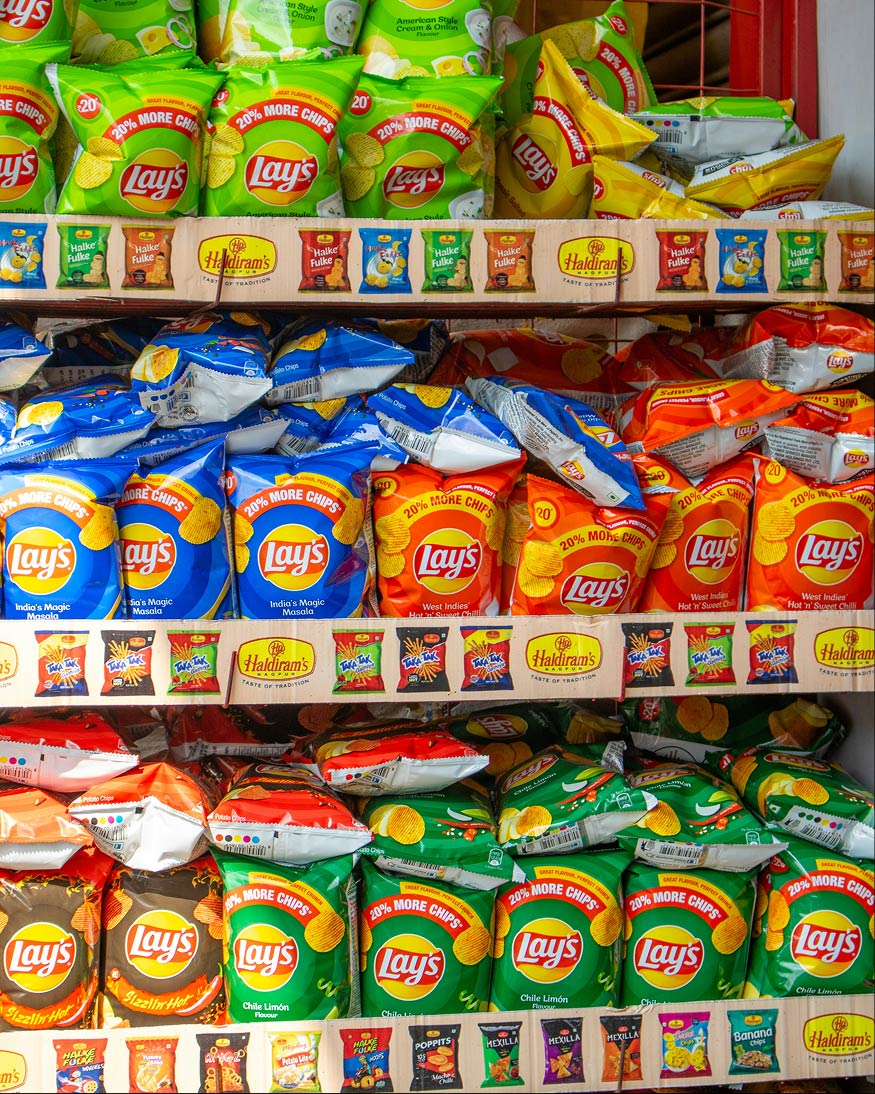
Traditionally, when consumer brands feel that the pressure is on, the instinct to do more lives up. Brands look to launch additional products, enter more categories, chase more trends, etc. However, this approach might become counterproductive, as resources spread thin produce mediocre results across the board.
"That’s why we're seeing a significant shift from pure innovation to smart renovation," Tim explains. "Brands are returning to their core, evaluating the existing product portfolios, and asking fundamental questions: What do our consumers actually want? What barriers prevent them from choosing our products? What are we actually good at? And how do we make existing offerings more relevant rather than simply adding new ones?"
Looking at the current market, Unilever’s ongoing transformation illustrates this shift best. Under former CEO Hein Schumacher, the company already prioritised 30 "Power Brands" that now represent over 75% of group turnover. Simultaneously, the company divested non-core assets including Dollar Shave Club, Elida Beauty, and food brands like Unox and Conimex.
Brands are returning to their core, evaluating the existing product portfolios, and asking fundamental questions: What do our consumers actually want? What barriers prevent them from choosing our products? What are we actually good at? And how do we make existing offerings more relevant rather than simply adding new ones?
New CEO Fernando Fernandez, who took the helm in March 2025, has signalled even greater urgency. Speaking at the Barclays Global Consumer Staples Conference, Fernandez announced plans to replace around 50 of the company's top 200 managers, pledging to eliminate what he described as "pockets of mediocrity" within the organisation. "Every brand and category in Unilever's portfolio must earn the right to be there," he stated.
The investment shift is equally telling. Unilever increased brand and marketing spend to 15.5% of turnover, the highest in over a decade, with Fernandez declaring that "the times of Unilever trading off lower, uncompetitive investment in our brands to deliver some more profit are gone."
For many of the consumer brands fighting for shelf space, portfolio decisions are unavoidable in 2026. However, they must be grounded in genuine consumer insight rather than internal assumptions or financial modeling alone. Leadership teams need to invest in understanding which products genuinely resonate with which consumer segments before making cuts, or risk eliminating brands with hidden growth potential while retaining underperformers.
But portfolio decisions do not happen in isolation. They intersect directly with another force reshaping consumer brands: the regulatory environment around packaging and sustainability.

When sustainability becomes mandatory.
For years, sustainability has been positioned as a choice. A way to differentiate, appeal to conscious consumers, or burnish corporate reputation. That framing is about to become outdated.
"At Made, we’ve seen sustainability becoming a non-negotiable for brands," Tim states. "Not necessarily because their consumers are demanding it at the point of purchase, though many of them are, but because legislation is making it mandatory. Consumer products that don't comply simply won't reach the market anymore."
The regulatory landscape is converging globally around 2026. In the European Union, the PPWR (Packaging and Packaging Waste Regulation) entered into force in February 2025 and becomes fully applicable from August 2026. All packaging must be recyclable by 2030, plastic packaging must contain minimum recycled content, and harmful PFAS are banned from food packaging. Critically, PPWR is a regulation, not a directive, meaning uniform standards across all 27 EU member states with no room for national interpretation.
The United Kingdom has implemented its own Extended Producer Responsibility (pEPR) scheme, with full operational frameworks and modulated fees taking effect from 2026. Producers of poorly recyclable packaging will face progressively higher fees, while those using highly recyclable materials benefit from reduced costs.
In the United States, state-level EPR laws are creating momentum toward similar requirements. According to the Sustainable Packaging Coalition, California's SB 54 is the most expansive, setting aggressive plastic reduction mandates with compliance requirements extending through 2026. Colorado, Oregon, Minnesota, Maryland, and Washington have all enacted packaging EPR legislation, with most programs launching or escalating in 2026. The US EPA has recommended developing a national EPR framework, signalling that federal alignment may eventually follow.
For global consumer brands, this regulatory convergence means sustainability compliance can no longer be managed market-by-market. The requirements are substantively similar: recyclability mandates, recycled content targets, harmful substance bans, and producer responsibility for end-of-life packaging costs. Brands that redesign packaging once to meet the highest standard will find compliance easier across all markets.
Hence, sustainability will no longer be positioned as a marketing differentiator. In 2026 and beyond, sustainability will be a market access requirement. This requires deep understanding which consumer segments value circular approaches (informing where to invest in premium sustainable positioning) versus which simply expect baseline compliance (where cost-efficient solutions matter most). The portfolio recalibration and sustainability strategy are now inseparable.
The sustainability transition also connects directly to the next major force reshaping consumer markets: the profound shift in how people think about health.

Health as the new baseline expectation.
If sustainability is becoming mandatory through regulation, health is becoming mandatory through consumer preference. And the two trends reinforce each other: consumers increasingly expect products that are good for them and good for the planet simultaneously.
According to NIQ's Global State of Health & Wellness 2025 report, conducted in early 2025 across 19 countries, 70% of global consumers believe they are proactive in managing their health, while 57% now prioritise "aging well" more than they did five years ago. The data reveals that 53% of consumers plan to buy more high-fibre foods, while around 40% plan to increase purchases of superfoods, high-protein plant-based foods, or probiotic products.
At the same time, however, these consumers are also growing sceptical. NIQ found that 82% want more transparency in product labels, while 62% are increasingly doubtful of health claims made by companies.
"Health used to be a niche market. In 2026 and beyond, it will transition into the general market," Tim observes. "Consumers are viewing products through a health lens across categories, not just in food. They want products with high-value components like protein, probiotics, and functional ingredients, not just products that are free from sugar or gluten. And they're getting better at distinguishing genuine health benefits from marketing spin. That’s where it gets tricky for brands to really claim health."
“Health used to be a niche market. In 2026 and beyond, it will transition into the general market
Another emerging dynamic deserves particular attention: the rapid adoption of GLP-1 medications for weight management.
According to Gallup, in just over a year, the percentage of US adults taking drugs such as Ozempic, Wegovy, Mounjaro, and Zepbound more than doubled to 12.4%, approximately 41 million people. NIQ's research indicates that 43% of consumers globally would consider taking anti-obesity medications if recommended by their healthcare provider.
"This presents a significant opportunity for brands willing to rethink their propositions," Tim explains. "GLP-1 users are consuming 15-40% fewer calories and showing reduced cravings for sweet, salty, fatty, and alcoholic products. But they are still spending; they're just buying differently. They want smaller portions, higher protein content, and products that help them meet nutritional needs with less food volume."
Consumer brands must move ‘health’ from being a marketing claim to being actual product reality. Leadership teams need to understand how their specific consumer segments think about health, which functional benefits they prioritize, how sceptical they are of claims, and whether emerging dynamics like GLP-1 adoption will reshape their category. Brands that respond with genuine reformulation and transparent communication about the actual outcome of their products, will capture share; those that rely on cosmetic repositioning will lose credibility over time.
But capitalising on health trends, or any of the dynamics discussed so far, requires something that many large consumer brands have lost somewhere along the way: genuine understanding of who their consumers are and what they actually want.
The path forward: consumer insight as the connecting thread.
The thread connecting portfolio recalibration, sustainability compliance, and health positioning is consumer insight. Each decision depends on understanding specific consumer segments deeply enough to know what will resonate and what will not.
This is where challenger brands currently hold their advantage. They succeed not because they have better products or bigger budgets, but because they understand their consumers intimately. Large consumer brands often lack this granular understanding, relying instead on broad market research that reveals averages but obscures the specific segment insights that drive growth."
A key priority is understanding consumer drivers and barriers to maintain brand relevance," Tim emphasises. "This requires going beyond traditional market research to develop deep, nuanced insights into specific consumer segments, including those that have historically been underserved."
Made's collaboration with Danone and Alpro illustrates this approach. By engaging directly with ethnic minority consumers across Europe, we developed actionable recommendations that revealed opportunities invisible to traditional research methods. Further co-creation brought new food combinations, communication approaches, and packaging propositions that made the brands more relevant to underserved segments.
Long story short: the pressure for consumer brands is real. Volumes are stagnating, costs are rising, regulations are tightening, and competitors are gaining ground. However, the potential is also real. Consumer insight has never been more important for consumer brands. The question for leadership teams is whether they have the capabilities to develop it. And at Made, we might just be the partner they need.
Ready to navigate 2026?
Made is offering complimentary strategy sessions for consumer brand leadership teams who want to build a concrete, outcome-based roadmap for 2026 and beyond.
You will leave with a clear picture of where your business stands relative to the forces reshaping the market, strategic opportunities across portfolio renovation, sustainability compliance, and consumer insight, and a prioritized roadmap tailored to your specific context.